
Meta Pixel Saltar al contenido
Geedle Blog

Geedle Blog

Practical guides on LMS platforms, applied gamification, Mexican STPS compliance, virtual course production, and ISO management systems — drawn directly from our projects across Mexico and Latin America.

Geedle Blog
Administrador escolar en su escritorio comparando tres propuestas impresas con una calculadora y el calendario del ciclo escolar
Training

How much does a parent school program cost for a school? What drives the price and how to compare quotes

When a school asks how much a parent school costs, the honest answer is: it depends on five things, and the cheapest quote is usually the one that gets cancelled after the third session. This article explains what drives the price, how the three standard packages differ, how to compare the investment with what the school loses when a family does not re-enroll, and what to ask in every quote. No price list: every school is different, and anyone who sends you a flat rate without asking about your levels has not understood the job.


Estudiante de bachillerato sola en una banca del pasillo mirando su celular mientras una orientadora se acerca
Training

Signs of student dropout and how to set up an early-alert system with the data you already have

Students almost never drop out suddenly. They stop coming on Mondays, then stop submitting, then fail a partial, then ask for their papers. By the time the school notices, the family has decided. An early-alert system does not need software you do not have: it needs three pieces of data the school already collects, a weekly routine and tutors who know what to do with a red light. This is how we set it up in high schools and universities in Mexico.

Grupo de directores y coordinadores escolares trabajando en equipos con tarjetas de casos mientras una facilitadora dibuja la ruta de módulos en el pizarrón
Training

What a school principal academy should include: modules, hours, deliverables and questions for the provider

School owners who look for a principal academy find two things: university diploma programs of 100 to 240 hours for one leader at a time, and motivational conferences for the whole staff. Neither solves the Monday problems of a new principal. A principal academy for a school or a network should be short enough for a leadership team to finish within a term, built on cases from their own level, and leave behind tools, not notes. This is what to demand before signing.

Taller para familias en la biblioteca de un colegio con madres y padres trabajando en mesas pequeñas y una facilitadora acompañando una mesa
Training

A parent school that actually works: topics by level, a 60-minute format and how to get parents to show up

Almost every private school in Mexico has tried a parent school: a speaker, an auditorium, forty parents the first time and nine the third. The idea is right; the format is what fails. A parent school works when the topics come from the problems the school actually sees, when each session gives parents one thing to do at home that week, and when attendance is designed, not hoped for. This is the format we run with schools from preschool to high school.

Propietarios de un colegio y su hija reunidos con una consultora educativa en la sala de juntas revisando una propuesta
Training

How to choose an education consultancy for your school: diagnosis first, red flags and what to demand

Every school owner has met the consultant who, in the first meeting, already knows what the school needs: his program. Education consulting is useful when it starts by looking, delivers things you can hold, and stays long enough to see whether anything changed. This guide is for owners, boards and principals comparing a speaker, an individual consultant and a program with follow-up, and for anyone about to sign a proposal they do not fully understand.

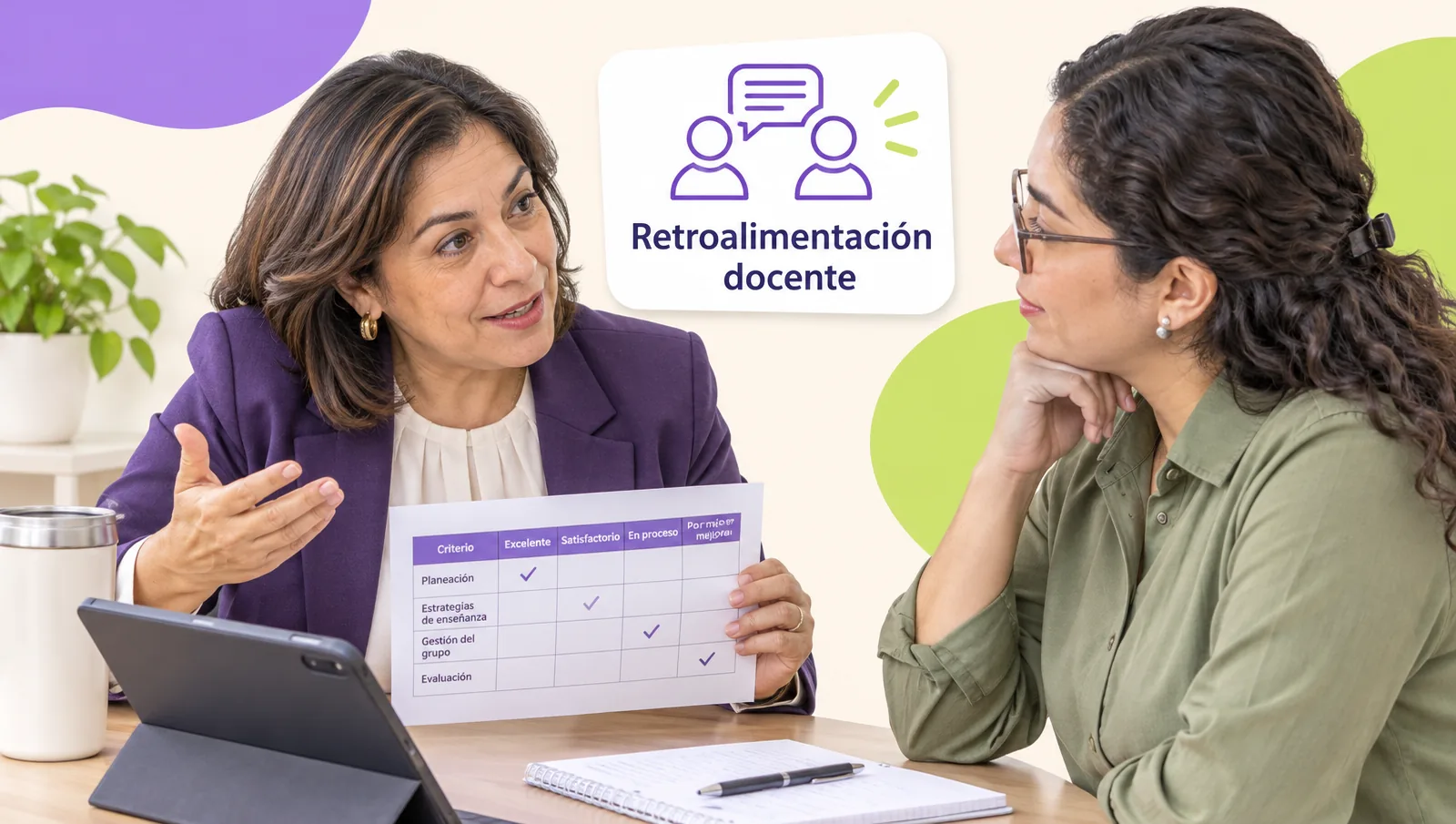
Directora escolar dando retroalimentación a un docente después de observar su clase, con la rúbrica impresa y una tableta sobre la mesa
Training

How to evaluate your teachers: class observation and 15-minute feedback that improves the class

Most schools "evaluate" teachers with a yearly survey and an occasional visit that everyone sees coming. Teachers hate it, principals postpone it, and nothing in the classroom changes. Observation works when it is short, frequent, built on a rubric everyone knows and followed by a 15-minute conversation that ends with one agreement. This is the routine we install with school leaders, including the hardest case: the veteran who says nobody is going to observe them.

Docente escuchando con calma a un padre de familia molesto en un salón de clases, tomando notas del reclamo
Training

How to handle a difficult parent: a four-step script for teachers and principals

The father who demands a grade change in front of other parents. The mother who sends twelve WhatsApp messages at eleven at night. The couple who arrives with a lawyer's letter over a suspension. Every teacher and principal faces these meetings, and almost none of them was trained for them. This four-step script is the one we rehearse with school leaders in Mexico; it does not make the parent happy, it makes the meeting end with an agreement instead of a crisis.

Directora escolar en su primer día recibiendo a los docentes en la entrada del plantel con una agenda en la mano
Training

First 100 days as a school principal: a week-by-week plan (and the mistakes that cost the most)

Most new principals in Mexico were the best teacher on staff until the day before. Nobody handed them a plan: they inherited a desk, a WhatsApp group of angry parents and a staff that still calls them by their first name. The first 100 days decide whether the team reads them as the principal or as a colleague who got a bigger office. This is the plan we use with newly promoted principals and coordinators, week by week, with the mistakes we see most often.

Seis colaboradores construyendo una torre de espagueti y malvavisco en una sala de capacitación mientras un facilitador cronometra; tarjetas: Objetivo, Roles, Acuerdo escrito
Training

Teamwork activities for companies: 12 with a goal (and what each one must leave in writing)

A teamwork activity without a goal is a game; with a goal and a written agreement at the end it is training. The difference is not in the activity but in what happens afterwards. Here are twelve we use on the plant floor and in the office, grouped by the problem they solve, with duration, materials and, above all, what the team must leave in writing before going back to work.

Líder de equipo entrenando paso a paso a un operador nuevo y, en otra escena, delegando una tarea a un colega experimentado; tarjetas: Dirigir, Entrenar, Apoyar, Delegar
Training

Situational leadership: what it is and real examples on the plant floor and in the office

The most common mistake of a new manager is leading everyone the same way: with the same amount of instruction, follow-up and freedom. Situational leadership solves exactly that with a simple idea: the right style depends on the person and the task, not on the boss. Here we explain it with production-floor and office examples so you can apply it this week.

Dos compañeros de oficina en una conversación tranquila: ella pone un límite con las palmas abiertas y él escucha; tarjetas: Hechos, Efecto, Pedido
Training

Assertive communication at work: 10 examples and a three-step script

Assertive communication is the most requested topic in company courses and the least practiced: almost all of us know what we should have said an hour after the meeting. This article gives the three-step script we use in the effective communication course and ten real office and plant examples, so next time you say it in the meeting and not in the hallway.

Gerente señalando una celda de una matriz de roles y responsabilidades en el pizarrón mientras su equipo discute; tarjetas: Quién hace, Quién decide, Quién se entera
Training

Roles and responsibilities matrix: how to build it with your team in one session

Almost every team conflict has the same root: two people thought the task belonged to the other, or both thought it was theirs. The roles and responsibilities matrix solves that in a 45-minute session if it is built with the team and not for the team. This guide explains how to build it, with a plant example and an office example, and how to keep it from ending up in a drawer.

Would you rather walk through it together?

Everything you read here is what we apply at your company — start with the free assessment.

Enter the VIP Zone

Geedle clients only. No passwords: we send a code to your email.

or

Not a client yet? Request your free diagnosis · Privacy notice

Choose your assessment

Answer 8 questions in 3 minutes and get your result with recommendations from a consultant.