Teamwork activities for companies: 12 with a goal (and what each one must leave in writing)
A teamwork activity without a goal is a game; with a goal and a written agreement at the end it is training. The difference is not in the activity but in what happens afterwards. Here are twelve we use on the plant floor and in the office, grouped by the problem they solve, with duration, materials and, above all, what the team must leave in writing before going back to work.
In this article
- What makes a teamwork activity work?
- To diagnose the team (start here)
- 1. The four stages
- 2. What holds me back
- To clarify roles and responsibilities
- 3. Who does what? (the live matrix)
- 4. The shift handover
- 5. Internal customer and supplier
- To build trust
- 6. The mistake of the week
- 7. Asking for help on time
- 8. What I value about you
- To improve communication
- 9. The blind instruction
- 10. Chain paraphrasing
- So meetings end in agreements
- 11. The fifteen-minute meeting
- 12. The 90-day plan
- Activity, team building or course: which one suits you
- Want activities that end in agreements and not in photos?
What makes a teamwork activity work?
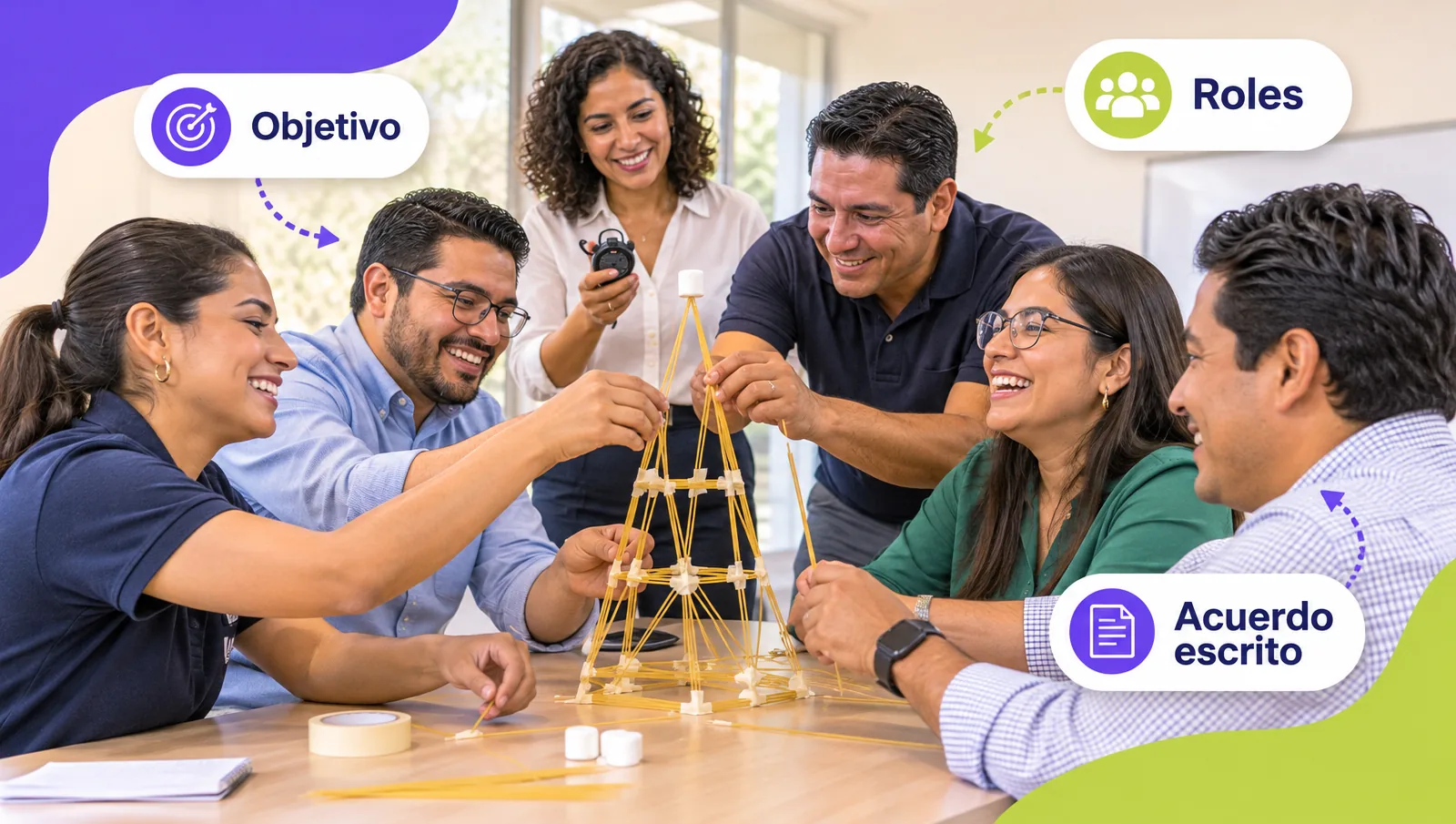
A teamwork activity works when it has a concrete goal (clarifying roles, rebuilding trust, improving communication or closing meetings with agreements), connects with a real situation of the team and ends in a written agreement applied the following week. It lasts 15 to 60 minutes, is done with the natural team (the manager and their people) and is reviewed at 30 days. Without those three elements, the team has fun and on Monday everything stays the same.
That is why the classification below is not by type of game but by goal. Before choosing, answer: what is happening to this team? If you do not know, a short climate survey or the first activity on the list will tell you.
To diagnose the team (start here)
1. The four stages
Goal: know which stage the team is at (forming, storming, norming, performing). Duration: 20 min. Each person privately marks which stage they think the team is at and why; answers are compared on a board. The manager almost always sees "performing" and the team sees "storming". Leaves in writing: the agreed stage and the two most repeated symptoms.
2. What holds me back
Goal: surface the real obstacles. Duration: 25 min. On sticky notes, everyone writes three things that keep them from doing their job well and that depend on the team, not the company. They are grouped and voted. Leaves in writing: the three obstacles with the most votes, which become the agenda for the next activities.
To clarify roles and responsibilities
3. Who does what? (the live matrix)
Goal: close the gray areas. Duration: 45 min. List the ten tasks that generate the most friction and, for each one, the team agrees who does it, who decides and who must be informed. Cells with no agreement are the manager's to-do list. The full step by step is in how to build the roles and responsibilities matrix. Leaves in writing: the matrix, posted in the area.
4. The shift handover
Goal: keep information from getting lost between shifts or departments. Duration: 30 min. Two subgroups simulate a handover with a list of real pending items; the incoming shift can only act on what it was told. The gaps show immediately. Leaves in writing: the handover form with the five items that can never be missing.
5. Internal customer and supplier
Goal: coordinate with other departments. Duration: 40 min, with both departments present. Each one writes what it needs to receive from the other, when and how, and what it receives today. Differences are compared and negotiated. Leaves in writing: a one-page internal service agreement with deliverables, timing and whom to escalate to.
To build trust
6. The mistake of the week
Goal: get mistakes reported on time. Duration: 15 min, in the weekly meeting. The manager starts by telling a mistake of their own from the week and what they learned; then whoever wants to. The mistake is not discussed, only the lesson. By the fourth week people report before the mistake grows. Leaves in writing: a log of lessons, not of culprits.
7. Asking for help on time
Goal: remove the cost of asking for help. Duration: 30 min. In pairs, each person practices asking for help with a real situation ("I will not make it with the report, I need two hours from someone") and the other practices answering without judging. Then it is rehearsed out loud with an AI character in Geedle RolePlay, which sometimes answers badly on purpose. Leaves in writing: the team rule on when and how help is asked for.
8. What I value about you
Goal: peer recognition. Duration: 20 min. Each person writes one concrete behavior (not an adjective) they value in each colleague and hands it over. It works best at the end of a hard week. Leaves in writing: nothing for the manager; the cards belong to each person.
To improve communication
9. The blind instruction
Goal: give instructions understood the first time. Duration: 25 min. One person describes a simple figure and another draws it without seeing it or asking; then it is repeated allowing questions. The second version always comes out better, and the rule comes from there. Leaves in writing: the team's instruction structure (what, by when, how you will know it is right).
10. Chain paraphrasing
Goal: listen before answering. Duration: 20 min. Nobody may answer in the meeting without first repeating in their own words what the previous person said. Awkward for ten minutes and revealing afterwards. More exercises in active listening techniques. Leaves in writing: whether the team adopts the rule in real meetings and for how long.
So meetings end in agreements
11. The fifteen-minute meeting
Goal: meetings with an agenda, minutes and follow-up. Duration: 15 min, standing if on the plant floor. Three questions per person: what I closed, what I will close, what holds me back. A note-taker records agreements with an owner and a date. Leaves in writing: the minutes, in the same format every week.
12. The 90-day plan
Goal: turn all of the above into commitments. Duration: 45 min, at the end of a course or a session. The team picks three agreements from the previous activities, gives them a date, an owner and evidence, and agrees when they are reviewed. Leaves in writing: the plan, which Geedle Bot can remind the team of every week when the course is with Geedle.
Activity, team building or course: which one suits you
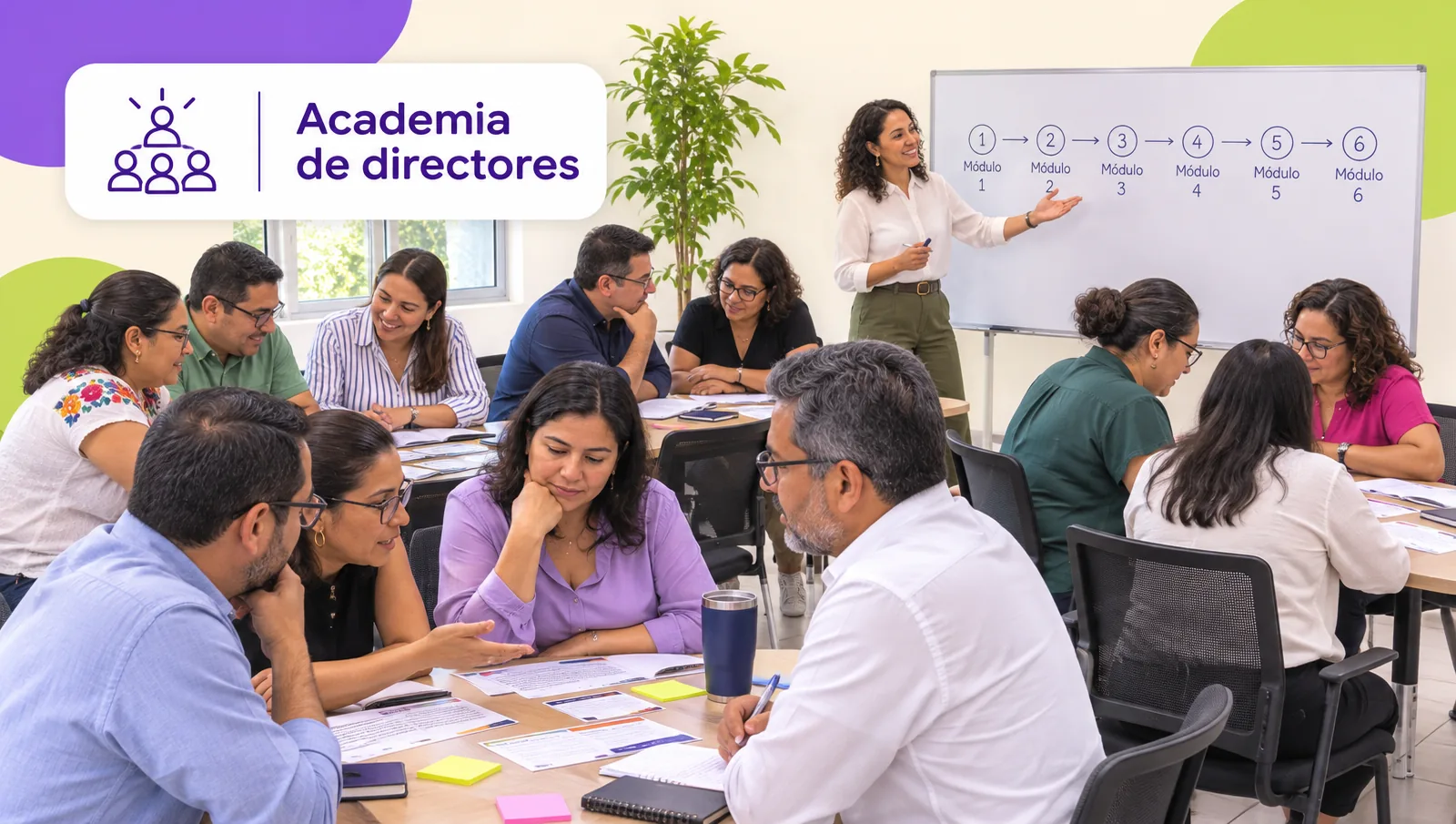
A single activity serves a meeting; a team building day groups several with a goal and a 30-day measurement; a 12-hour teamwork course chains them into six modules with deliverables, a DC-3 certificate and a before-and-after assessment. The full comparison is in team building vs teamwork course, and if you are looking for ideas for a full day, in 25 team building activities.
In Geedle's course, activities 3, 5, 7, 9, 11 and 12 are the backbone of the six modules, each with a gamified team challenge and the written agreement as evidence. That is how gamified training stops being a contest and becomes the agreements the team applies on Monday.
Want activities that end in agreements and not in photos?
Tell us what is happening to your team and we choose the activities, the format and the measurement. The full program is the teamwork course for companies: on-site at your company in Mexico, live virtual or self-paced, with a DC-3 certificate, gamified challenges and Geedle Bot answering questions, delivering summaries and the exact minute of the recording. If you want your people to rehearse the difficult conversation first, try the two-minute voice demo of Geedle RolePlay or request a proposal: we send it with three scope options and a closed price in under 24 business hours.