



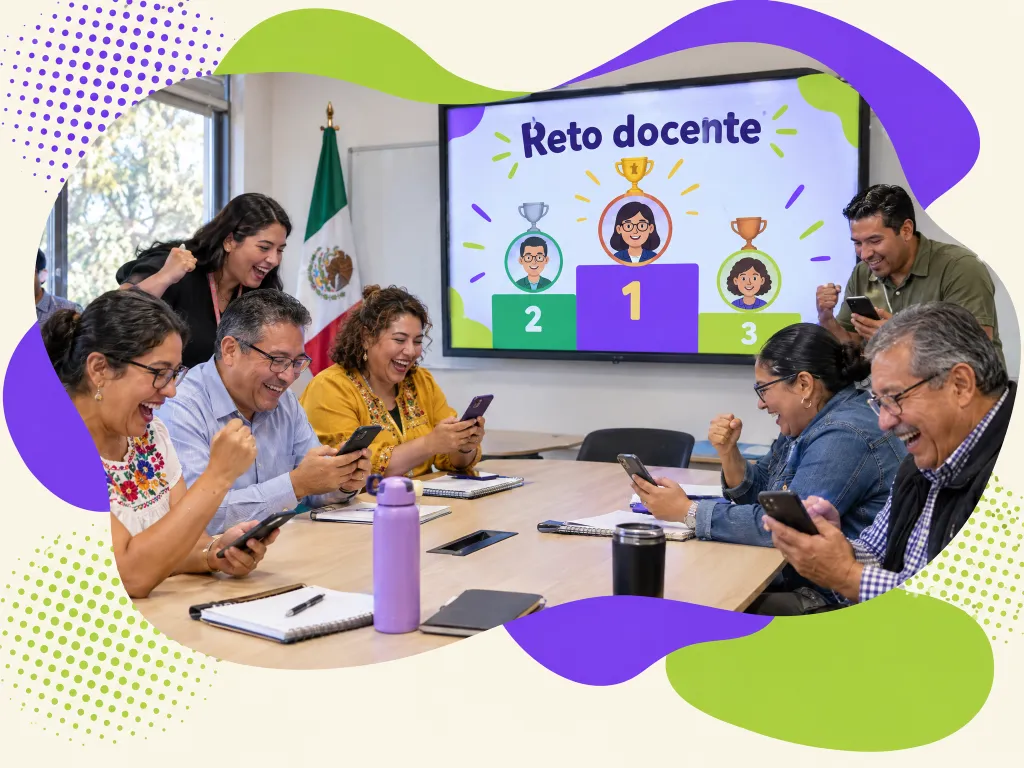
Challenges the faculty wants to play
Quizzes, missions, and leaderboards by team or by campus. Healthy competition sparks conversation among teachers and keeps participation up all year.

Platforms
Course production
Online course production
From content to SCORM, in your city
Instructional design for courses
Objectives, script and storyboard
Course content design
Writing, scripts and graphic design
Gamified courses
End-to-end SCORM production
Interactive videos
Decisions and assessment in video
Learning objects
Interactive micro-content
Moodle Plugins
Artificial intelligence
ISO 9001 — Quality
ISO 14001 — Environmental
ISO 45001 — Safety
ISO services
Formats
Learn
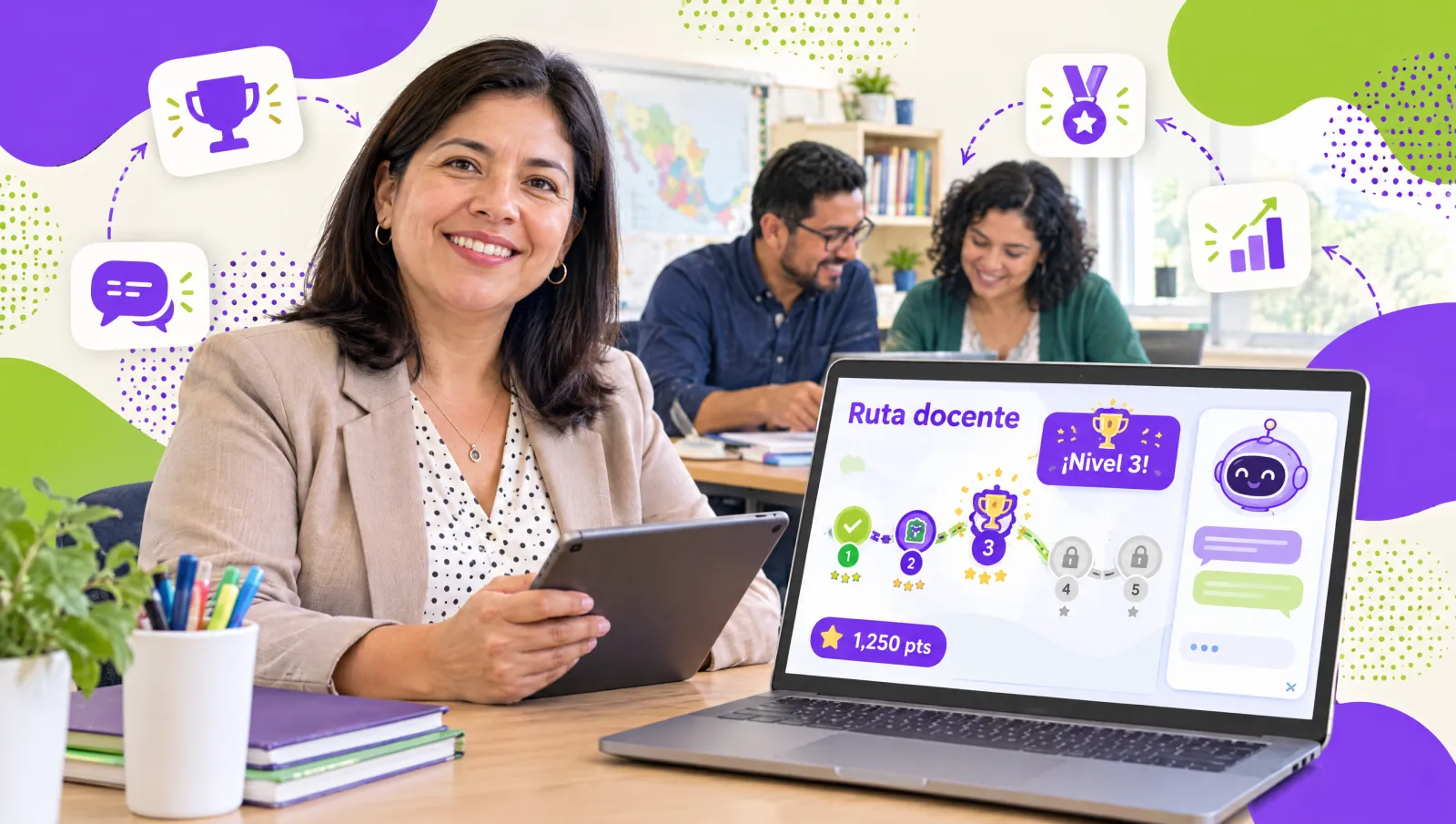
Professional development programs for K-12 teachers and university faculty that actually change what happens in the classroom: intuitive microlessons, gamified challenges, an artificial intelligence agent available 24/7, timely follow-up, and real incentives.
It is the set of processes through which teachers build and update their skills throughout their careers. Teacher education is comprehensive pedagogical preparation (what a teacher knows, does, and is); teacher training focuses on specific, updatable skills, such as a teaching method or a digital tool. Together they make up the continuing professional development that any school or university needs to sustain the quality of education and improve student learning.
Because it is usually designed as an event, not a process: a long course during a break or a one-day workshop, hours of theory, a certificate, and no follow-up. Without practice with a real class, without support, and without recognition, what was learned fades within weeks. Teachers say so themselves in needs assessments: they ask for less lecturing and more tools they can use, especially for curriculum co-design, formative assessment, and interdisciplinary work.
We turn it into a continuous, measurable process. Short paths teachers take at their own pace, challenges solved by applying ideas in class, an AI agent that supports them between sessions, follow-up alerts for the academic office, and incentives that recognize progress. The result is a faculty that takes part because it wants to, not because it has to, and evidence of what each teacher applied.
Online courses in 10-to-15-minute microlessons, hands-on workshops in person or live online, diploma-style programs in blocks across the school year, and instructional coaching with classroom observation. A typical path takes 2 to 3 hours a week for 4 to 8 weeks; an annual professional development program combines several paths and works around grading and end-of-term periods.
Participation can't be demanded: it has to be designed. These are the six principles behind every professional development path we build.
A platform that makes sense without a manual: teachers log in from a phone or computer, see their path, and know what comes next. No lost passwords, no endless menus.
Levels, points, badges, and team challenges. Game mechanics serve the learning goal instead of decorating it: every point is earned by applying something in class.
Every module ends with an activity the teacher uses with their own class: a lesson plan, a rubric, a teaching sequence. They learn by doing, with their subject and their students.
An artificial intelligence assistant trained on the program's content. It answers questions at any hour and jumps to the exact minute of the recorded session where the topic was explained.
Automatic reminders and alerts to the academic office when someone falls behind, before they drop out. Every teacher's and every campus's progress, in real time.
Recognition, digital micro-credentials, and rewards your institution defines. Effort becomes visible, gets celebrated, and counts toward professional development.
Five moments in a Geedle path, from the team challenge to the final recognition.
Quizzes, missions, and leaderboards by team or by campus. Healthy competition sparks conversation among teachers and keeps participation up all year.
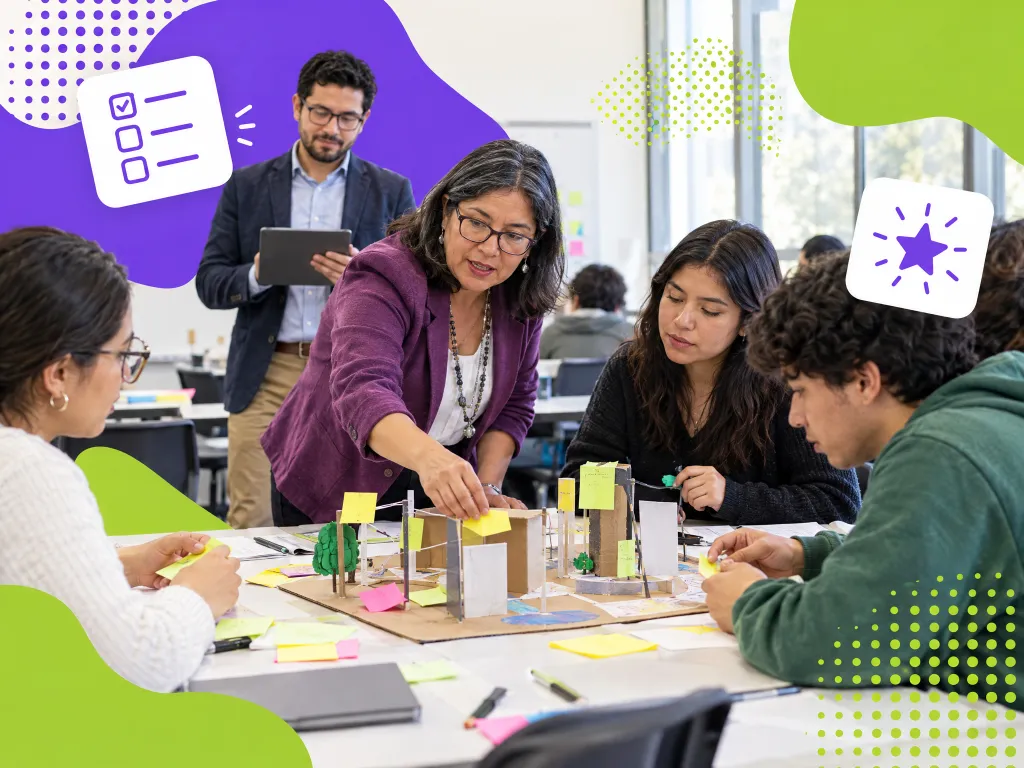
Every module ends with classroom evidence: a teaching sequence, an applied rubric, a project. The coach gives feedback on what happened in class, not on a quiz.
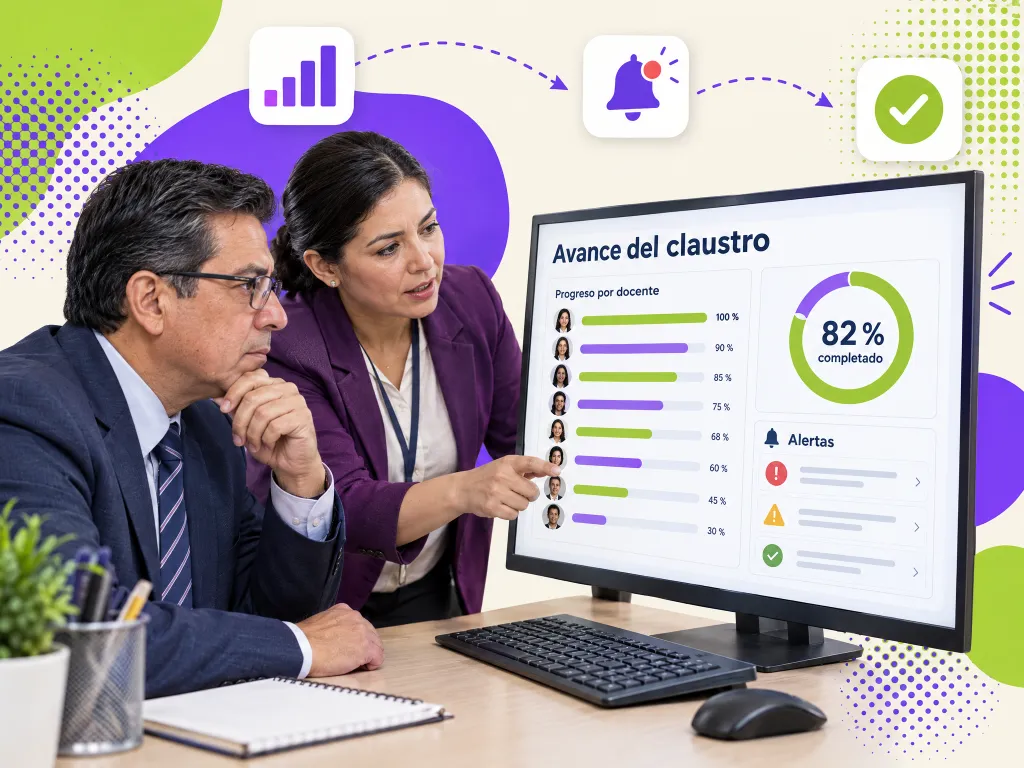
The academic office sees progress by teacher, group, and campus, and gets alerts when someone falls behind. Stepping in on time beats a report at the end of the course.
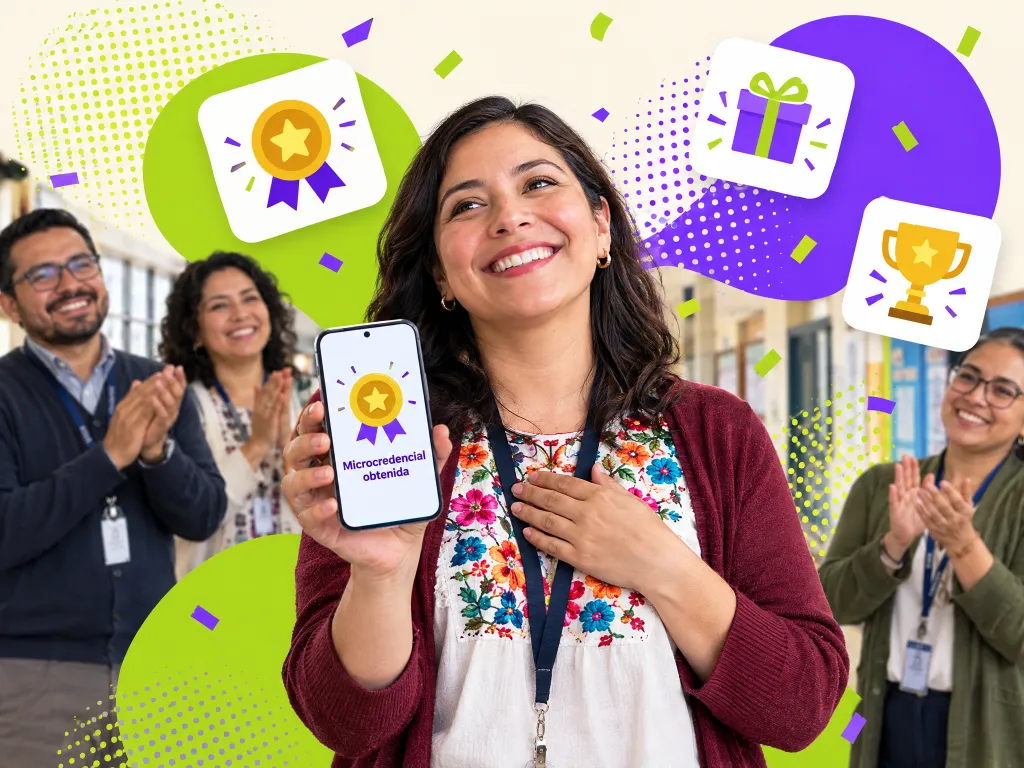
Digital micro-credentials, badges, and rewards your institution defines. Professional growth becomes visible and is celebrated as a community.
Levels, points, and the next challenge always in view, on a phone or a computer. Nobody has to ask what comes next or where the material was.
Each institution chooses its topics; these are the ones we are asked for most in Mexico.
Preschool, theementary, and middle school, public and private, under the New Mexican School's 2022 curriculum.
General and technical high schools, and schools with their own or affiliated programs.
Public and private universities, with full-time and adjunct faculty.
Principals, supervisors, and academic coordinators: the people who sustain change at each school.
Five stages, from needs assessment to impact evaluation. Each one delivers something concrete.
Faculty survey, interviews with leadership and, when needed, classroom observation. We identify real gaps in teaching skills, not assumed ones.
Assessment by level and campusWe define objectives, modules, classroom evidence, and game mechanics, all aligned with your educational model and, for K-9, the 2022 curriculum.
Path map and calendarAn in-person or live kickoff: teams, rules of the game, first challenges. Day one decides whether the faculty gets hooked.
Platform ready, faculty enrolledMicrolessons, hands-on sessions, and feedback on evidence. Geedle Bot answers questions 24/7 and the academic office gets follow-up alerts.
Biweekly progress reportsWe measure classroom application, not just attendance. We close with micro-credentials, recognition, and recommendations for next year.
Impact report and certificatesThe difference is not the syllabus: it is how the process feels and what remains afterward.
| Geedle path | Traditional course | |
|---|---|---|
| Format | 10-to-15-minute microlessons + hands-on sessions | Long sessions, mostly lecture |
| Motivation | Challenges, levels, teams, and incentives | Mandatory attendance and a certificate |
| Classroom application | Classroom evidence in every module, with feedback | Optional and untracked |
| Questions between sessions | Geedle Bot 24/7 with the exact minute of the recording | Wait for the next session, if any |
| Follow-up | Early alerts and a dashboard by teacher and campus | An attendance list at the end |
| Recognition | Digital micro-credentials and rewards | Certificate of attendance |
We help you answer that with a free assessment of your teacher development program, and design a path that leaves real evidence.
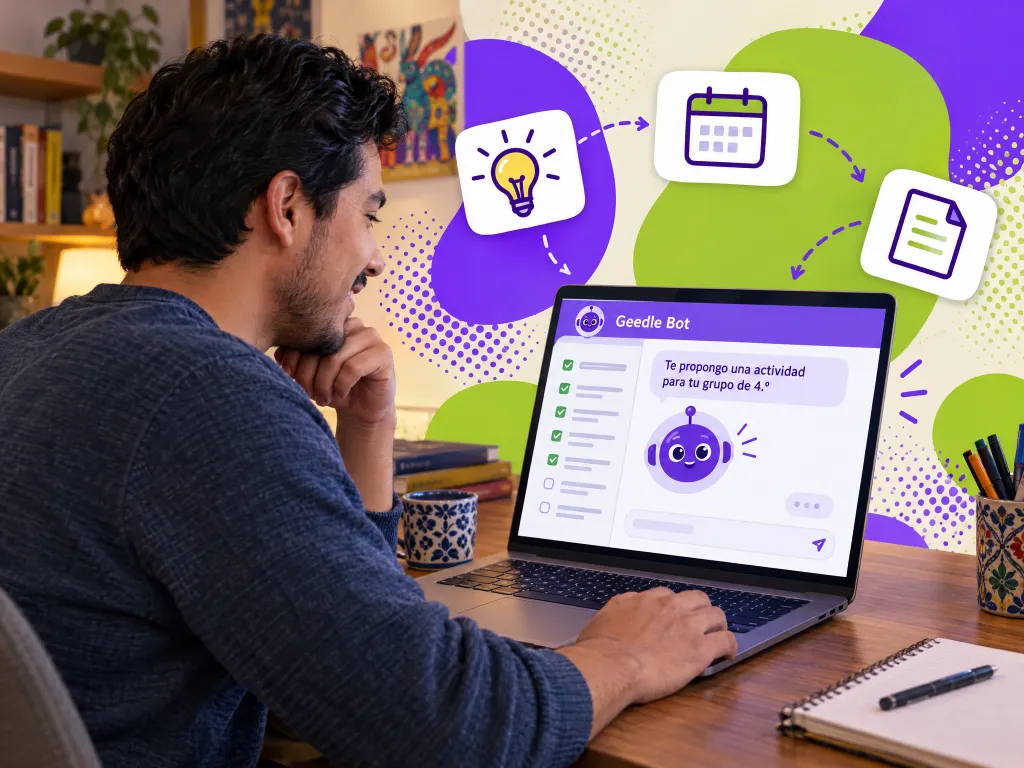
Training doesn't stop when the session ends. Geedle Bot is trained on your program's materials and recordings, and it supports each teacher whenever they need it.
The New Mexican School model asks teachers to co-design their analytical program, teach through projects, and assess formatively. Official programs from the SEP and each state are the foundation; our paths complement them for institutions that want their own program. We explain it in detail in continuing teacher education in Mexico.
AI is already in the classroom, whether teachers use it or not. We teach how to plan, create materials, and give feedback with AI without losing pedagogical judgment, and how to design assessments that cannot be solved by copying. Read our guide to artificial intelligence for teachers and meet Geedle Bot.
A good program starts with a needs assessment and ends with impact evaluation. We share the step-by-step in how to build a teacher training plan and the concepts in teacher education vs. teacher training. If you also need the platform, we handle Moodle implementation for your institution.
The same method with local support: in-person sessions where we have a team, and online across Mexico.
Tell us how many teachers, levels, and campuses you have. We'll reply the same day with a proposed path, free and with no commitment.