Meta Pixel Saltar al contenido
Geedle RolePlay · Internal auditor path · 6 scenarios

Role play for internal ISO 9001 auditors: practice the interview before you audit a colleague

The internal auditor course teaches the standard, the audit principles and how to plan the program. What it cannot teach in a classroom is what to do when the dispatch manager says everything is perfect and not a single record shows up, or when the audited manager walks out of the closing meeting. With Geedle RolePlay, your internal auditors practice the audit interview out loud with artificial intelligence auditees who evade, stall, get upset or cooperate too much, and receive a report on their questioning technique, their handling of evidence and the wording of their findings. Don't let your auditor's first difficult interview be with a coworker.

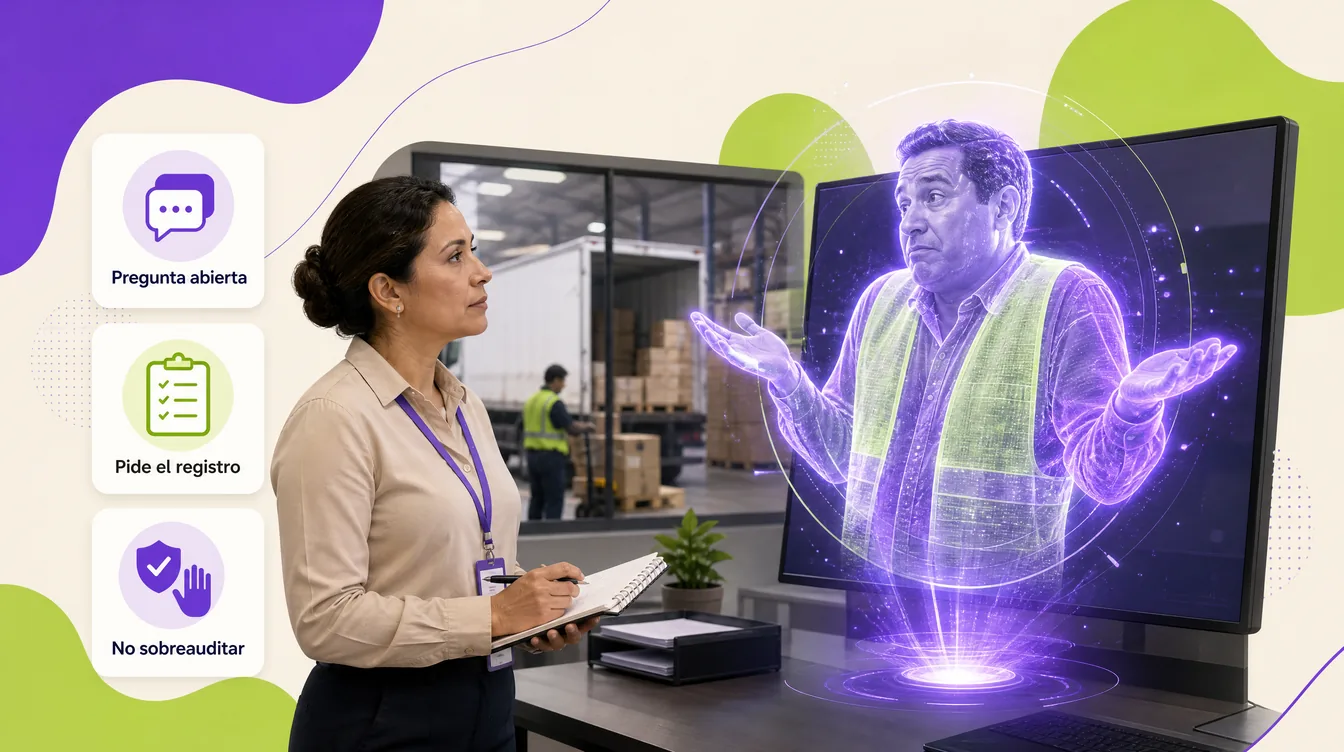
Internal auditor interviewing out loud an artificial intelligence dispatch manager who insists everything is perfect, with the interview rubric on screen

What is internal audit interview practice?

It is training for the part of the internal audit that happens in front of a person: opening the meeting, questioning in a funnel (from general to specific), asking for evidence with identifiers, listening, spotting a contradiction and stating the finding without intimidating. An ISO 9001 internal auditor course explains these techniques; Geedle role play puts them to the test with an AI auditee who reacts like a real person, and scores them with the same rubric for every auditor in your program.

Practice path

How do you practice the internal audit with the simulator?

A five-step path that follows the order of a real audit, from opening to closing. Each step uses one or two scenarios from the catalog and ends with a report the audit program coordinator can review.

  1. Open the meeting in ten minutes

    The lead auditor runs the remote opening meeting with the audited team: presents the objective, scope and criteria, confirms the agenda, explains how findings will be classified and answers questions without losing control of the time. It is the entry scenario, with the coach on.

    Scenario: Remote opening meeting in 10 minutes
  2. Learn not to over-audit

    Facing an operator, the internal auditor must verify the requirement at hand, acknowledge conformity when it exists and move on, without turning the interview into an interrogation or hunting for findings outside the scope. The micro-case is short and measures something courses rarely assess: when to stop.

    Scenario: Micro-case: don't over-audit
  3. Get the evidence out of an evasive auditee

    The buyer answers in generalities, changes the subject and asks to “send it later”. The auditor practices the funnel: open question, follow-up question, closed question with an identifier (“show me this quarter's evaluation of the fuel supplier”) and records what did not appear without giving in to the delay.

    Scenario: The evasive auditee and the staller
  4. Spot the process with no records and follow up

    With the dispatch manager who insists everything is perfect, the auditor samples specific records and states the finding with location, criterion, condition and evidence. Then, with the maintenance manager, verifies whether the corrective action from the previous audit was effective or just closed on paper.

    Scenarios: “Everything is perfect” and Following up on a corrective action
  5. Close with a hostile auditee in exam mode

    The difficulty-5 scenario is done without the coach and with a minimum score. The audited manager disputes the evidence, questions the auditor's competence and asks for the nonconformity to be downgraded to an observation. The score comes from the server and stands as evidence of the auditor's competence for your audit program.

    Scenario: The hostile auditee at the closing meeting

Can't find the scenario your team needs? We build it with you

Tell us the conversation that costs you the most and share your procedures, your product and your real objections. We design the character, the hidden information, the rubric and the evidence, pilot it with your team and leave it ready to assign.

Why practice with an AI auditee?

Why practice with an AI auditee instead of only in the classroom?

Six reasons why spoken practice complements the internal auditor course.

Auditees with personality

Quiet, talkative, evasive, hostile or overly cooperative: the character has a personality and an emotional thermometer that shifts with the auditor's tone. In the classroom, the colleague playing the auditee almost always cooperates; here they don't.

Hidden information and sampling

The auditee knows which records exist and which do not, and only reveals it when the auditor asks for concrete evidence, with a date, unit or shipment number. That is how you practice sampling with identifiers instead of accepting a “yes, we have it”.

Interview technique rubric

The report scores the sequence of questions (open, follow-up, closed), whether the auditor leads the answer, how much they talk compared to the auditee, how they handle the evidence and how they state the finding. These are the criteria an audit program coordinator wants to see, measured the same way for everyone.

With your procedures and your checklist

Upload your internal audit procedure, your checklist and the procedures of the audited processes. The AI auditee answers with your context and the rubric can be adjusted to your finding format.

Recommendations with a source

Every area to improve in the report relies on a source from the Geedle RolePlay evidence library, which includes literature on audit interview technique, remote auditing and root cause analysis. The auditor sees where the recommendation comes from.

Evidence for your audit program

ISO 9001 requires objective and impartial auditors and evidence of their competence. Exam mode leaves a score by criterion, in PDF and exportable, that complements the course certificate in each internal auditor's file.

Report for each auditor

What does each internal auditor receive when the interview ends?

A report of their own with the same rubric as the rest of the audit team, so the program coordinator knows who can already audit alone and who should shadow an experienced auditor.

  • Score by criterion: question sequence, handling of evidence, listening, time control and wording of the finding
  • Key moments of the transcript: the leading question, the record they never asked for, the generality they accepted
  • How they could have asked it, with the source of each recommendation and a model answer in “See how it's done”
  • Comparison with their previous attempt and with the other auditors in the program
  • PDF report for the auditor's competence file
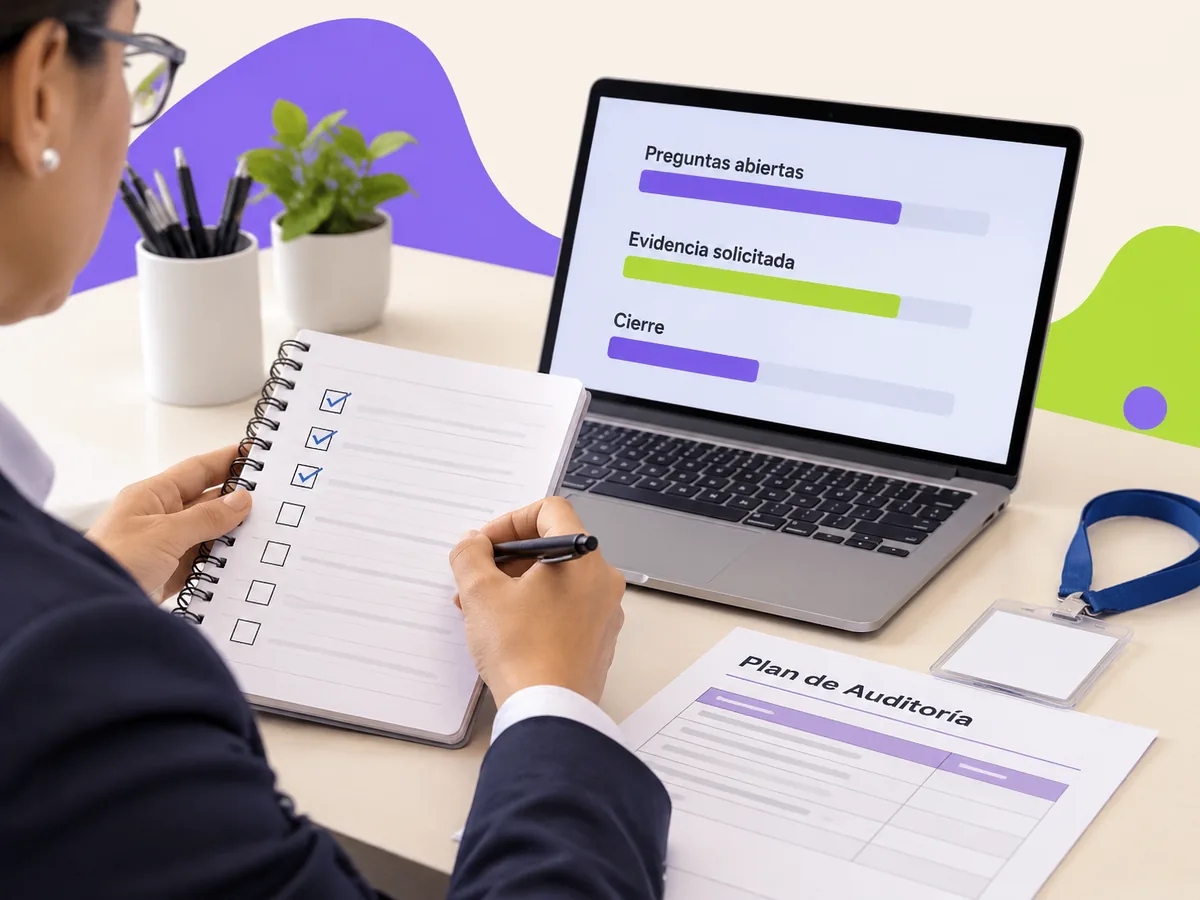
Report of a simulated internal audit interview: score by criterion of the interview technique, key moments and comparison with the previous attempt
01

What happens in “Everything is perfect”: a process with no records?

It is the most representative scenario of the path (difficulty 4). Your team member practices as internal auditor and interviews the dispatch manager of a refrigerated freight carrier. The character is self-assured and friendly: he insists that unit assignment, the temperature check before loading and the log of every trip are done “always, without fail”. What the auditor does not know is that the procedure requires a temperature verification record per shipment and that, in the audited period, that record does not exist for several units. If the auditor accepts the generality or asks a leading question (“you do record the temperature, right?”), the character happily confirms and the interview ends with no findings and a poor score. If the auditor questions in a funnel and samples with identifiers (“show me the temperature record for Tuesday's shipment to Monterrey”), the dispatch manager starts to evade, blame the driver and offer to send it later. The rubric measures the question sequence, whether the auditor insists respectfully, whether they separate what they saw from what they were told and how they state the finding: location, criterion (the clause and the procedure), condition found, evidence and frequency. At the end, the report shows the exact question that lost or recovered the interview. To go deeper, read interview techniques for internal auditors.

02

How do you handle the hostile auditee at the closing meeting?

It is the difficulty-5 scenario and the one no course can reproduce faithfully. Your lead auditor presents the findings to the audited manager, who arrives upset: interrupts, questions the auditor's competence (“how many audits have you done?”), disputes the evidence and asks for the nonconformity to be downgraded to an observation “because we are already fixing it”. The character escalates if the auditor gets defensive, calms down if the auditor listens and returns to the evidence, and holds a valid argument (a record the auditor did not review) that it only brings up when asked. The rubric rewards the auditor for upholding the audit principles (fair presentation, evidence-based approach), explaining the criterion without arguing, not reclassifying a finding under pressure and closing with agreed actions and deadlines. At the opposite extreme is the “don't over-audit” micro-case: an operator who complies and an auditor who, eager to find something, keeps asking outside the scope. Two sides of the same competence: firmness with evidence and respect when there is conformity.

03

Does role play replace the ISO 9001 internal auditor course?

No. The internal ISO auditor course teaches the ISO 9001 requirements, the ISO 19011 guidelines for auditing management systems, program planning, the checklist and the audit report. Without that, the auditor does not know what to ask. Role play trains what the course can only describe: how to ask, how to listen and how to hold a finding in front of a person who does not want to hear it. The recommended path is to take the ISO 9001 internal auditor course, practice the six scenarios in practice mode, shadow an experienced auditor during the first real audit and repeat the hostile auditee scenario in exam mode before leading one. If your company prefers a third party to run the internal audit, Geedle's ISO 9001 internal audit service does it with your team; and if what you need is to prepare the people who will be interviewed, the right path is the ISO 9001 audit role play for auditees. The scenarios follow the clauses of ISO 9001:2015, the edition that applies during the transition, and are being adjusted to ISO 9001:2026; see the guide to the ISO 9001:2026 transition.

Who it is for

Who is the internal auditor role play for?

For the whole audit team, not only for the person who just completed the course.

Lead auditor running a closing meeting with an artificial intelligence audited manager who disputes a finding, with the emotional thermometer on screen

Newly trained internal auditors

They took the course and have their certificate, but have never interviewed a colleague who evades or gets upset. They practice the interview technique before their first real audit.

  • Question funnel
  • Sampling with identifiers
  • Wording of the finding
  • First audit

Lead auditors and coordinators

They run the audit program, open and close the meetings and defend the findings before management. They rehearse the remote opening and the hostile closing meeting.

  • Opening meeting
  • Closing meeting
  • Classifying findings
  • Follow-up of actions

Quality managers

They coordinate the program, evaluate auditor competence and need objective evidence of who can audit alone.

  • Auditor competence
  • Exam mode
  • Heat map
  • PDF file

ISO consultants and trainers

They train internal auditors for their clients and want to give them measurable practice between the classroom session and the real audit.

  • Assigned practice
  • Report per participant
  • Scenarios with the client's procedures
  • Integrated systems

Do your internal auditors find what is there, or what the auditee wants to show them?

Book a Geedle RolePlay demo: hear an AI auditee dodge a question and see how the report scores your audit team's interview technique.

How do you handle each type of difficult auditee?

The ISO 19011 guidelines describe the ideal auditor; practice teaches you to deal with real auditees. This table summarizes the signs of each type, the technique the simulator trains and the scenario where it is practiced.

Type of auditeeHow it shows in the interviewTechnique the simulator trainsScenario
The one who says everything is perfectAnswers confidently and in generalities; never mentions a problem or an exceptionSampling with identifiers: ask for the record of a specific date, unit or shipment“Everything is perfect”: a process with no records
The evasive oneChanges the subject, answers a different question, talks about how well another process worksQuestion funnel: open, follow-up and closed; calmly return to the original questionThe evasive auditee and the staller
The staller“I'll send it later”, “my colleague has it”, “the system is slow”Record what was not shown as evidence not presented and agree on a deadline within the auditThe evasive auditee and the staller
The hostile oneInterrupts, questions the auditor's competence, disputes the evidence and asks to reclassify the findingListen, return to the criterion and the evidence, do not reclassify under pressure and close with agreed actionsThe hostile auditee at the closing meeting
The quiet oneAnswers in monosyllables and waits for the auditor to fill the silenceOpen questions, pauses and asking them to show how they do it instead of explaining itAny scenario with the personality adjusted
The over-cooperative oneTalks nonstop, offers documents nobody asked for and uses up the interview timeControl the time, close kindly and verify only what is within the scopeMicro-case: don't over-audit and Remote opening meeting
Try it now · 2 free minutes

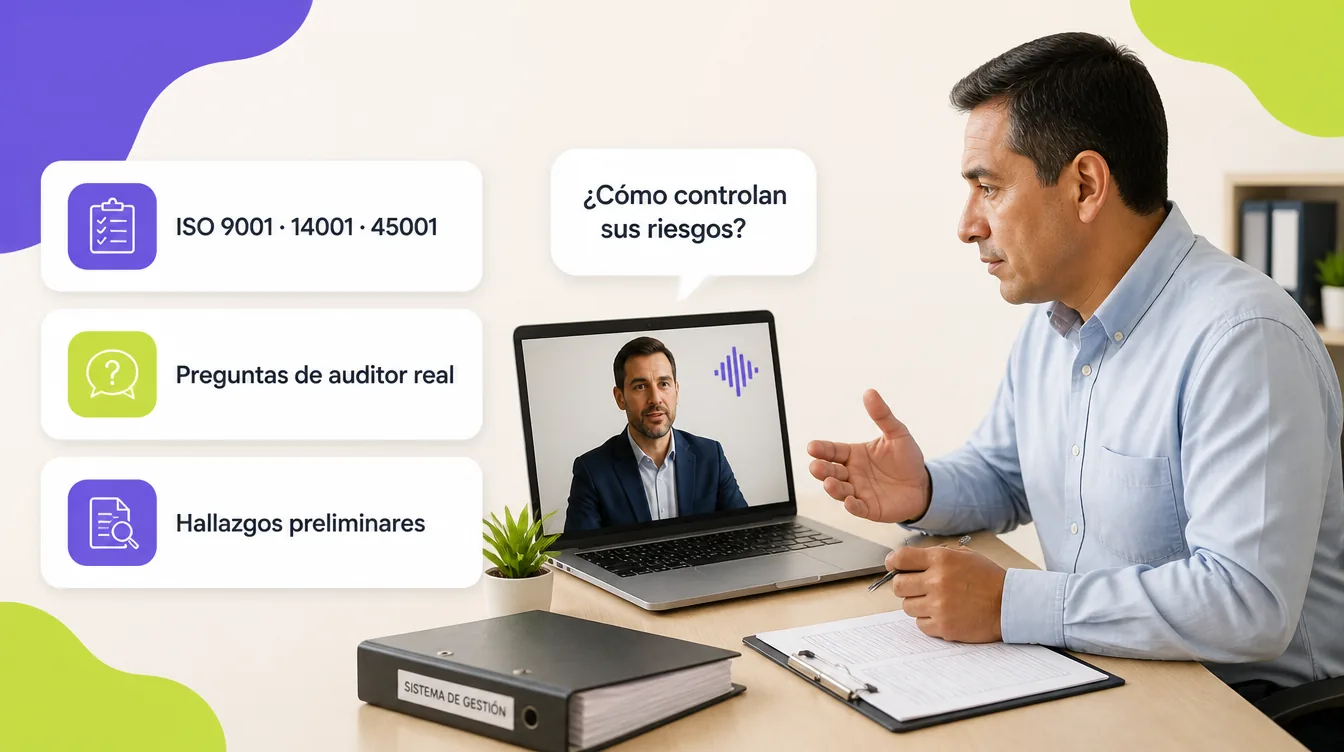
Talk to the AI iso auditor with avatar

A simulated audit interview: ISO 9001, 14001 or 45001, with preliminary findings.

  • Pick the standard (9001, 14001 or 45001) and say what your company does.
  • It asks what an external auditor would: context, risks, evidence, indicators.
  • It closes with two or three preliminary findings and the free assessment invitation.

No account. Voice and a real-time face in your browser; to continue past two minutes it asks for your name and email.

Virtual ISO auditor avatar interviewing a quality manager
Case studies

Projects we have already delivered

Real projects told with facts, not promises.

Corporate university

A gamified corporate university for a sushi restaurant chain in Mexico and the US

Train crews spread across restaurants in several Mexican states and the United States with the same standard — and give every employee a clear view of how to grow inside the company.

Read the full case
  • One team from start to finish. Pedagogy, design, development and consulting — nothing critical subcontracted.
  • Fixed price, no surprises. A proposal with three scopes and a closed price for each. You choose the size of the step.
  • We listen before we quote. A free, no-strings assessment: you keep a useful report even if we don’t work together.
FAQ

Frequently asked questions about internal audit interview practice

Let your internal auditors practice with a difficult auditee before sitting down with a colleague

Tell us how many auditors you have, when your next audit cycle is and what they struggle with most: asking, requesting evidence or holding the finding. We reply the same day with a Geedle RolePlay demo.

Enter the VIP Zone

Geedle clients only. No passwords: we send a code to your email.

or

Not a client yet? Request your free diagnosis · Privacy notice

Choose your assessment

Answer 8 questions in 3 minutes and get your result with recommendations from a consultant.