ISO 9001:2026 certification for a trailer transport company
Bring an operation that lives on the road under a quality management system that meets the new ISO 9001:2026 and passes the certification audit.
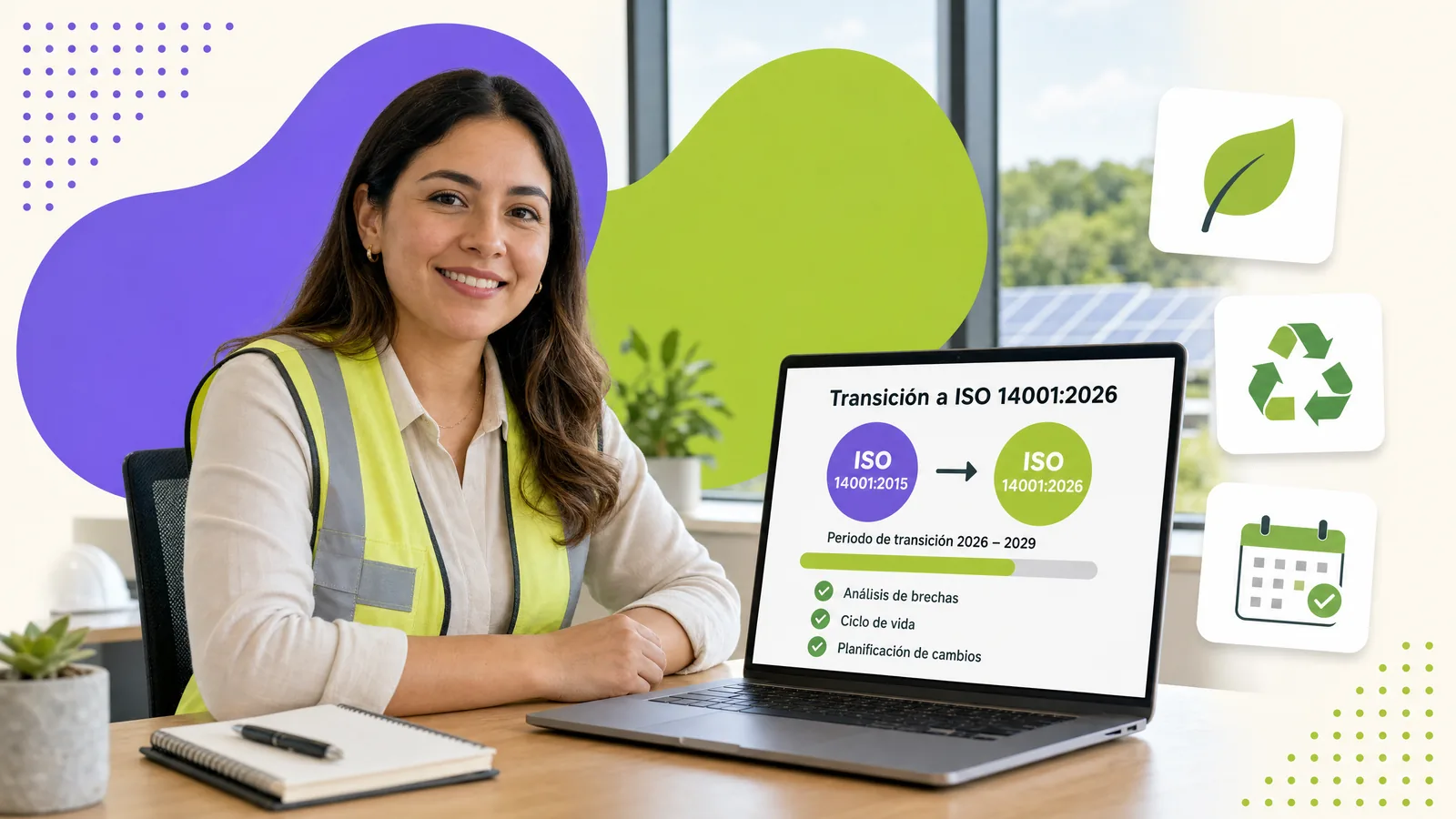
Read the full caseISO 14001:2026 was published on 15 April 2026 and ISO 14001:2015 certificates stop being valid on 30 April 2029. We help you transition your environmental management system without rebuilding it: gap analysis against the new requirements, updating what actually changes, team training with DC-3 records and an internal audit against the 2026 edition before your transition audit.

It is the process by which an organization certified to ISO 14001:2015 adjusts its environmental management system to the new edition of the standard and demonstrates it to its certification body in a transition audit. ISO 14001:2026 is a moderate revision: it keeps the ten-clause layout, the PDCA cycle and the risk and opportunity approach. What changes is the scope of the environmental context (climate change, biodiversity, pollution and resource availability), the life cycle perspective, a new planning of changes requirement and more precise rules for internal audit and management review. The transition rules are set by Global ACI, the body that replaced the IAF: three years, until 30 April 2029. Updated 15 October 2026.
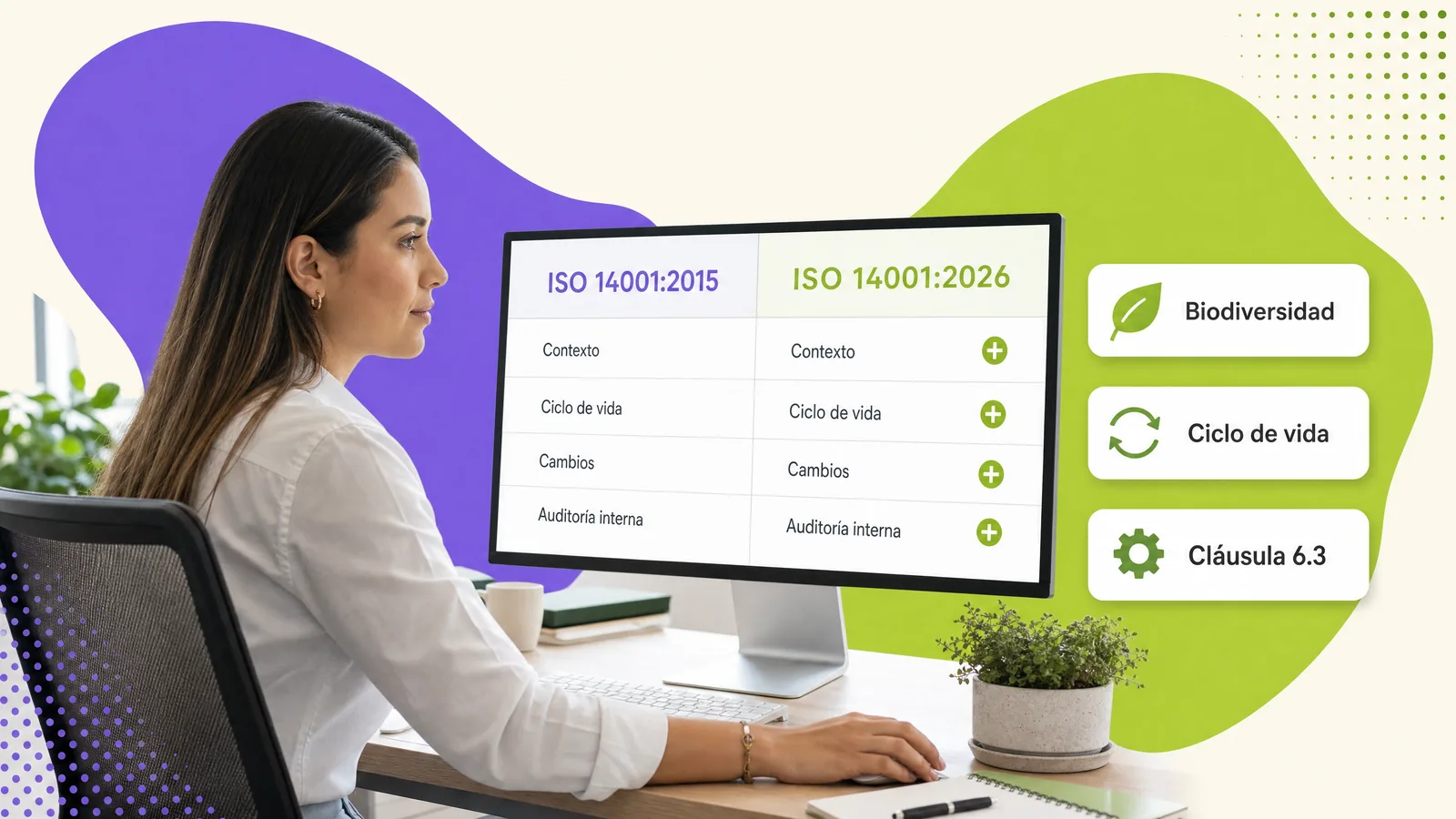
The changes confirmed in the published standard. Only two requirements are genuinely new (6.3 and 9.2.2); the rest are extensions and clarifications of what your environmental management system already does.
Besides climate change you must consider biodiversity and ecosystem health, pollution and the availability of natural resources, and which climate-related requirements your interested parties have.
The identification of environmental aspects clarifies the life cycle perspective and explicitly covers abnormal conditions and potential emergency situations.
Determining risks and opportunities is separated from planning actions. A context issue does not automatically become a risk: it has to be evaluated.
Changes that affect the environmental management system are planned and managed systematically, as ISO 9001 and ISO 45001 already required.
Operational control moves from “outsourced processes” to all externally provided processes, products and services. Each internal audit must have defined objectives in addition to scope and criteria.
Top management supports leadership in all relevant roles (5.1); management review is organized into general, inputs and outputs (9.3); Annex A was thoroughly revised with practical guidance.
A well-planned transition touches few things. Before rewriting procedures it pays to know what stays exactly the same in your environmental management system.

The order we follow so the transition happens inside your normal audit cycle, with no parallel project and no extra audit days.
We compare your environmental management system with ISO 14001:2026 clause by clause and prioritize what actually needs work.
Deliverable: gap report and transition planWe broaden the context analysis (climate, biodiversity, pollution, resources) and review the aspects register with a life cycle perspective, abnormal conditions and emergencies.
Deliverable: updated context and aspects registerWe separate the determination of risks and opportunities from the actions, create the planning of changes procedure and extend operational control to external products and services.
Deliverable: updated procedures and controlsISO 14001:2026 update course for process owners and internal auditors, with DC-3 records.
Deliverable: trained staff with evidenceInternal audit with defined objectives against the 2026 edition and management review in the new inputs-and-outputs format.
Deliverable: system ready for the transition auditTimeline from the mandatory document Global ACI-TECH-3-TR 2029-04-30 (M). Your certification body may set earlier internal dates: confirm them.
| Milestone | Date | Status |
|---|---|---|
| Publication of ISO 14001:2026 | 15 April 2026 | Published |
| Accreditation bodies ready to assess the 2026 edition | 31 October 2026 | Official |
| Accreditation decisions for certification bodies completed | 30 April 2027 | Official |
| Last date for an initial certification to ISO 14001:2015 | 30 October 2027 | Official |
| ISO 14001:2015 certificates no longer valid | 30 April 2029 | Official |
Request the gap analysis: in a few days you know which clauses affect you and how much work it means, with three fixed-price scopes.
You can hire the full support or just one piece: the ISO 14001:2026 gap analysis, the environmental legal requirements register, the update and internal auditor courses with DC-3, the ISO 14001 internal audit against the new edition or the system maintenance retainer. If you are not certified yet, direct ISO 14001:2026 certification skips the 2015 edition altogether.
ISO 9001:2026 was published on 16 September 2026 with its own timeline: if your environmental system lives next to a quality system, plan the ISO 9001:2026 transition in the same audit and consider an integrated management system. On the blog: ISO 14001:2026 changes clause by clause, the step-by-step transition plan and the official timeline for both standards. We have already taken a trucking company to ISO 9001:2026 certification: read the case study.
The same transition plan, applied to the industry and environmental requirements of each location.

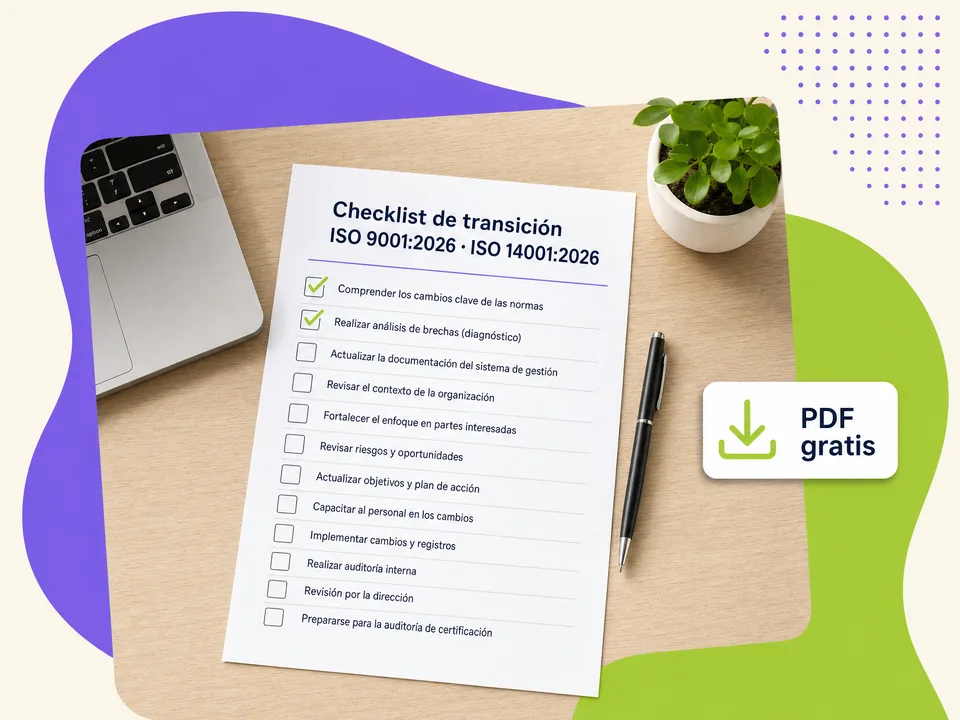
Official Global ACI dates and the points the transition auditor will review, clause by clause, for both standards. Tick only what you can evidence.
Not on paper: a trailer transport company, with operations on the road, passed its certification audit with our consulting and follow-up.
Bring an operation that lives on the road under a quality management system that meets the new ISO 9001:2026 and passes the certification audit.
Read the full caseStart with the gap analysis: we tell you what changes in your environmental management system, how much work it means and in which audit the transition should happen.