Post-tour satisfaction survey: the exact questions, scales and how to automate it on WhatsApp
A post-tour satisfaction survey changes the moment you learn about a problem: the same day, with the traveler still at the destination and time to fix it, instead of on their return, in a public review. This article gives the exact questions, the scale, the sending moment, what to do with a low rating and how to turn good ones into Google reviews and the next trip.
In this article
- Why does an end-of-trip survey arrive too late?
- What to ask at the end of each tour and on which scale?
- When should you send the survey so people answer it?
- What to do with a low rating the same day?
- How are ratings per guide and supplier used?
- How do you turn a good experience into a review and the next trip?
- I want my travel agent: how do we start?
Why does an end-of-trip survey arrive too late?
Because it mixes everything: Monday's excellent guide with the van that did not show up on Wednesday, and the average tells you neither what to fix nor with whom. Besides, the traveler is already home, the annoyance has become a review and the supplier that failed has already been paid. Asking at the end of each tour separates the experiences, points to the specific guide or supplier and gives you the chance to solve it at the destination. The full service is at per-tour survey and after-sales.
What to ask at the end of each tour and on which scale?
One one-tap question and one optional. The first: “How was [tour]? Rate it 1 to 5” with five buttons or stars. The second, only if they want: “Anything we should know?”. Nothing else. Long surveys are ignored on vacation; the one-tap one is answered while walking to the bus. The recommendation question (0 to 10) is saved for the end of the trip, once.
| Moment | Question | Scale | What it is for |
|---|---|---|---|
| At the end of each tour | How was Chichén Itzá? | 1 to 5 (one tap) | Rating per tour, guide and supplier |
| At the end of each tour (optional) | Anything we should know? | Free text | Spot the concrete problem the same day |
| At the end of the trip | How likely are you to recommend us? | 0 to 10 | Overall recommendation and review |
| At the end of the trip | What was the best part and what would you change? | Free text | Improve the package and the next destination |
| One week later | Would you leave us a Google review? | Link | Public reputation, only to those who rated well |
When should you send the survey so people answer it?
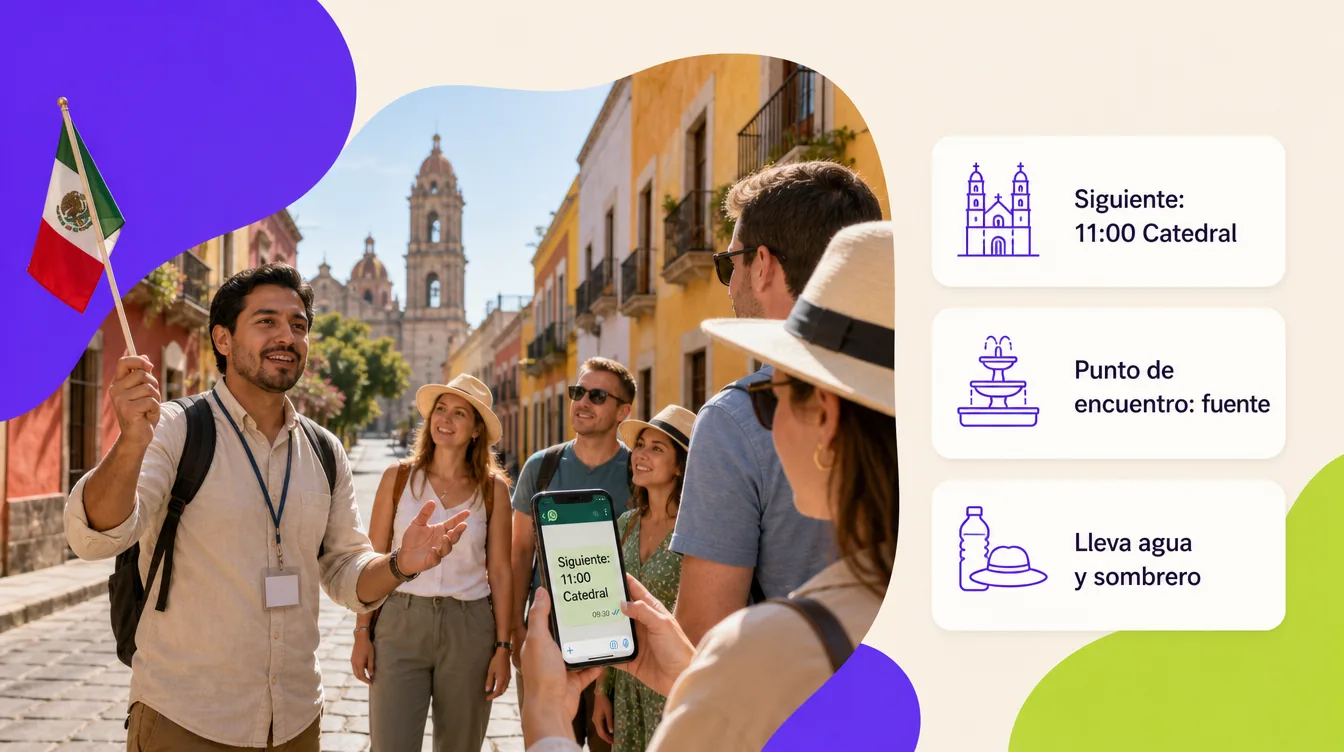
Between 15 and 45 minutes after the tour ends, when the traveler is already heading back or resting, and never in the middle of the next leg. If the day has four tours, each survey arrives in its gap; the last one can go together with tomorrow's summary. The agent knows when each leg ended because it reads the same itinerary it uses to accompany the traveler day by day.
- Morning tour: survey before lunch.
- Afternoon tour: survey on arrival at the hotel, together with tomorrow's itinerary.
- Long transfers: a single question about the transfer, not one per stop.
- Last day: the tour survey plus the recommendation question.
What to do with a low rating the same day?
Act in minutes, not in Monday's report. A rating of 1 or 2, or a comment with words like “late”, “dirty”, “rude” or “not included”, goes immediately to the coordinator with the traveler's name, the tour, the guide and the supplier. The coordinator writes or calls, listens, solves what can be solved (a seat change, an apology, a small touch at dinner) and the agent logs the closure. A problem solved at the destination usually ends in a good review; an ignored one, in a bad one.
- Instant alert: the coordinator gets the case with context, not an average.
- Human reply: the agent does not apologize on the agency's behalf or offer compensation; it opens the door and the person walks in.
- Logged closure: what was done and whether the traveler was satisfied.
- Pattern: if the same supplier drops three times in a month, the dashboard shows it.
How are ratings per guide and supplier used?
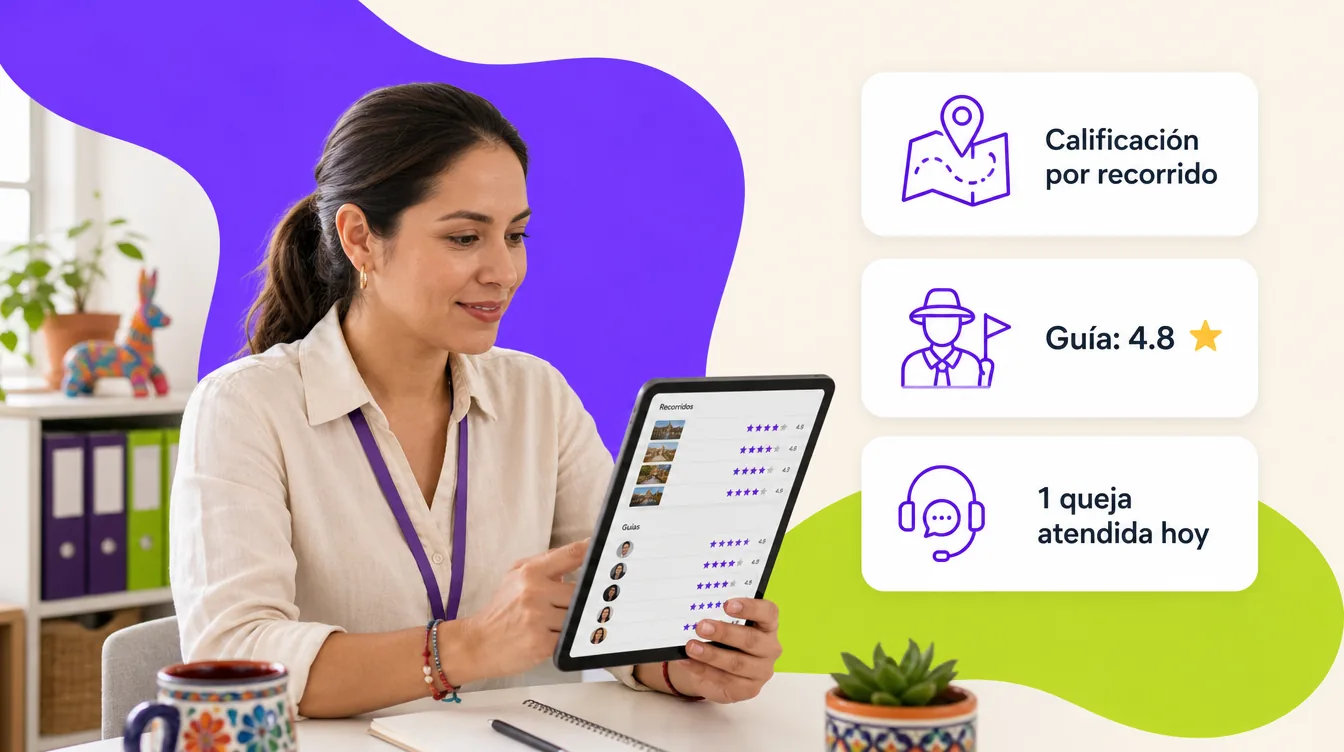
To decide with data what is decided today by impression: which guide comes back, which transport company is replaced, which restaurant leaves the package and which tour sells best. The dashboard accumulates average rating and comments per guide, per supplier and per tour, and coordinators see the day's open complaints. No need to invent indicators: the one-tap rating and the free comment are enough to operate.
How do you turn a good experience into a review and the next trip?
Those who rated well are asked, a week later, for a Google review with the direct link; they get the group's photo album; and, when the time comes, the agent proposes the next destination based on what they already traveled and opens the quote. Those who rated poorly are not asked for a review: their issue is solved. That closing of the loop is what separates an agency that sells trips from one with travelers who come back. How that cycle starts at the first quote is explained in the 9:07 p.m. traveler and the CRM's role in AI agent vs CRM for travel agencies.
I want my travel agent: how do we start?
Write the one-tap question for your best-selling tour and decide who gets the alert when someone gives a 2. The rest is automation. Tell us how many travelers you move each month and what they ask most in the “I want my travel agent” form: we propose the scope of the first agent (quotes, payments, day-by-day itinerary or per-tour survey) with the calendar and the payment gateway your agency already uses. If you would rather feel it before talking to anyone, upload an itinerary or your package list to the trial bot and ask it what a traveler would ask you. The full service is at AI agent for travel agencies.