AI agent vs CRM for travel agencies: what you need first and how they work together
When an agency searches for a “CRM for travel agencies” it almost always has a different problem than it thinks: it does not lack organized data, it lacks someone who answers. The CRM stores and organizes; the AI agent talks, collects and accompanies. This comparison explains what each solves, in what order to adopt them depending on your agency's size and how they work together once you have both.
In this article
What does a CRM do in a travel agency?
A CRM stores every prospect and customer with their history: what they quoted, what they bought, when they travel, what they paid and what is pending, which funnel stage they are in and who owns the follow-up. It keeps information from living in each advisor's phone and lets the owner see the whole funnel. What a CRM does not do on its own is answer the traveler: someone has to write every message.
The CRMs agencies use most are general sales-and-marketing tools with some tourism template; some conversational ones already include WhatsApp as a shared inbox. In every case the conversation remains manual.
What does an AI agent do that the CRM does not?
The AI agent talks to the traveler: it answers the quote at nine at night, sends the payment link and the reminder, delivers the itinerary every morning, answers “what time is the pickup?” with the real itinerary and asks how the tour went. Everything it talks about, it logs; that is why an agent without a CRM ends up needing one, even if it is a well-built spreadsheet.
- 24/7 quotes with your ranges and packages, leaving complex cases to the advisor (how it works).
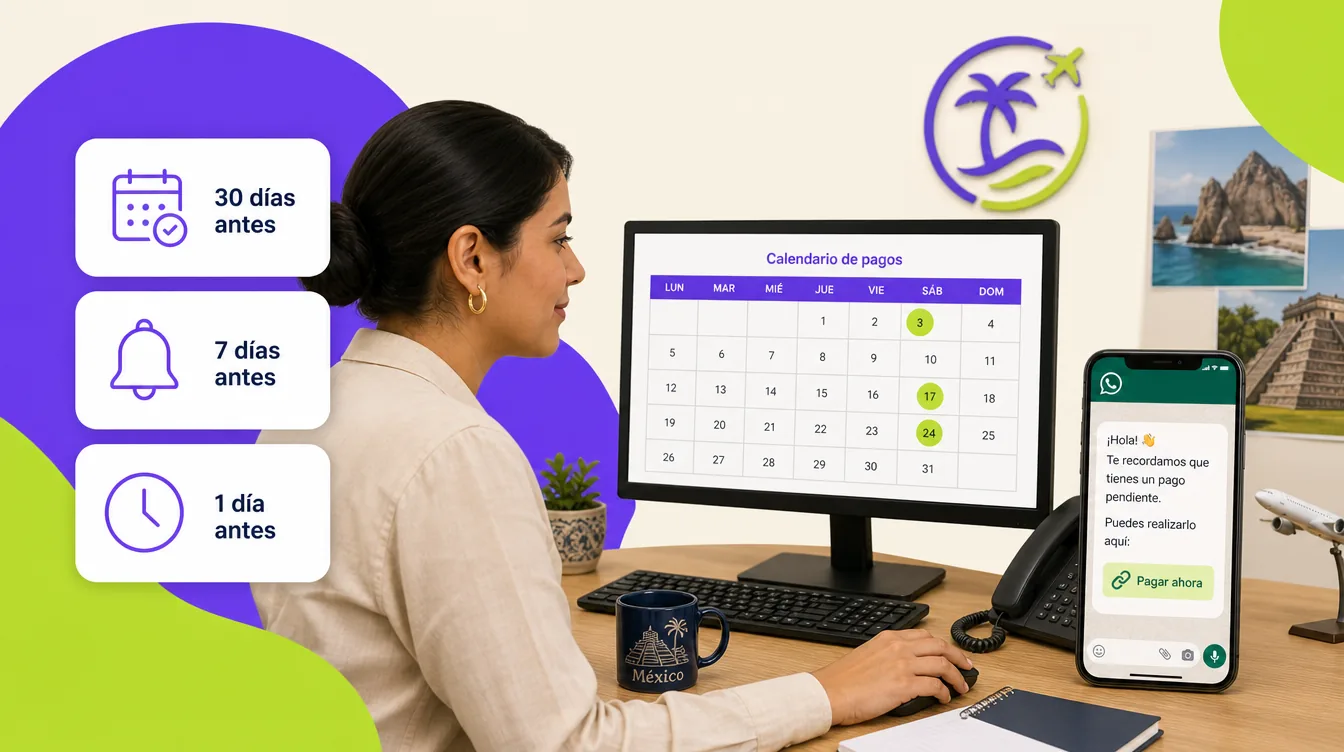
- Collection with reminders at T-30, T-7 and T-1, payment link and receipt (payment reminders).
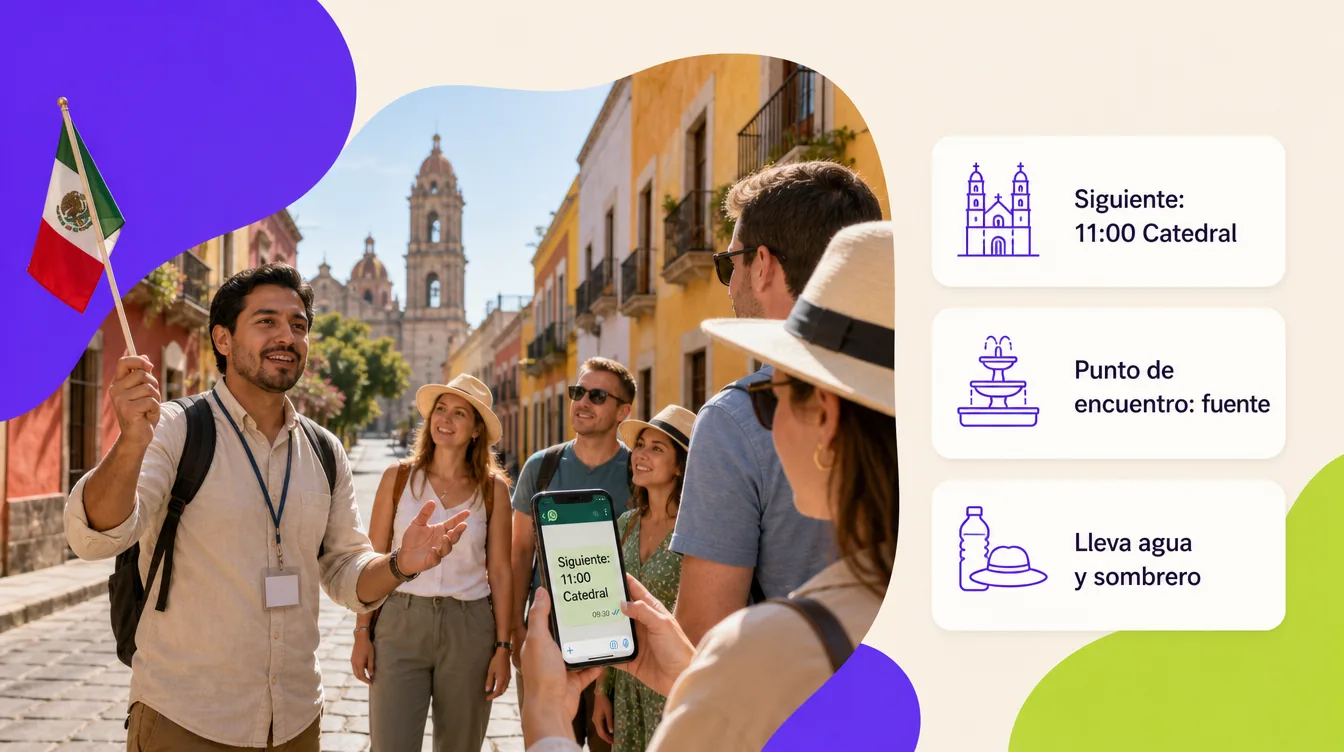
- Day-by-day and leg-by-leg itinerary, with several tours on the same day (trip companion).
- Per-tour survey and after-sales: review, album, next destination (survey and after-sales).
- Handoff to a person with full context when the case calls for it.
CRM or AI agent: what does each solve?
The table sums up the difference: the CRM is memory and order; the agent is conversation and action. Neither replaces the other, but they do change the order in which to adopt them depending on where it hurts today.
| Agency need | CRM | AI agent |
|---|---|---|
| Know which stage each prospect is in | Yes, that is its job | Logs it, but the CRM shows it better |
| Answer quotes after hours | No | Yes, with your ranges and packages |
| Remind payments and confirm receipts | Alerts the advisor to write | Writes to the traveler with a payment link and confirms |
| Send the itinerary and remind each leg | No | Yes, every morning and before each tour |
| Survey after each tour | End-of-trip survey, if configured | One tap at the end of each visit, with an instant alert |
| Funnel and team reports | Yes | Reports conversations, complaints and ratings |
| Replace the advisor on complex cases | No | No: it escalates them with context |
What do you need first depending on your agency's size?
It depends on where the money leaks. If you lose quotes by not answering, the agent comes first and an organized spreadsheet acts as the CRM at the start. If you already answer fast but the team steps on each other, drops follow-ups or does not know who paid, the CRM comes first. If you have more than one coordinator at the destination and several groups at once, you need both and the agent is the one that gives back the most hours.
- Agency of one to three people: agent first. The pain is nights and weekends; the records can live in a spreadsheet while you grow.
- Agency with a sales team: CRM first if the problem is follow-up; agent afterwards for 24/7 quotes and payments.
- Operator with groups at the destination: agent first for the leg-by-leg itinerary and the per-tour survey; the CRM organizes after-sales.
- Agency that already has a CRM: the agent connects to it and feeds it on its own; it is the shortest scope.
How do the CRM and the agent coexist when you have both?
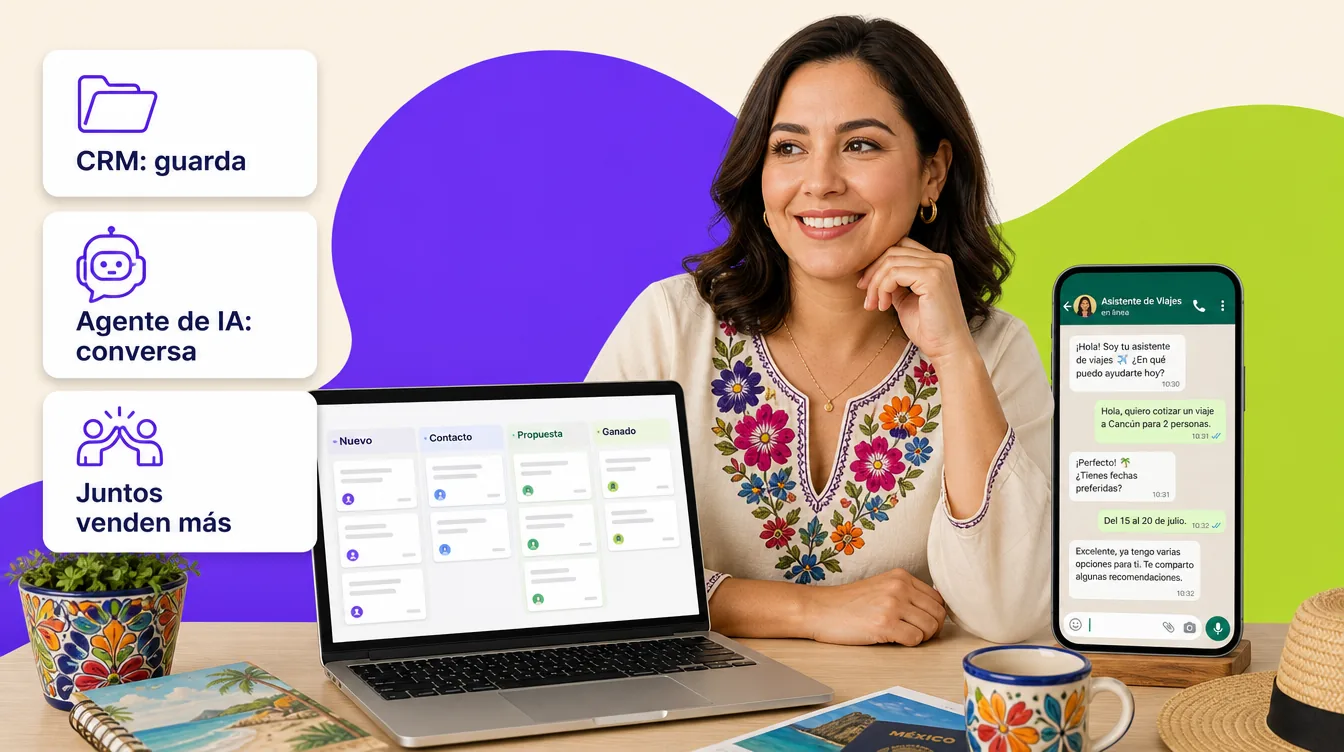
The agent talks and the CRM remembers. Every quote, payment, completed leg and rating the agent handles is written to the customer's record; every CRM stage triggers what the agent must do (moved to “deposit paid”, remind the balance; moved to “traveling”, send the day's itinerary). The advisor sees the summary in the CRM and enters the conversation only when the agent calls. If your company is large and wants agents that consult manuals and internal systems with permissions, the corporate version is at AI agents for business.
To decide between a custom agent and the assistant offered by the WhatsApp platform itself, read Meta Business Agent vs custom AI agent; to understand what changes the cost, what an AI agent for travel agencies does and costs.
I want my travel agent: how do we start?
If you already have a CRM, bring it to the conversation: the agent connects to it. If you do not, do not buy one before knowing who will answer. Tell us how many travelers you move each month and what they ask most in the “I want my travel agent” form: we propose the scope of the first agent (quotes, payments, day-by-day itinerary or per-tour survey) with the calendar and the payment gateway your agency already uses. If you would rather feel it before talking to anyone, upload an itinerary or your package list to the trial bot and ask it what a traveler would ask you. The full service is at AI agent for travel agencies.