
Agencies with circuits and packages
Several suppliers per trip and quality that varies by destination.
- Per tour
- Per supplier
- Reviews
- Next destination
The end-of-trip survey arrives late: by the time the traveler answers it, the guide who did not show up, the dirty hotel or the transfer that left them waiting happened a week ago. With the AI agent, at the end of each tour the traveler receives a one-tap survey on WhatsApp (⭐ 1 to 5 and an optional comment). A low rating or a complaint goes to the coordinator instantly, while the rest of the trip can still be fixed. And on return, the same agent asks for the Google review, shares the album, recommends the next destination and activates the referral program. Meta-approved templates and traveler consent; compensation is decided by your agency.
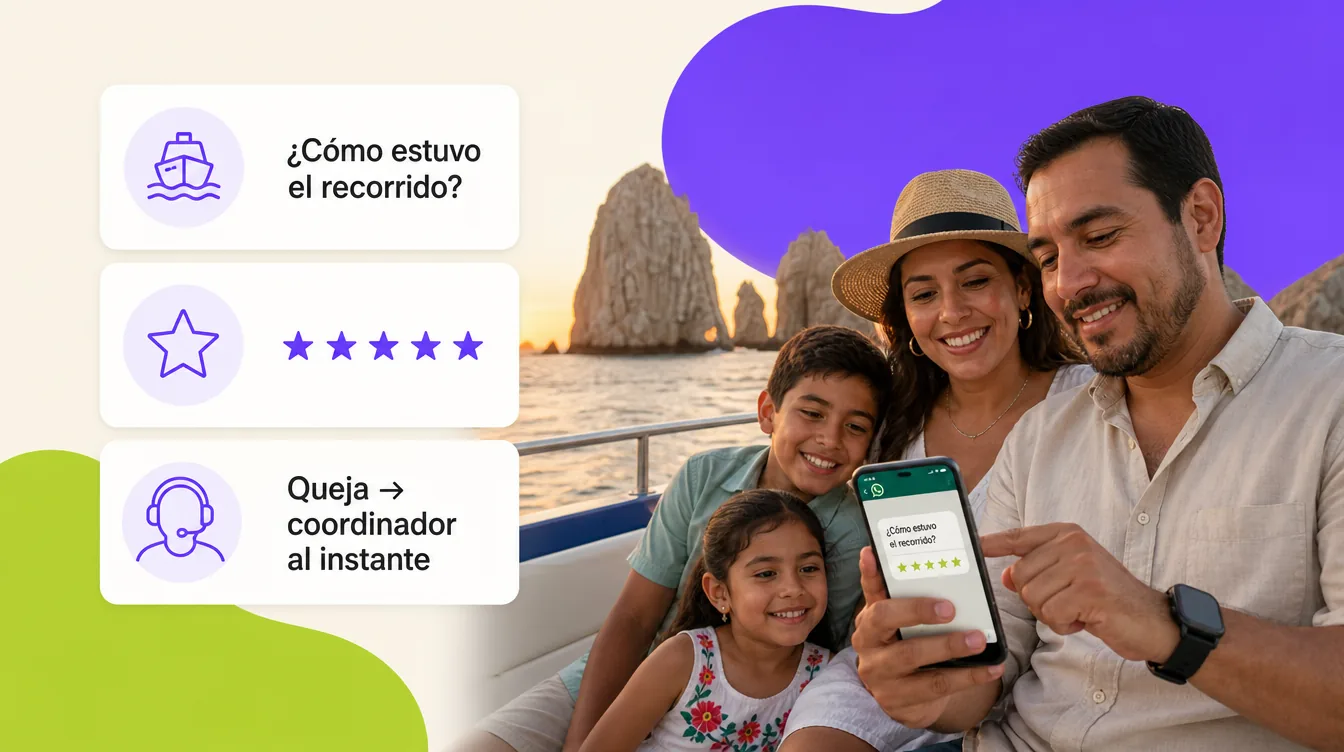
It is a one-tap WhatsApp message (⭐ 1 to 5 and an optional comment) that an artificial-intelligence agent sends the traveler at the end of each tour of the trip. A low rating or a complaint reaches the coordinator the same day to be fixed; high ones feed the rating per guide and supplier and, on return, the review request and after-sales.
Because it measures memory, not experience: the traveler averages a week into one rating, forgets which tour failed and, if something went wrong, has already told Google, their friends and the hotel review. The agency finds out when nothing is left to do but apologize and discount something. The per-tour survey reverses that: one one-tap question while the experience is fresh, a private channel to complain before a public one, and a coordinator who can act during the same trip. It also tells you which guide, which supplier and which leg of the itinerary raise or lower the rating, not just the average.
The one-tap survey at the end of each leg (⭐ 1-5 and optional comment), escalation rules (a rating of 1 or 2, or words like “rude”, “dirty”, “they left us” go to a person instantly with the tour, the guide and the history), the cumulative rating per guide, hotel, carrier and restaurant, the trip close with a Google review request, the group's shared photo album, the next-destination recommendation based on what they traveled and the season, the referral program with a code per traveler, and the dashboard of open and closed complaints. All through the official WhatsApp Business platform, with Meta-approved templates and traveler consent. The agent records and routes; compensation and refunds are decided by your agency.
By asking everyone who finished the trip, with the direct link to your listing and without offering anything in return. Google's policies forbid paying for reviews, selectively asking only satisfied customers to inflate the rating and discouraging negative ones. What the agent does do is handle the complaint privately during the trip, so the real experience is better in the end, and send the review request at the right moment: the day after returning, once the traveler has looked at the photos. Public negative reviews are answered from your listing by a person; the agent alerts you to them and prepares the trip context.
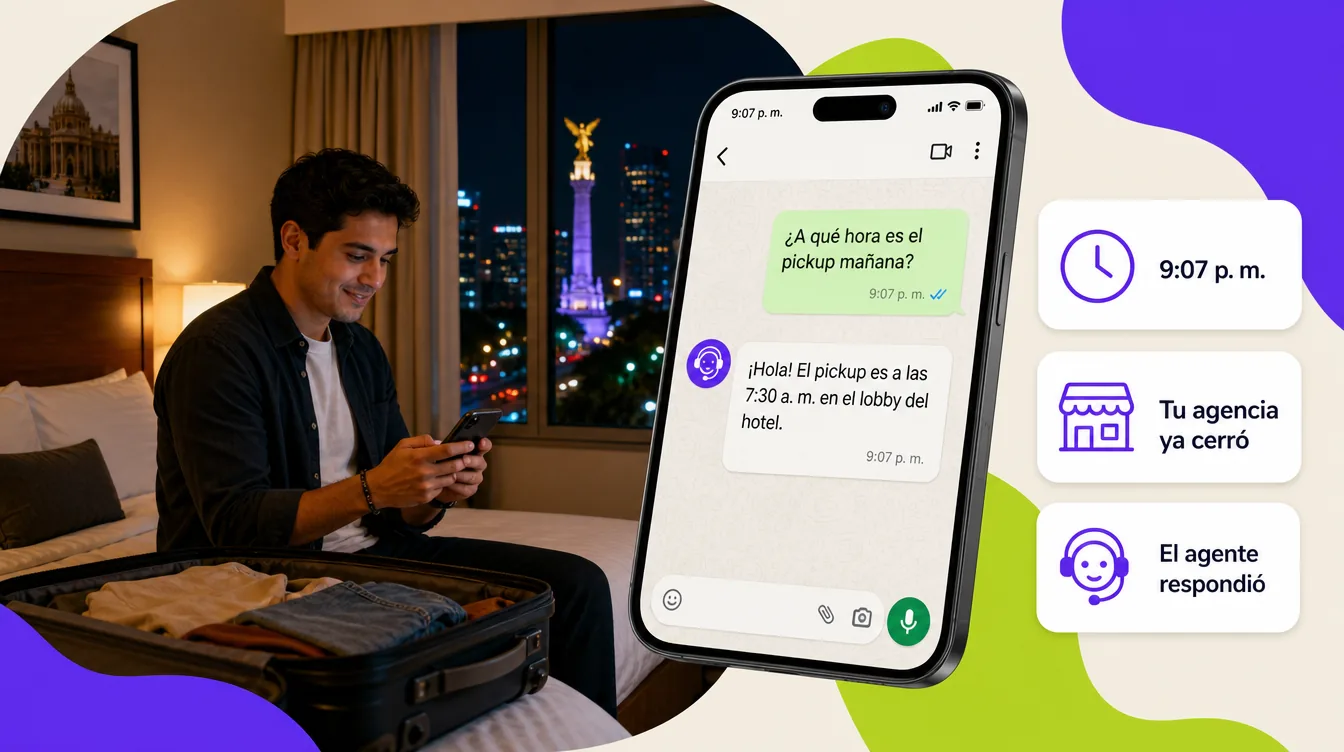
At 9:07 p.m., at the hotel, a traveler answers the cenote survey with two stars and writes: “the guide kept us waiting an hour and was rude”. Without an agent, that comment shows up in the end-of-trip survey five days later, next to a one-star Google review that can no longer be avoided. With the agent, the coordinator receives the alert that same night with the guide's name, the tour and the comment; by eight in the morning the traveler has an apology, an explanation and a gesture from the agency, and the next day's guide has been briefed. The rest of the trip is saved, and the review that comes at the end is a different one.
Both measure satisfaction; only one lets you fix the trip while it happens.
| Criterion | Per-tour survey with the agent | End-of-trip survey |
|---|---|---|
| When it asks | At the end of each leg, while the experience is fresh | Days later, when they forgot what failed |
| What it measures | Each tour, guide and supplier separately | An average of the whole week |
| Complaint | Reaches the coordinator the same day and is fixed during the trip | Arrives when nothing is left to do |
| Public review | The complaint is handled privately before it goes public | The negative review is already on Google |
| Participation | One tap on WhatsApp | Long form by email |
| Decisions | Whom to rehire, which leg of the itinerary to change | An overall satisfaction percentage |
Three steps on top of the itinerary already loaded in the agent.
What to ask and when
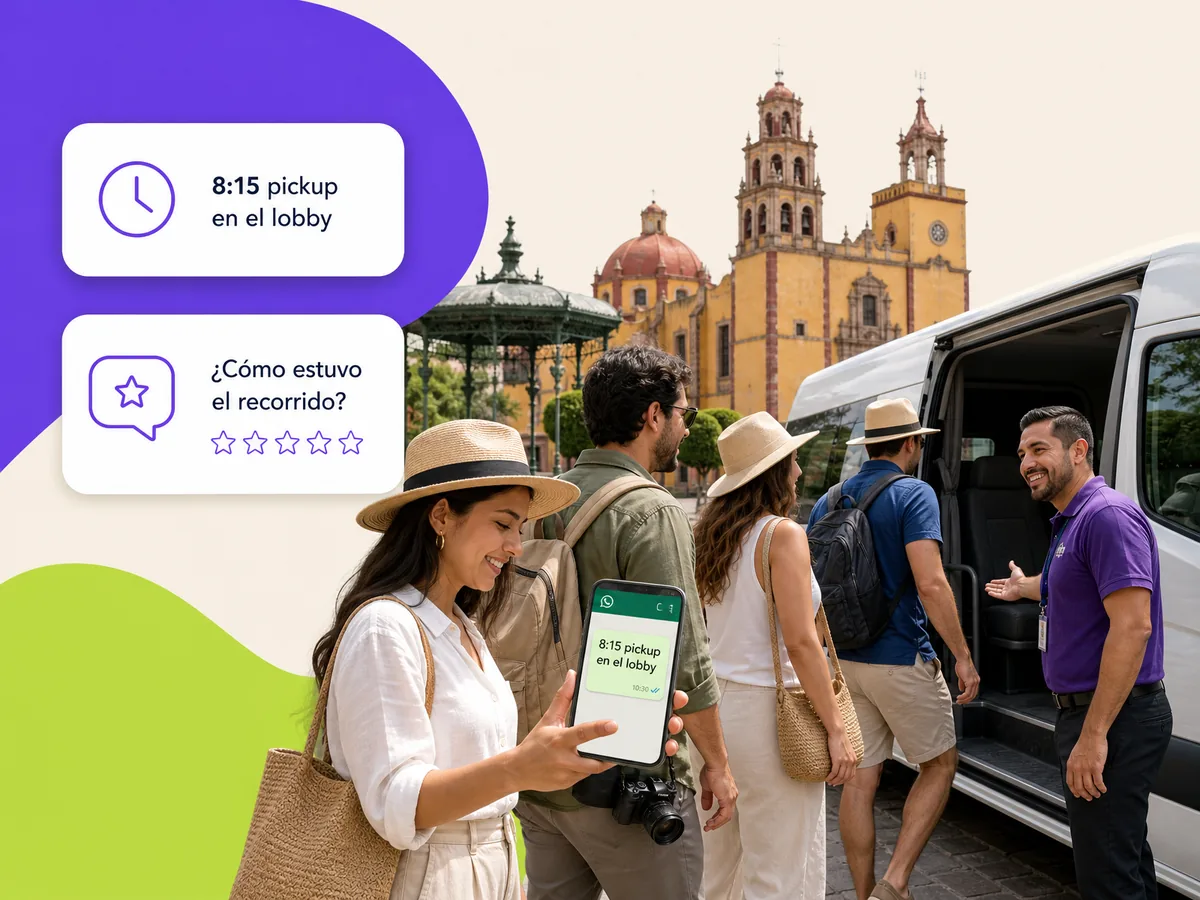
We define the one-tap question per type of tour (visit, transfer, meal, hotel), the sending moment (at the end, never at night) and the alert thresholds: which rating or which words go to a person, and to whom.
Approved templates and escalation
We write and submit to Meta the templates for survey, thank-you, complaint follow-up, review and referrals. We connect escalation to the coordinator's phone and, if you want, to your CRM or a shared sheet.
Pilot, calibration and after-sales
We test it with a real group: we check how many answer, whether the frequency bothers anyone and which alerts were useful. We adjust and activate full after-sales: review, album, next destination and referrals.
Six pieces to fix things during the trip and sell the next one.
Stars 1 to 5 and an optional comment while the experience is fresh; no long forms nobody answers.
Low rating or alert word: the coordinator receives tour, guide, time and comment instantly, not on return.
Every star adds to the guide, the hotel, the carrier or the restaurant of that leg; you know whom to rehire and whom not to.
Google review request to everyone, with a direct link, at the right moment and without incentives, as Google's policies require.
On return: group photos shared, next-trip recommendation based on what they traveled and a referral code per traveler.
Open and closed complaints, response time, rating per tour and per trip, reviews obtained and referrals that requested a quote.
If the answer is “the trip average”, you are missing the data to decide. Tell us how many tours your typical trip has and we show you how the one-tap survey and the dashboard would look.
Data per trip, per tour and per supplier to operate today and negotiate tomorrow.
Eight questions about quotes, payments, itineraries and complaints. You get a score, the three tasks to automate first and the ones that should stay with a person.
For any operation that depends on guides, suppliers and tours it does not fully control.
Several suppliers per trip and quality that varies by destination.
In-house and subcontracted guides; the guide's rating decides whom to call again.
One client (school or company) asking for evidence of how the trip went.
Repeat customers and referrals as the main sales channel.
PDF, Word, Excel or PowerPoint. The bot answers only with what is written and tells you the page, section or sheet it came from. Free, no account, deleted after 7 days.
The survey and after-sales close the cycle of the AI agent for travel agencies: it starts with 24/7 quotes and continues with the itinerary and day-by-day companion.
Read what to ask in the survey after each tour and how to automate it and AI agent or CRM for travel agencies: what you need first.
Low ratings usually point to a skill, not a person: Geedle's hospitality and tourism courses and the AI customer service role play train the guide before the next group.
Real projects told with facts, not promises.
Train crews spread across restaurants in several Mexican states and the United States with the same standard — and give every employee a clear view of how to grow inside the company.
Read the full caseBring an operation that lives on the road under a quality management system that meets the new ISO 9001:2026 and passes the certification audit.
Read the full caseTell us how many tours your typical trip has, how many guides and suppliers you use and how you ask for reviews today. We reply the same day with the one-tap survey and dashboard proposed for your agency.