ISO 9001 Mock Audit: How to Prepare Your People in Two Weeks
An ISO 9001 mock audit is the only way to know how your organization will react before the certification body arrives. You do not need a month or a huge rollout: two well-planned weeks are enough to rehearse every person, walk through the processes and close with written findings. Here is the day-by-day plan, who takes part, how each stage is run and how to use AI role play so nobody reaches the mock audit without having practiced their interview.
In this article
- What is an ISO 9001 mock audit?
- Who takes part in the mock audit, and in what role?
- How are the two weeks split?
- How does each person rehearse before the on-site mock audit?
- How do you run the mock audit, stage by stage?
- Opening meeting
- Process interviews
- Evidence review
- Closing meeting
- What do you do with the mock audit findings?
- How far in advance should you run the mock audit?
- What mistakes ruin a mock audit?
- Try it for two minutes, or build it around your case?
What is an ISO 9001 mock audit?
An ISO 9001 mock audit is a dress rehearsal of the external audit: someone plays the auditor, goes through the processes using the same stages (opening meeting, interviews, evidence review and closing meeting) and delivers written findings. Its purpose is for staff to practice and for the organization to find its gaps while there is still time to fix them.
Do not confuse it with the internal audit. The internal audit is a requirement of ISO 9001: it is planned in a program, carried out by competent auditors who are independent of the process, and its results are reported to management. The mock audit is a preparation exercise; it does not replace the internal audit or count as evidence that you did one. What they do share is the method, which is why it helps to lean on ISO 19011, the guidelines standard for auditing management systems.
Who takes part in the mock audit, and in what role?
A mock audit has four roles: whoever coordinates it, whoever audits, those who are interviewed and whoever represents management. The most important point is that the mock auditor must not assess their own process, because they will only ask what they already know is fine and the exercise will lose its value.
| Role | Who usually takes it | What they do in the mock audit |
|---|---|---|
| Coordinator | The person responsible for the quality management system | Builds the plan, notifies the areas, tracks the rehearsals and gathers the findings |
| Lead mock auditor | An internal auditor from another area or an external consultant | Runs the opening and closing meetings, assigns processes and writes up the findings |
| Auditees | Process owners and shop-floor staff | Answer the interview for their process and show their records |
| Top management | The director or general manager | Attends the opening and closing meetings and sits for their own interview |
| Guides | Supervisors or quality staff | Accompany the auditor on the tour without answering for the auditees |
How are the two weeks split?
The two weeks are split into one for preparation and one for execution. In the first, you define the scope and each person rehearses their interview separately; in the second, you run the full on-site mock audit, write up the findings and build the action plan. That is ten working days in total.
| Day | Activity | What should be left in place |
|---|---|---|
| 1 | Define scope, criteria and processes; appoint the lead mock auditor | Audit plan with times and interviewees |
| 2 | Kick-off meeting with process owners and assignment of individual rehearsals | List of people with their scenario and deadline |
| 3 and 4 | Individual interview rehearsals, and a check that the records for each process are up to date | Each person with at least two recorded attempts |
| 5 | Review of rehearsal results and reinforcement for anyone below the minimum score | Short list of people and processes at risk |
| 6 | Opening meeting, site tour and top-management interview | Attendance list and auditor's notes |
| 7 | Interviews with operational processes | Notes and evidence reviewed by sampling |
| 8 | Interviews with support processes: purchasing, maintenance, staff competence, document control | Notes and evidence reviewed by sampling |
| 9 | Writing up findings and closing meeting | Mock audit report |
| 10 | Cause analysis and corrective action plan; second round of rehearsals | Plan with owners and dates |
If your organization is small, days 6 to 8 fit into a day and a half. What you should not cut is the first week: an on-site mock audit with people who have never rehearsed only confirms that people have not rehearsed.
How does each person rehearse before the on-site mock audit?
Before the on-site mock audit, each person rehearses their interview separately with a simulated auditor, until they can explain their process and show their evidence without freezing. AI role play removes the usual bottleneck: the quality manager cannot interview everyone on every shift one by one.
In Geedle RolePlay's ISO 9001 audit role play, an AI character in the auditor's role interviews the employee by voice, pushes back when the answer is vague and asks for the evidence, which appears on screen. Days 3 and 4 of the plan work like this:
- You assign the scenario. Each group gets its own, with a deadline, a number of attempts and a minimum score. For example, the interview on competence and awareness for area managers, or the audit of Purchasing for the buyer.
- The person practices. Each attempt takes a few minutes and can be repeated as often as needed. In practice mode a coach gives hints; in exam mode it does not.
- They get their report. A score for each rubric criterion, strengths, areas for improvement and key moments with their timestamps, plus a comparison with the previous attempt.
- You see the big picture. Reports show who has practiced, who has not and which competencies are weak in each area. That tells you who to reinforce on day 5.
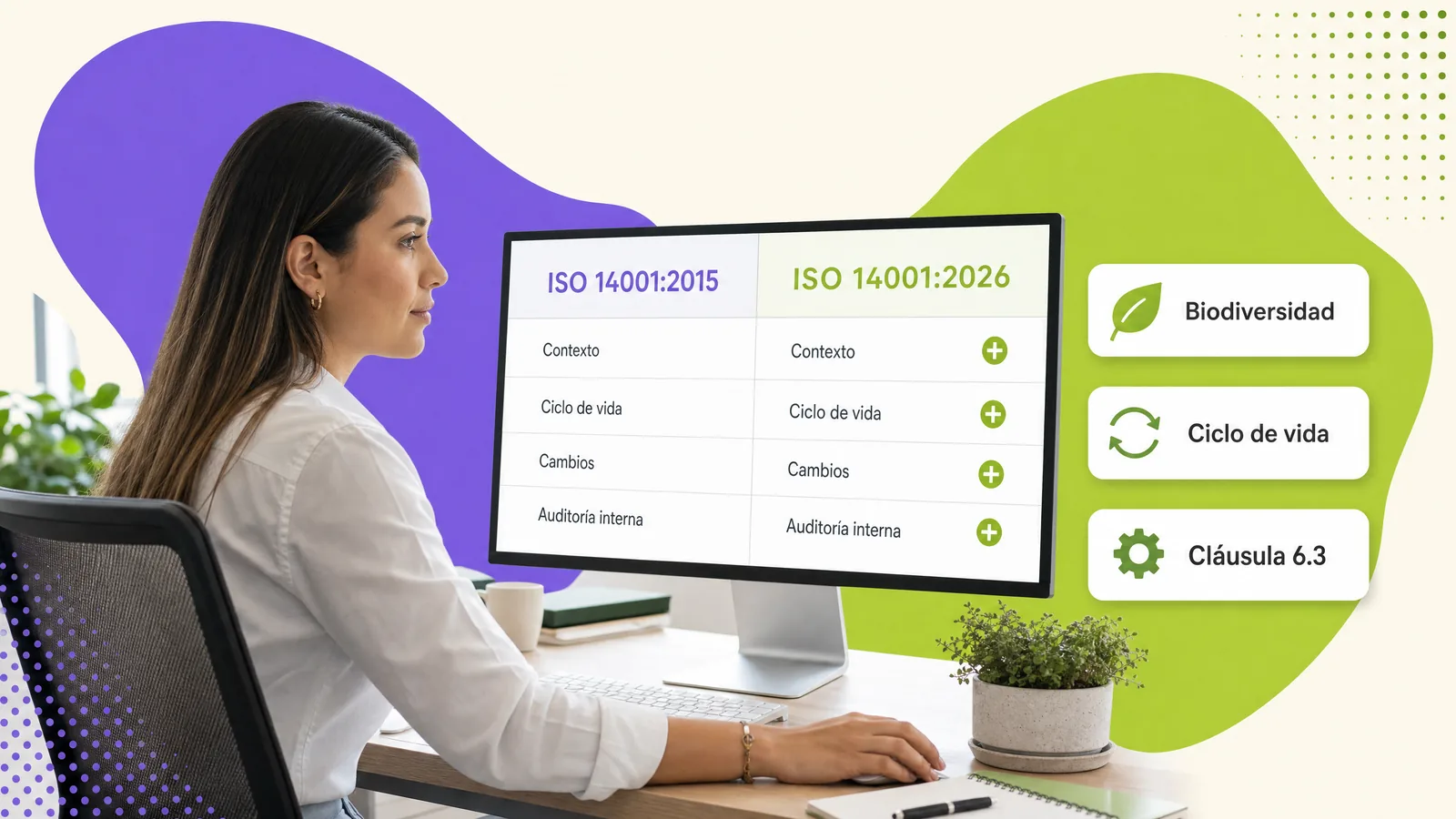
A note on editions: Geedle RolePlay scenarios follow the clauses of the 2015 edition, the one that applies during the transition, and are adjusted to ISO 9001:2026, published on September 16, 2026. A three-year transition is expected, to be formalized by the IAF; what is known so far is in the ISO 9001:2026 transition guide.
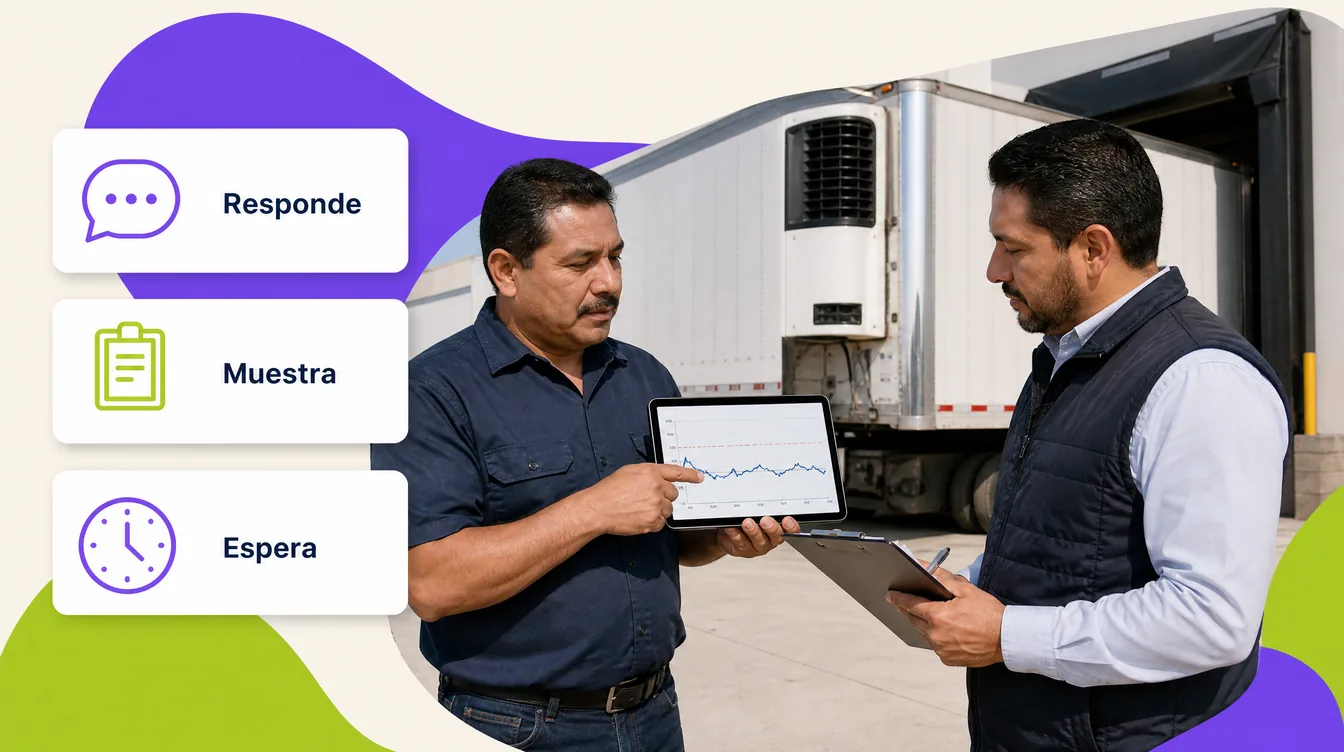
If your company has processes the catalog does not cover, such as temperature control at a refrigerated freight carrier, the scenario is built with your procedures and your forms: it is explained in how to design a custom role-play scenario. And so that everyone knows what to answer, share the guide on how to answer an ISO 9001 auditor beforehand.
How do you run the mock audit, stage by stage?
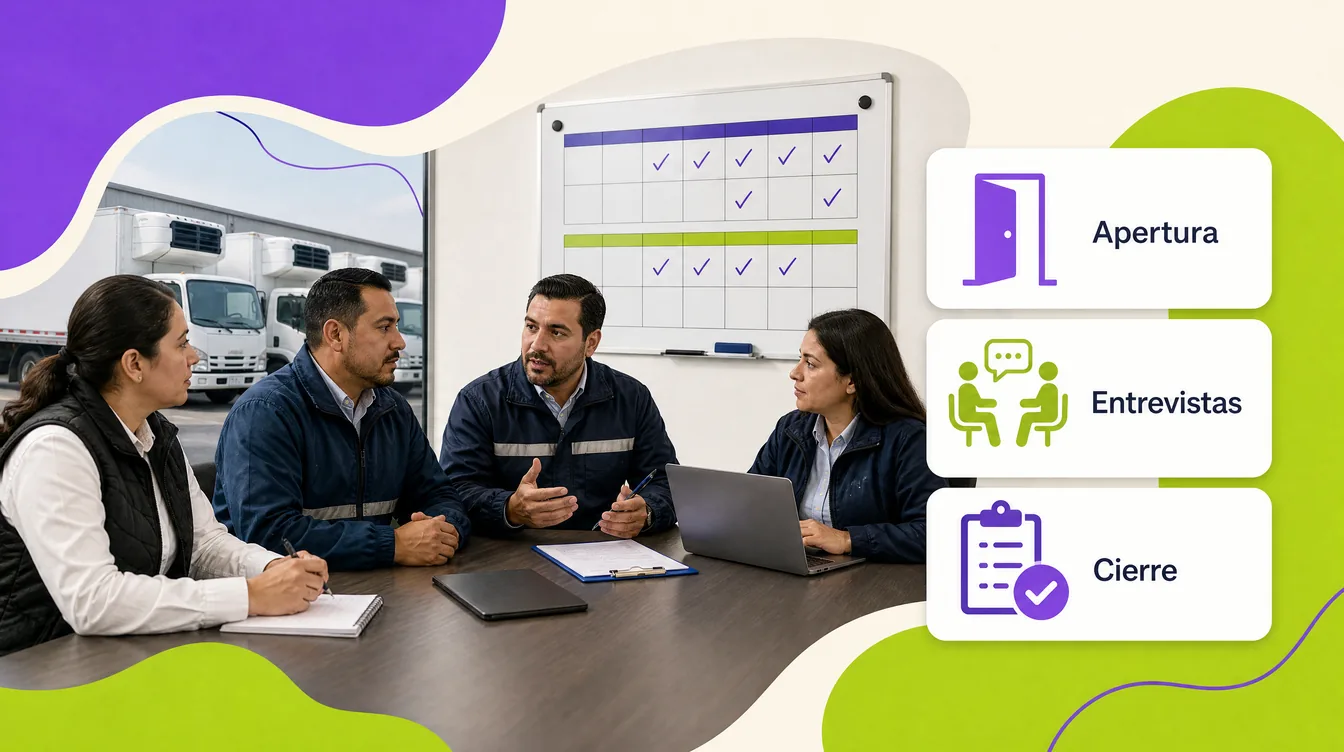
The mock audit is run with the same four stages as a real audit: opening meeting, process interviews, evidence review and closing meeting. Keeping the format matters as much as the content, because much of the staff's nervousness comes from not knowing what will happen or in what order.
Opening meeting
Fifteen to twenty minutes is enough. The lead auditor introduces the team, confirms the scope, criteria and schedule, explains how findings will be classified and answers questions. Management should be present: it is the first sign of commitment an auditor looks for.
Process interviews
The auditor goes to where the work is done and interviews the person who does it, not just the manager. They use open questions to understand the process and closed ones to confirm facts. If you want your internal auditors better prepared for this stage, see these interview techniques for internal auditors.
Evidence review
Every statement is checked against records taken by sampling: the auditor picks the dates, the record numbers or the units, not the auditee. This is where the typical gaps show up: incomplete records, obsolete documents still in use, measuring equipment without valid calibration and corrective actions that have been open for months.
Closing meeting
The auditor presents strengths, nonconformities and opportunities for improvement. Auditees practice the hardest part: listening to a finding without getting defensive, asking to hear the requirement and the evidence, and accepting or challenging it with records in hand.
What do you do with the mock audit findings?
Mock audit findings are treated as real: fix the immediate issue, analyze the cause and define corrective actions with an owner and a date. Filing them away because "it was only a rehearsal" wastes the exercise; whatever the mock audit found, the external auditor will find too.
- Separate document issues from people issues. A missing record is fixed with discipline; a person who could not explain their process is fixed with training and more rehearsals.
- Prioritize by risk. First whatever affects the customer or a legal requirement; then matters of form.
- Verify before closing. A corrective action is finished when you confirm it worked, not when someone signs that it was done.
- Rehearse again. Anyone who froze repeats their scenario until they reach the minimum score.
If the findings point to deeper problems in the system, you may need outside support: see Geedle's ISO consulting and its ISO 9001 internal audit service.
How far in advance should you run the mock audit?
Finish the mock audit with enough margin to close whatever it finds. Our recommendation is to leave at least four weeks between the mock audit's closing meeting and the external audit, because analyzing causes, applying corrective actions and verifying that they worked takes longer than spotting the problem.
Running it the week before the audit is the most common mistake: you discover the gaps when there is no time left to address them, and all you achieve is a more nervous team. If your audit will be against the new edition of the standard, also review the route to ISO 9001:2026 certification.
What mistakes ruin a mock audit?
A mock audit is ruined when it becomes a friendly performance in which everyone knows what they will be asked. To be useful it has to resemble the real audit in its uncomfortable parts: follow-up questions, samples chosen by the auditor and findings written with their requirement and their evidence.
- Sharing the questions in advance, or letting each area choose its own records.
- Interviewing only managers and leaving out shop-floor staff and the afternoon and night shifts.
- Skipping the opening and closing meetings "because we all know each other".
- Leaving nothing in writing: without a report there are no actions and no follow-up.
- Using the result to reprimand people instead of fixing the system.
Notice. "ISO" is a trademark of the International Organization for Standardization; Geedle is not affiliated with it and is not a certification body. The simulator is for rehearsal: it does not replace the audit or guarantee its outcome.
Try it for two minutes, or build it around your case?
A mock audit is worth what happens before it: every person having rehearsed their interview. Start with the virtual ISO auditor: a free two-minute voice demo in your browser, no account needed. To see the full Geedle RolePlay product with scenarios for your area, request a demo and we will walk through it with your case. And if the scenario your team needs is not in the catalog, we build it with you, using your procedures, your product and your real objections: see custom role-play scenarios. Full product details are at Geedle AI role play.