ISO 14001:2026 changes versus 2015, clause by clause
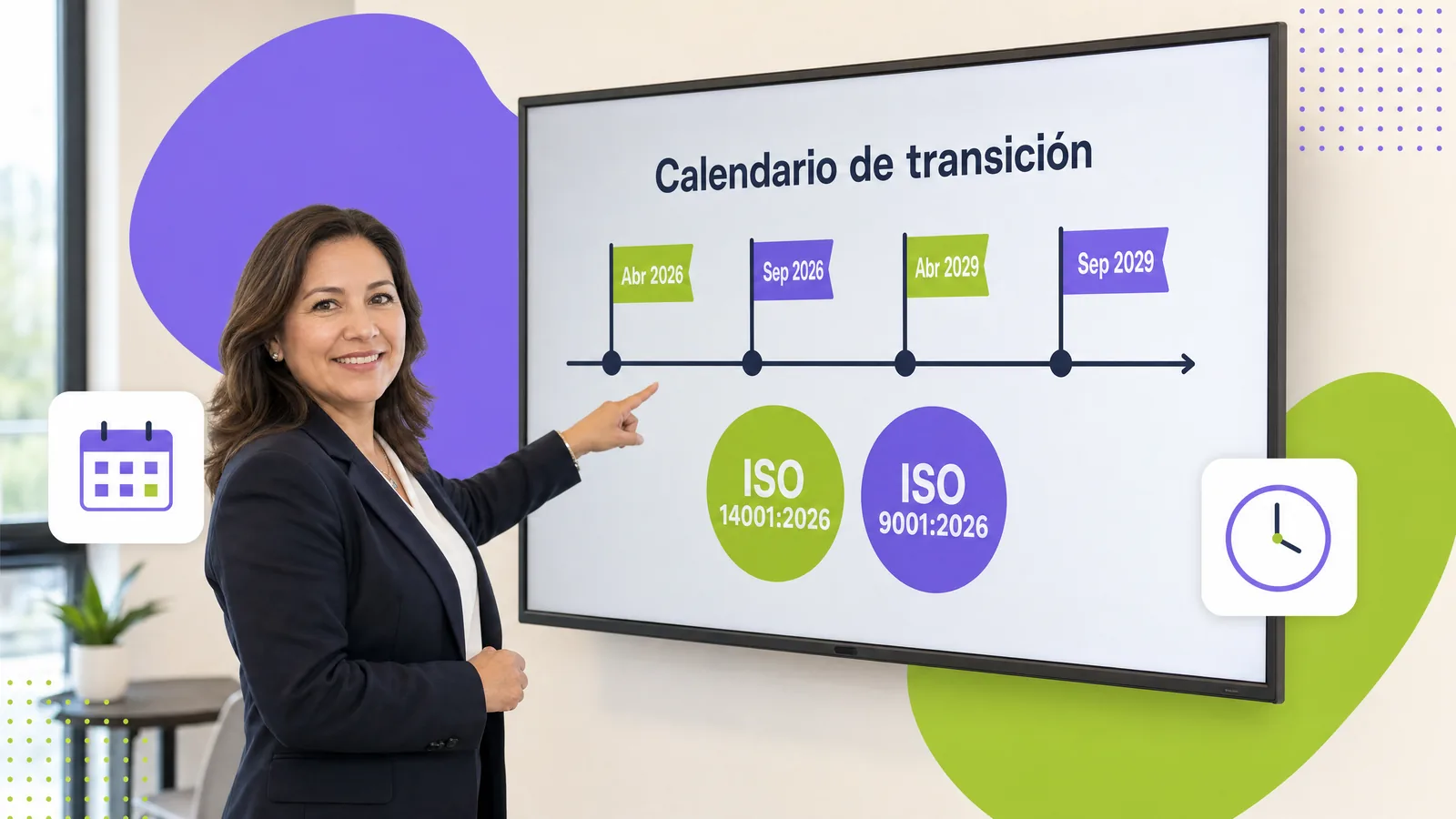
ISO 14001:2026 was published on 15 April 2026 and is a moderate revision: it keeps the ten clauses, the PDCA cycle and the risk and opportunity approach. Only two requirements are new (planning of changes and objectives for each internal audit); the rest are extensions and clarifications. Here are the changes, clause by clause, and what they mean for a certified environmental management system.
In this article
What changes in ISO 14001:2026?
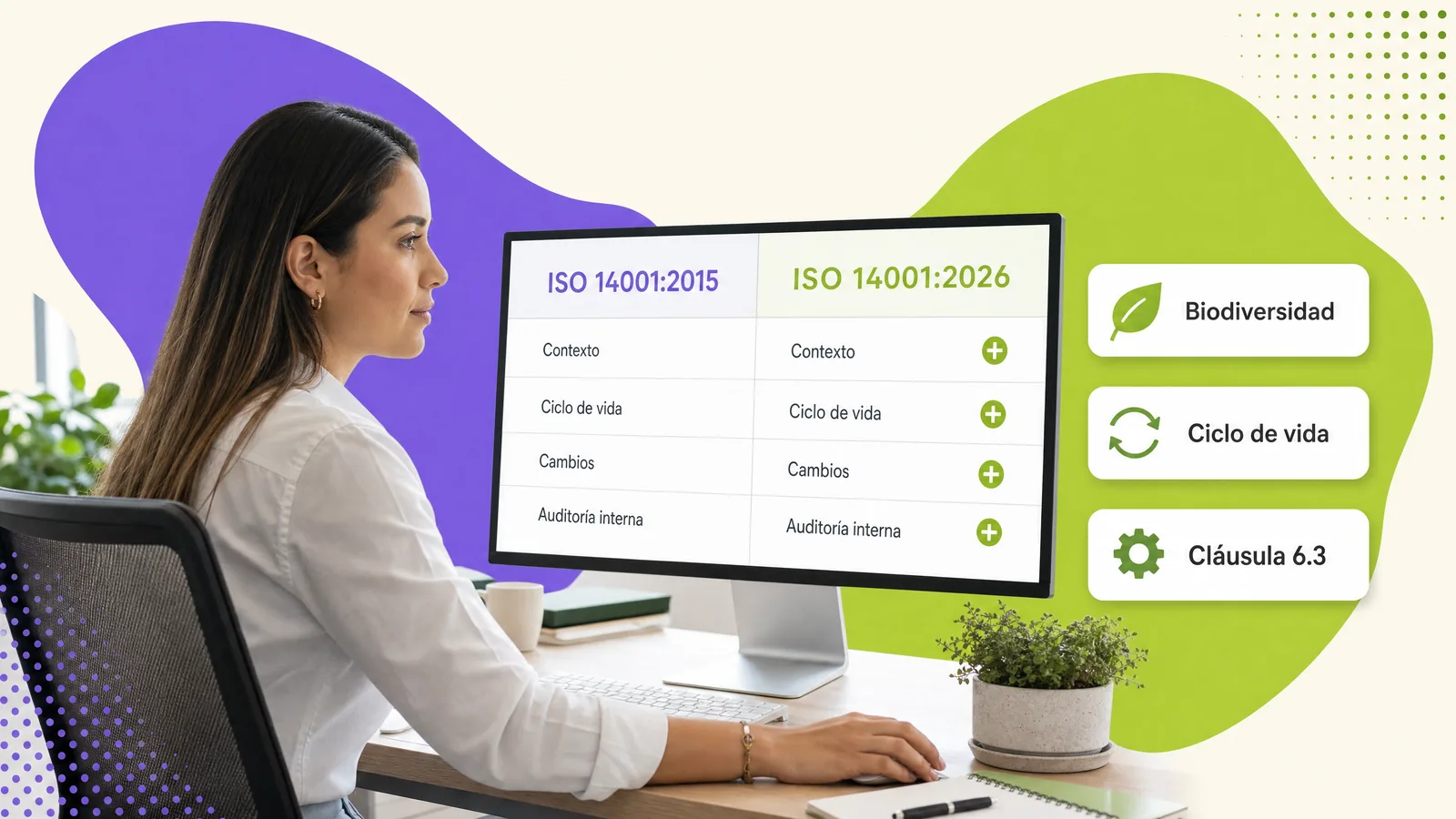
Seven things change: the environmental context explicitly includes climate change, biodiversity, pollution and resource availability (4.1 and 4.2); top management must support leadership in all relevant roles (5.1); environmental aspects are identified with a life cycle perspective, abnormal conditions and emergencies (6.1.2); risks and opportunities are reorganized (6.1); planning of changes appears (6.3); operational control covers all externally provided processes, products and services (8.1); and each internal audit must have defined objectives (9.2.2). Management review is restructured (9.3), clause 10 is reordered and Annex A was thoroughly revised.
Clause 4: context of the organization
The 2024 amendment already required considering climate change. The 2026 edition broadens the list of environmental conditions that can affect the organization or be affected by it: biodiversity and ecosystem health, pollution and the availability of natural resources, in addition to climate. Clause 4.2 clarifies that interested parties may have climate-related requirements. In practice, the context analysis of many environmental management systems moves from a list of internal and external issues to an analysis that names the water, air and biodiversity of the place where the plant operates.
Clause 5: leadership
Top management must support leadership in all relevant roles, not only in management positions. It is a shift in emphasis consistent with ISO 9001:2026 and its quality culture: environmental responsibility is evidenced in supervisors, shift leaders and maintenance managers, not only in the policy signed by the director.
Clause 6: planning
- 6.1.2 Environmental aspects. The life cycle perspective is clarified and abnormal conditions (start-ups, shutdowns, maintenance) and potential emergency situations must be covered explicitly. The aspects and impacts register must consider the stages the organization controls or can influence: suppliers, transport, product use and end of life.
- 6.1 Risks and opportunities. Determining risks and opportunities is separated from planning actions. A context issue does not automatically become a risk: it has to be evaluated and a decision made on whether it needs action.
- 6.3 Planning of changes (new). Changes that affect the environmental management system —a new process, a different supplier, an expansion— are planned and managed systematically, as ISO 9001 and ISO 45001 already required.
Clause 8: operation
Operational control moves from “outsourced processes” to all externally provided processes, products and services. It affects anyone who buys raw materials with environmental impact, hires waste haulers or outsources maintenance: the type and extent of control over them must be defined, consistent with the life cycle perspective. Emergency preparedness is extended to all potential emergency situations identified in 6.1.2.
Clause 9: performance evaluation
Two changes. In 9.2.2, each internal audit must have defined objectives in addition to scope and criteria: scheduling “audit the whole system” is no longer enough, you must state what you intend to verify. In 9.3, management review is organized into three parts —general, inputs and outputs—, which makes it easier to integrate with the ISO 9001:2026 review, whose inputs also changed.
Clause 10 and Annex A
The improvement clause is reordered with no substantive change. Annex A, which gives guidance on clauses 4 to 10, was substantially revised with examples and clarifications: it is the best reading to interpret the life cycle and the broader context without over-interpreting them.
What does not change
| Element | ISO 14001:2015 | ISO 14001:2026 |
|---|---|---|
| Structure | Ten clauses, harmonized structure | Same |
| PDCA cycle and process approach | Yes | Same |
| Aspects and impacts, legal requirements, objectives | Yes | Same, with the life cycle clarified |
| Climate change in the context | Since the 2024 amendment | Extended to biodiversity, pollution and resources |
| Planning of changes | Did not exist | New (6.3) |
| Objectives for each internal audit | Not required | New (9.2.2) |
| Validity of the 2015 certificate | In force | Until 30 April 2029 |
What it means for your environmental management system
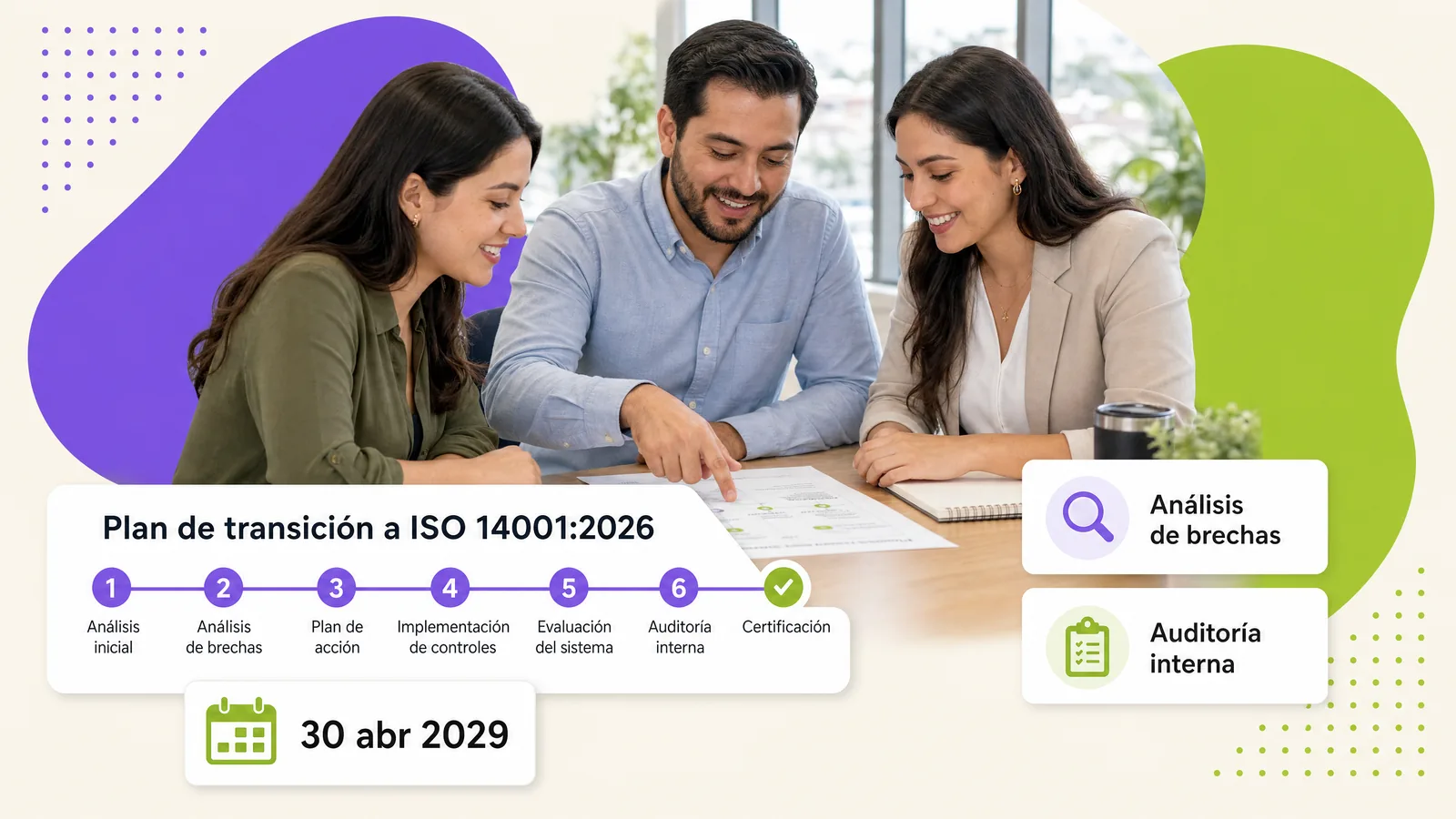
For a certified organization the transition is usually a few weeks of work: a gap analysis against the 2026 edition, reviewing the context and the aspects register, creating the planning of changes procedure, adjusting the audit program and the management review, and auditing internally against the new edition. The full plan, with dates, is at ISO 14001:2026 transition and, step by step, in the ISO 14001:2026 transition plan. If the company is not certified yet, it pays to go straight to ISO 14001:2026 certification: from 31 October 2027 no initial certificates to the 2015 edition are issued.
Where do you start? Get the free assessment
If your environmental management system is certified to ISO 14001:2015, the gap analysis tells you in a few days which clauses affect you. Answer eight questions in the free ISO systems assessment and get your level and what to do first; or message us on WhatsApp or through the contact form. No cost, no commitment. We have already taken a trailer transport company to ISO 9001:2026 certification: read the case study.