How to Answer an ISO 9001 Auditor: What Your Staff Should Be Able to Say and How to Rehearse It
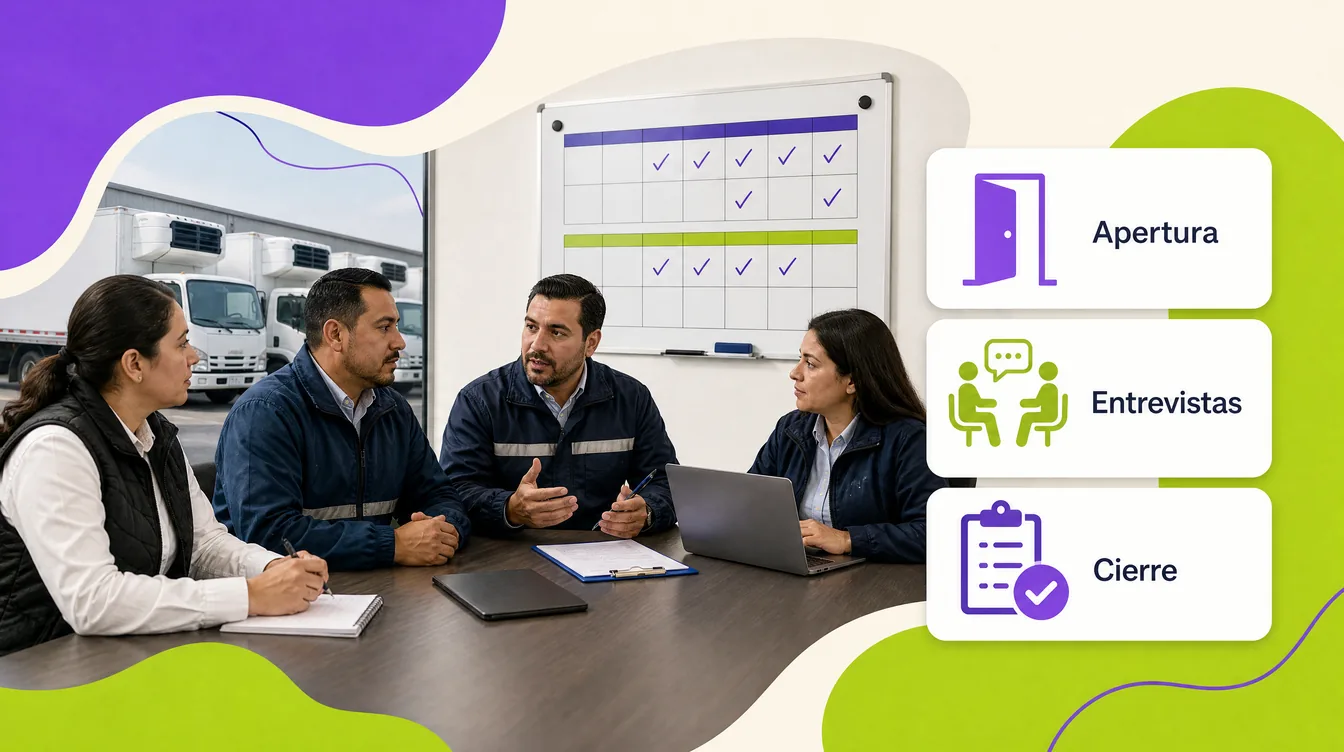
Answering an ISO 9001 auditor is not about reciting the quality policy. It is about answering exactly what you were asked and showing the record that proves it. That sounds easy until the auditor stops at your workstation and your mind goes blank. This guide is for the shop-floor auditee (the operator, the supervisor, the buyer) and for whoever has to prepare staff for an audit: what to say, what to show, what to do when you don't know, and how to rehearse it beforehand.
In this article
- How do you answer an ISO 9001 auditor?
- Why do people get nervous in front of the auditor?
- What should each role be able to say?
- How do you answer with evidence instead of talk?
- What should you do when you don't know the answer?
- How do you accept or challenge a finding at the closing meeting?
- How do you prepare staff for an audit if they have never been in one?
- Which phrases should you avoid in front of the auditor?
- Try it for two minutes, or build it around your case?
How do you answer an ISO 9001 auditor?
To answer an ISO 9001 auditor, reply only to what was asked, in your own words and in the order you actually do the work, then show the document or record that backs it up. If you don't know something, say so and explain where it is looked up or who decides. Don't guess, don't embellish and don't contradict your procedure.
The auditor is not grading how well you speak. They compare three things: what the procedure says, what you say you do, and what the records show. When all three match, the interview takes a few minutes. When one does not, a finding appears, meaning something the auditor writes down because a requirement is not met or could be improved. The list of what auditors usually ask, clause by clause, is in ISO 9001 auditor questions and how to rehearse them. Here we cover the other half, the one almost nobody trains: how the person answers.
Why do people get nervous in front of the auditor?
People get nervous because the interview feels like a personal exam, when what is actually being audited is the quality management system, not the individual. That nervousness causes three failures no manual can fix: improvising, saying too much, and contradicting what the written procedure says.
- Improvising. The person can't recall a detail and makes it up to save face. The auditor asks for the record, the record says something else, and a memory lapse becomes a nonconformity.
- Saying too much. To fill the silence, the auditee mentions what happened last month, the step that "sometimes" gets skipped and what they think of the boss. Every extra sentence is a new audit trail.
- Contradicting the procedure. "The document says that, but here we do it differently." Your way may well be better, but the finding is already on the table: the system does not reflect the operation.
What should each role be able to say?
Each role should be able to explain its own process: what comes in, what they do, how they know it was done right, what they do when it goes wrong and where the record is kept. Nobody needs to know the standard by heart. Take a refrigerated freight carrier as an example; here is how the conversation is split.
| Role | What the auditor usually asks | What they should be able to show |
|---|---|---|
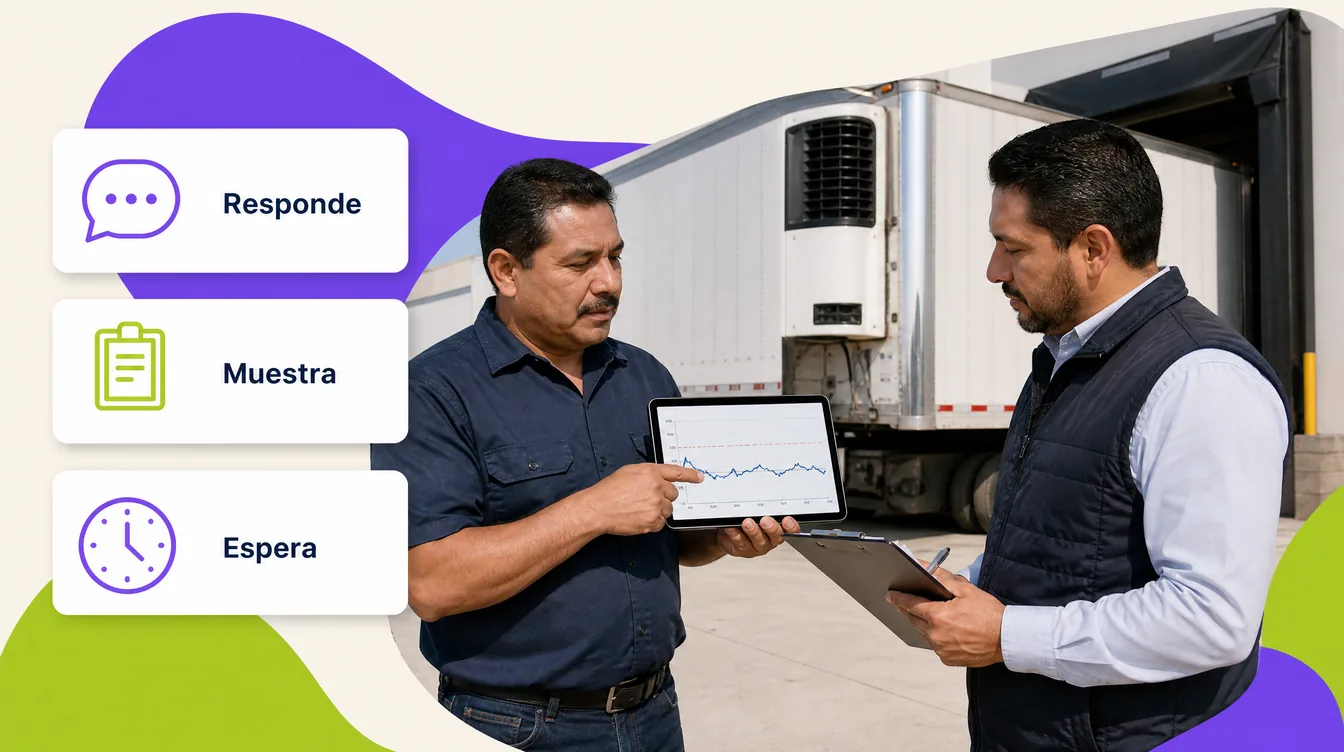
| Truck operator | How do you know the trailer is at temperature before loading? What do you do if it is not? | Today's checklist, the temperature log and the report raised the last time something failed |
| Yard supervisor | How do you make sure your people know how to do the job? How do you find out about a problem? | The competence matrix, training records and shift indicators |
| Buyer | What criteria do you use to select and evaluate a supplier? What happens when one fails? | Selection criteria, the latest evaluation and what was done with the supplier that fell short |
| Maintenance manager | How do you decide when a unit goes in for service? What happens if it is delayed? | The maintenance schedule, closed work orders and measuring equipment with valid calibration |
| Top management | What are the quality objectives and how are they going? Which risks did you address this year? | The policy, objective tracking and the management review minutes |
Notice the pattern: the auditor asks "how" and "what if". The first question checks the normal process; the second checks the control when something goes off plan. Anyone who only rehearsed the first one stumbles on the second.
How do you answer with evidence instead of talk?
You answer with evidence when every statement comes with something the auditor can see: a record, a system screen, a label, a signature. Evidence is any verifiable data showing that the activity was done the way the procedure says. The practical rule is answer, show and wait.
- Listen to the whole question. If you did not understand it, ask for it to be repeated. Nobody loses points for that.
- Answer in one or two sentences. What you do, not what "is done" in general or what another area does.
- Show the record. Have today's and an earlier one at hand: the auditor usually asks for a sample, not just the example you picked.
- Stop talking and wait. You have answered. The next question belongs to the auditor.
The difference shows in a single question, for example "How do you know this unit is cleared to leave?"
| Answer | What the auditee says | What it triggers |
|---|---|---|
| Talk | "Well, it has been checked. They always check them before they leave." | The auditor asks who, when and with what, and starts pulling the thread |
| Evidence | "I fill in this checklist before every departure. Here is today's, with the trailer temperature and my signature." | The auditor reviews the record, samples a few other days and moves on |
What should you do when you don't know the answer?
When you don't know the answer, say so plainly and offer the route to get it: where the information is looked up or who is responsible. "I don't know it by heart, but I can check it here" shows that the system works. A made-up answer shows the opposite and almost always ends in a finding.
There are three valid ways out, and your staff should have them rehearsed:
- "I don't know it by heart; it is looked up in..." and you open the procedure, the board or the system where the data lives.
- "That is not my decision; it is handled by..." and you name the responsible role, not a person to blame.
- "I didn't understand the question. Could you put it another way?" Auditors use terms from the standard that go by other names on the floor.
What never helps: guessing a figure, promising a document that does not exist, blaming a coworker or saying "quality handles that" when the activity is yours. The quality of your process belongs to whoever runs it.
How do you accept or challenge a finding at the closing meeting?
At the closing meeting, where the audit team presents its conclusions, listen to the whole finding and ask to hear the requirement and the evidence it is based on. If it is correct, accept it without excuses. If the auditor missed a record, present it calmly before the report is closed.
A nonconformity is the failure to meet a requirement, whether it comes from the standard, the customer, the law or your own procedure. Certification bodies usually classify them as major or minor depending on their scope and their effect on the system. Either way, what follows is the same: analyze the cause and define corrective actions, not look for someone to blame.
- Accept when the fact is true and the requirement applies. Arguing an obvious finding wears down the relationship and does not change the report.
- Clarify when the wording is ambiguous: ask which requirement is not met and with what evidence. That is your right, and a good auditor welcomes it.
- Challenge when evidence exists that was not reviewed. Show it; do not describe it.
How do you prepare staff for an audit if they have never been in one?
The most direct way to prepare staff for an audit is to have them rehearse their interview out loud, several times, with someone who asks follow-up questions. Reading the procedure helps them know what to say; rehearsing is the only thing that teaches them to say it with the auditor standing there.
The usual problem is who plays the auditor. The quality manager cannot interview every employee on every shift, and a coworker asks what they already know you will answer well. That is what Geedle RolePlay's ISO 9001 audit role play is for: an AI character in the auditor's role interviews you by voice, pushes back when the answer is vague and asks for the evidence, which appears on screen for you to explain. There are scenarios for an interview on competence and awareness, an audit of Purchasing on the control of external providers, a top-management interview and a closing meeting with a major nonconformity.
At the end you get a rubric-based report: a score per criterion, strengths, areas for improvement and the key moments of the conversation with their timestamps. In practice mode a coach gives hints; in exam mode it does not, and the company sets the minimum score.
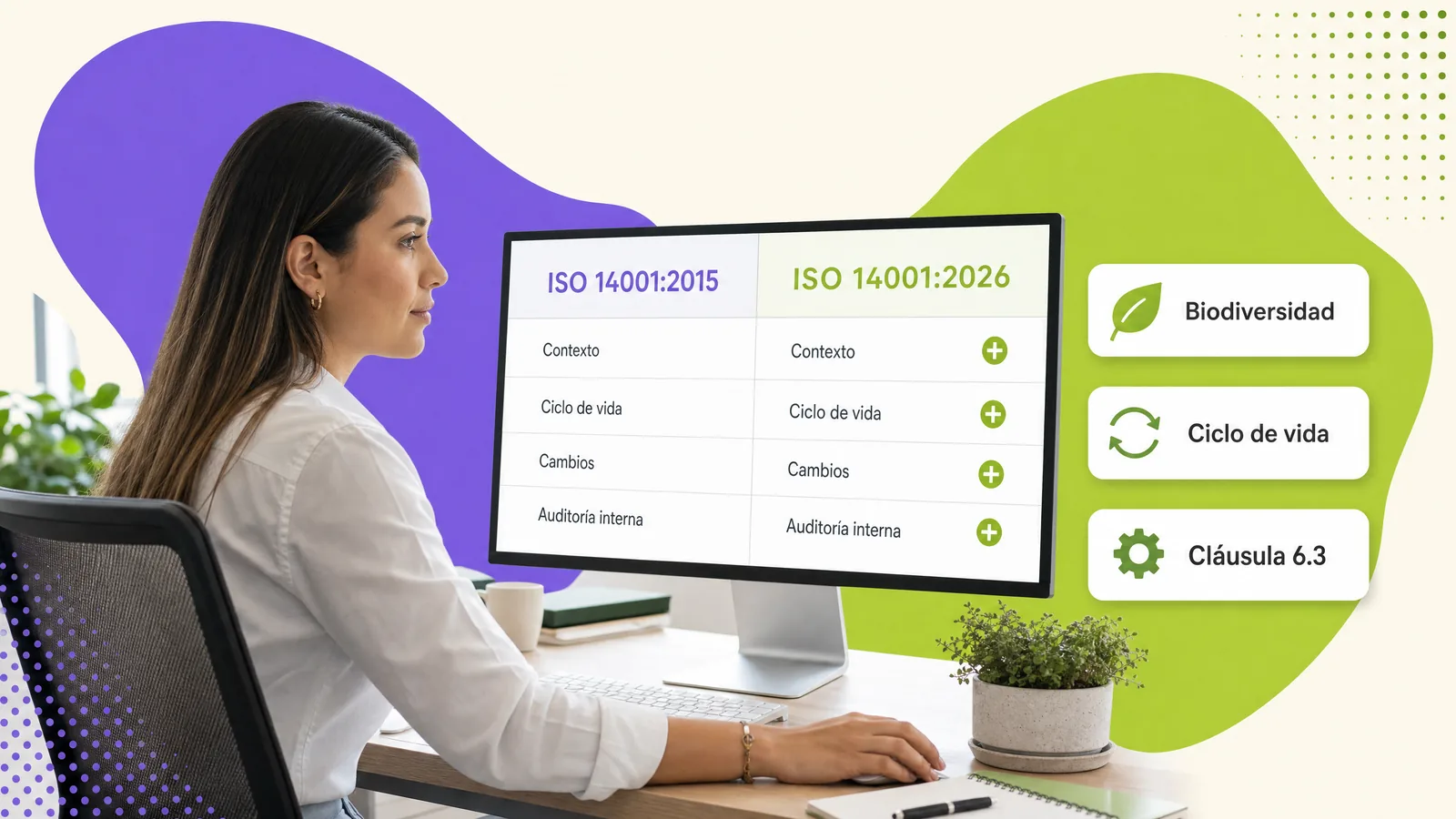
A note on editions: Geedle RolePlay scenarios follow the clauses of the 2015 edition, the one that applies during the transition, and are adjusted to ISO 9001:2026, published on September 16, 2026. A three-year transition is expected, to be formalized by the IAF; what is known so far is in the ISO 9001:2026 transition guide.
Individual rehearsal does not replace the full exercise. The next step is to bring everyone together in an ISO 9001 mock audit in two weeks, and if you have nobody to audit internally yet, look at Geedle's ISO 9001 internal audit service or its ISO consulting. If your certification audit will be against the new edition, the route is in ISO 9001:2026 certification.
Which phrases should you avoid in front of the auditor?
Avoid phrases that sound like habit rather than system, because each one invites a question you cannot back up with records. They are not forbidden; they simply open doors that you then have to close with evidence that may not exist.
- "We always do it this way." The auditor will ask where that is written and request three records from different dates.
- "It almost never happens." So it does happen. Where was it recorded last time, and what was done?
- "Quality handles that." If the activity belongs to your process, the answer is yours.
- "I'll get it to you later." Say where the document is and who keeps it; "later" sounds like it does not exist.
- "The procedure says something else, but..." If the operation changed, the change is documented before the audit, not confessed during it.
The ISO 9001 standard requires people to be aware of the quality policy, the objectives that concern them and how their work contributes. That is demonstrated with simple answers, in their own words, with the record in hand.
Notice. "ISO" is a trademark of the International Organization for Standardization; Geedle is not affiliated with it and is not a certification body. The simulator is for rehearsal: it does not replace the audit or guarantee its outcome.
Try it for two minutes, or build it around your case?
Your people do not need to memorize the standard: they need to have answered those questions before the auditor asks them. Start with the virtual ISO auditor: a free two-minute voice demo in your browser, no account needed. To see the full Geedle RolePlay product with scenarios for your area, request a demo and we will walk through it with your case. And if the scenario your team needs is not in the catalog, we build it with you, using your procedures, your product and your real objections: see custom role-play scenarios. Full product details are at Geedle AI role play.