Secondary and high school
Group tutors, educational counseling, difficult conversations with teenagers and their families; vocational guidance in the final year.
- Group tutor
- Educational counseling
- Life project
- Families
An academic support system set up in four to six weeks: we train your tutors, leave the manual, the interview forms and the referral criteria, and build a risk traffic light from the data your institution already has (attendance, partial grades, platform submissions). Coordination sees who is amber or red, the tutor gets the alert with a guided interview and every at-risk student has a recovery plan with an owner and a date. For secondary schools, high schools, universities, technological universities and teacher colleges that want to reduce failure and dropout.
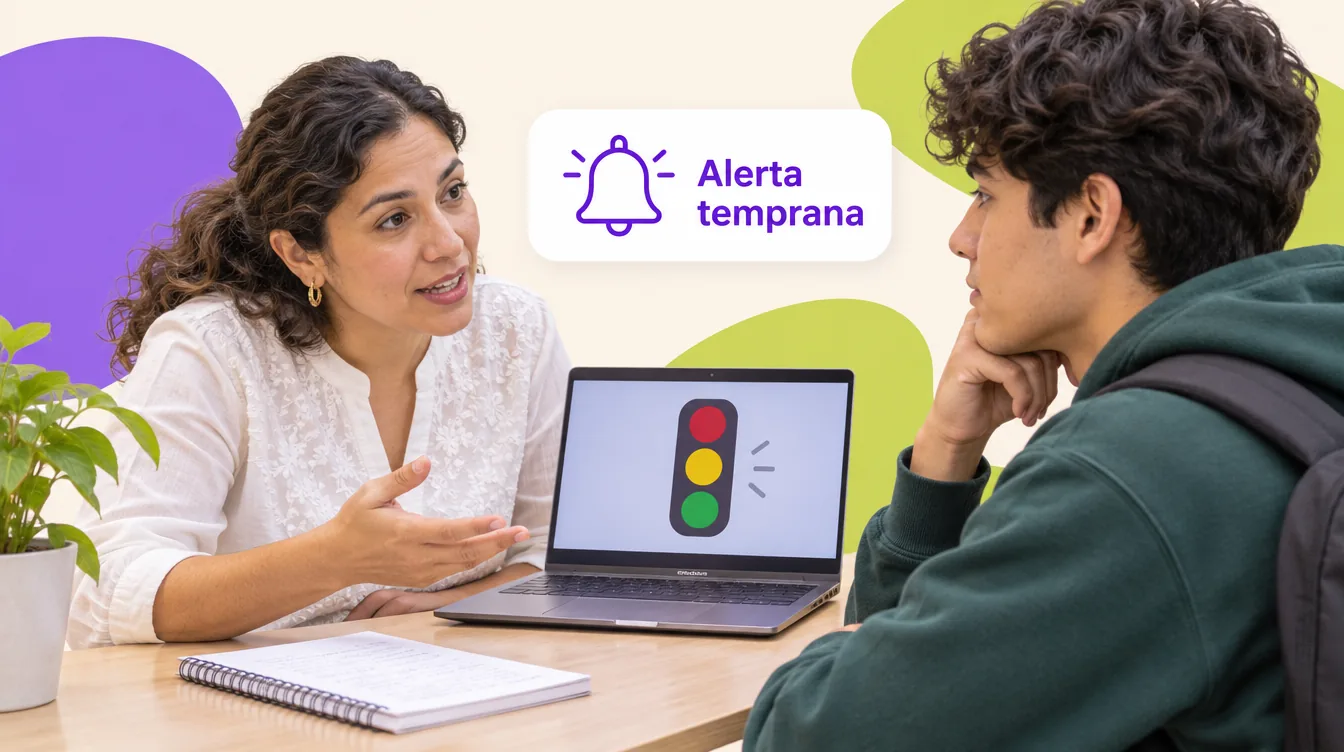
An institutional tutoring program is the system a school or university uses to assign every student a tutor, define what that tutor does, with which instruments and when they refer. The early alert is the part that makes it preventive: a traffic light that combines attendance, partial grades and submissions to flag the student at risk of failing or dropping out weeks before the withdrawal is a fact. Geedle delivers both pieces together: trained people and the dashboard that tells them whom to call today.
Because it arrives late and without data. At many institutions tutoring is one more subject on the timetable, the tutor has forty students and finds out one stopped attending once they have three weeks of absences and failed the midterm. The signs were there from the first month: absences on Mondays, assignments not submitted on the platform, a partial grade that fell from eight to five, a late payment. Nobody put them together. An early alert system for student dropout does exactly that: it crosses the data that already exists in the registrar's office and in the institution's LMS, turns it into a traffic light per student and warns the tutor while there is still time to act. Tutoring stops being a hallway chat and becomes an intervention with a date, an owner and follow-up.
A four-to-six-week project with six components: tutor training (teachers and counselors trained in interviewing, listening and referral), institutional tutoring program (roles, procedures and instruments in writing), early alert system (risk traffic light built from your attendance, grades and submissions), trajectory tracking (attendance, performance and retention by cohort and group), academic recovery (support plans for those already in red) and transition between levels (integration of new intake, the semester where most students are lost). Deliverables: assessment, tutoring manual, interview forms, indicators, referral criteria and team training. If the institution asks, we add the parent school module so families learn to read the same signs at home.
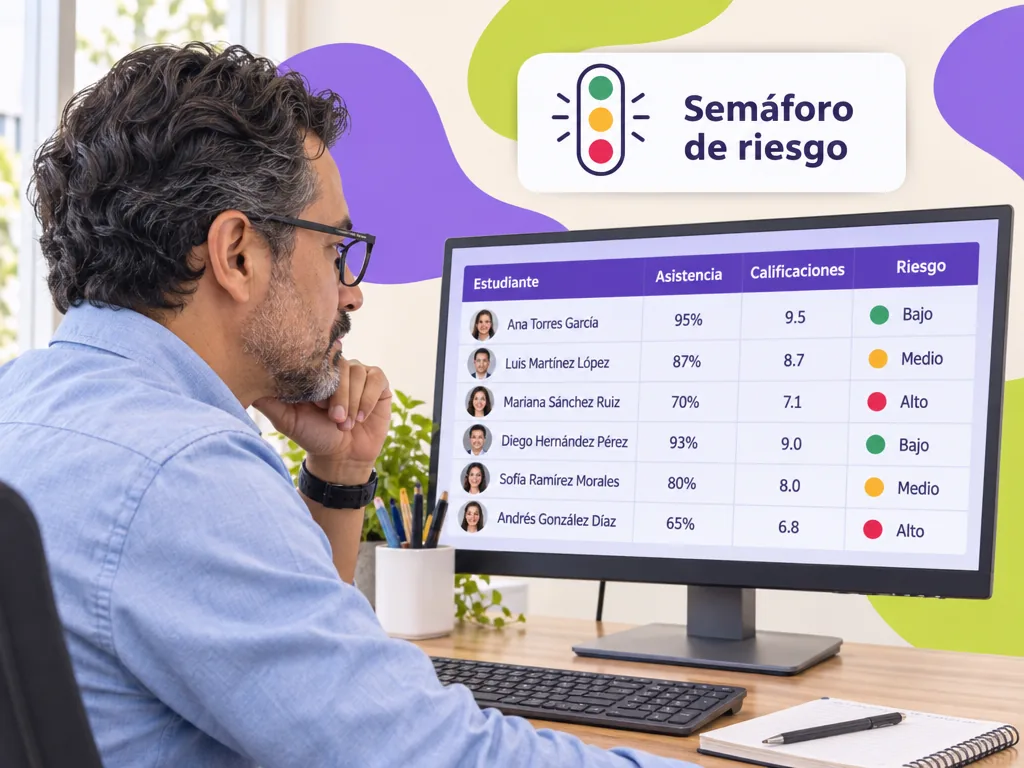
The traffic light uses rules the institution itself defines: for example, amber after two consecutive absences or one overdue submission on the platform, red when a failing partial grade and three absences in the month add up; if management decides, a late payment also counts as a withdrawal risk sign. Data comes in from the registrar's office and from Moodle or another LMS without double entry. The tutor receives the alert on their dashboard with the guided interview: what to ask, what to listen for, what to offer and when to refer to counseling, the family or student services. What they agree is logged and coordination sees the full dashboard: how many students in each color, which groups concentrate the risk and which tutors have pending interviews. Between interviews, an AI tutor answers students' content questions from the course material, so human tutoring focuses on what a machine cannot solve.
They enter academic recovery: a short plan with three agreements (attendance, submissions and one tutoring session in the subject they failed), a review date two weeks out and a named owner. If the cause is not academic (work, health, family, money), the referral criteria say who takes the case and how it is followed up without the student telling their story five times. The plan lives on the platform, the tutor ticks each agreement met and the traffic light goes back to amber or green when the data confirms it, not when someone assumes it.
We start from the data and the tutors you already have; no need to buy a new system.
Trajectory assessment and available data
With the registrar's office and coordination we review withdrawals, failure rates and absenteeism of the last cohorts, where they concentrate (first semester, one program, one shift) and which data exists and how often it is updated. Together we define the traffic light rules and the referral criteria. If the institution wants a broader reading, the institutional assessment also covers leadership, climate and families.
Tutor training and program manual
We train tutor teachers, counselors and coordinators in the tutoring interview, listening, reading the traffic light, recovery plans and referral, with cases from their own level and voice practice with an AI student who arrives unmotivated or defensive. We deliver the tutoring manual with roles, procedures and forms, ready for management approval.
Dashboard, alerts and launch with one cohort
We connect attendance, grades and platform submissions to the dashboard, activate tutor alerts and launch with the cohort where it hurts most, usually the new intake. During the first four weeks we accompany the interviews, adjust the traffic light rules and deliver coordination the first trajectory report with follow-up indicators.
Hired together as a project or separately if the institution already has part of the way covered.
| Component | What it solves | For whom |
|---|---|---|
| Tutor training | Teachers and counselors trained in interviewing, listening, traffic light and referral | Group tutors, counselors, coordinators |
| Institutional tutoring program | Roles, procedures, instruments and calendar in writing, approved by management | Academic management and coordination |
| Early alert system | Risk traffic light with attendance, partial grades and submissions; tutor alerts | Coordination, tutors, registrar |
| Trajectory tracking | Attendance, performance and retention by cohort, group and program | Management, board, owners |
| Academic recovery | Support plans with agreements, date and owner for those already in red | At-risk students and their tutors |
| Transition between levels | New intake integration and vocational guidance and life project in four sessions | First semester, final year of the previous level |
Tell us your level, how many students you serve and what data you have; we will tell you what your traffic light would look like, free of charge.
Trained people, data that already exists and a dashboard that says whom to call today.
Attendance, partial grades and LMS submissions, with rules your institution defines; no double entry and no new system.
The tutor opens the alert and sees what to ask, what to listen for, what to offer and when to refer; the agreement is logged.
Before the real interview, the tutor rehearses with an AI student who arrives unmotivated, silent or defensive and gets feedback.
Answers students from the course material at any hour, so human tutoring is spent on what matters.
Students by color, groups that concentrate risk, pending interviews and overdue recovery plans, on one screen.
Tutoring manual, interview and referral forms, indicators and a certificate for trained tutors; administrative staff receive a DC-3.
Risk signs change with age; so do the traffic light rules and the interview.

Group tutors, educational counseling, difficult conversations with teenagers and their families; vocational guidance in the final year.
Program coordinators and department heads; first semester, first-generation students, work and study.
Long trajectories with practicums, degree completion and scholarships; tracking by cohort and referral to student services.
New-hire retention in the first 90 days, corporate university participants who fall behind, and interns or public programs with retention targets.
A typical project runs four to six weeks and starts with the new intake cohort.
Reading of withdrawals, failure rates and absenteeism of the last cohorts; data inventory and traffic light rules.
Trajectory reportTutor roles, procedures, instruments, referral criteria and calendar; management approval.
Tutoring manualCase-based sessions, guided interview, AI voice practice and recovery plan; certificate for tutors.
Trained tutorsConnection with the registrar and the platform, active traffic light, tutor alerts and coordination dashboard.
Early alert systemFour weeks of follow-up on interviews, rule adjustment and first indicator report by cohort.
Retention reportDesigned for institutions with many students per tutor and little time for data entry.
The step from secondary to high school and from high school to university concentrates withdrawals caused by a poorly maofcision. The vocational guidance module is four 60-minute sessions with each group: interests and strengths; high school tracks or degree programs; comparison of options and requirements; transition plan. Every student leaves with a personal options matrix and a preparation calendar, and the institution with the list of those who need an additional conversation with their family. It plugs into the tutoring program or is hired alone for the final year of the level.
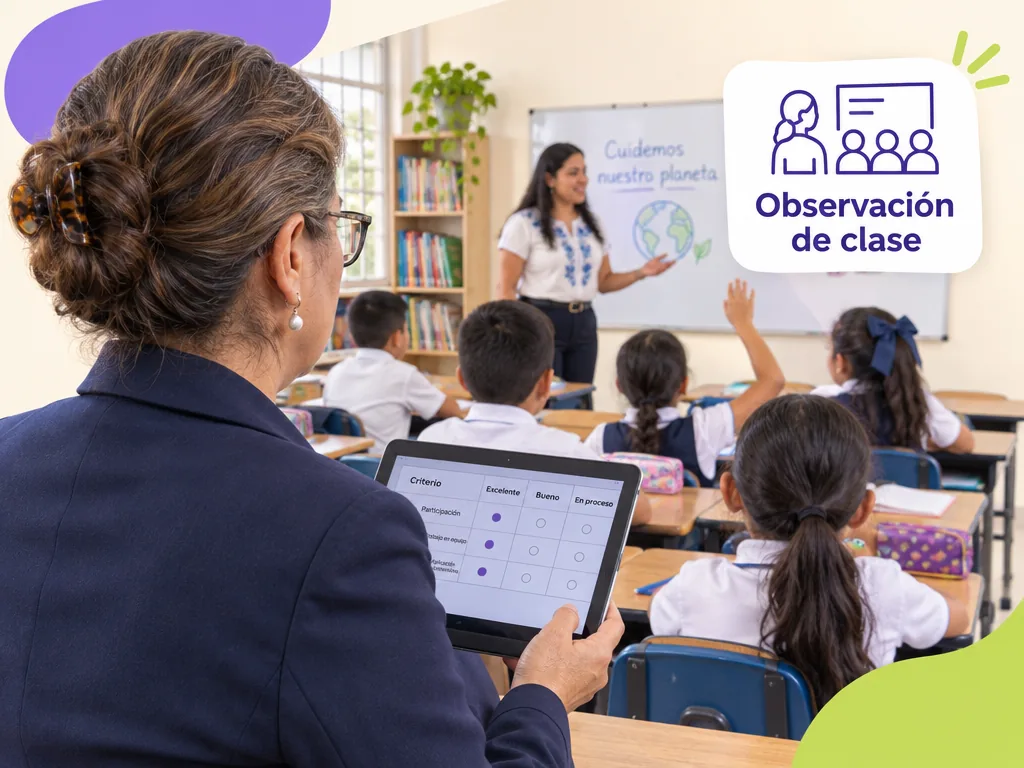
A tutoring program lasts as long as management's interest: the principal academy works on how to evaluate and support tutors, and the parent communication workshop prepares the conversation with the mother or father of the student in red.
Tutoring relies on teachers who detect and counters that solve: combine the program with teacher training, the student services course and the academic and administrative management course.
The traffic light reads submissions and activity from your e-learning platform; if you do not have one yet or want to tidy it up, Moodle implementation leaves the data ready for the dashboard and Geedle Bot answers tutors' and students' questions with the exact minute of the recording.
The same signs (absences, submissions, falling behind) anticipate new-hire turnover: digital onboarding includes the first-90-days traffic light and the corporate university tracks participants who fall behind on their paths.
Real projects told with facts, not promises.
Train crews spread across restaurants in several Mexican states and the United States with the same standard — and give every employee a clear view of how to grow inside the company.
Read the full caseBring an operation that lives on the road under a quality management system that meets the new ISO 9001:2026 and passes the certification audit.
Read the full caseTell us your level, how many students and tutors you have and what data you record. We reply the same day with a proposal for the program and the traffic light, free and with no commitment.