
Private schools from preschool to high school
Cycles per section in the school auditorium or online; the program is part of the value proposition that sustains re-enrollment.
- Preschool and primary
- Secondary
- High school
- Multi-campus networks
The parent school is the service your school offers its families that most shapes the relationship with them: limits, phones and study habits, "my child does not want to study", bullying, choosing a career and how to help without doing the homework. We design and deliver cycles of 3, 6 or 10 sessions of 60 to 90 minutes, by education level, with exercises, a home application guide, recorded attendance and a satisfaction survey, in the school auditorium, live online or recorded on the platform for those who could not attend. Educational focus, not clinical.
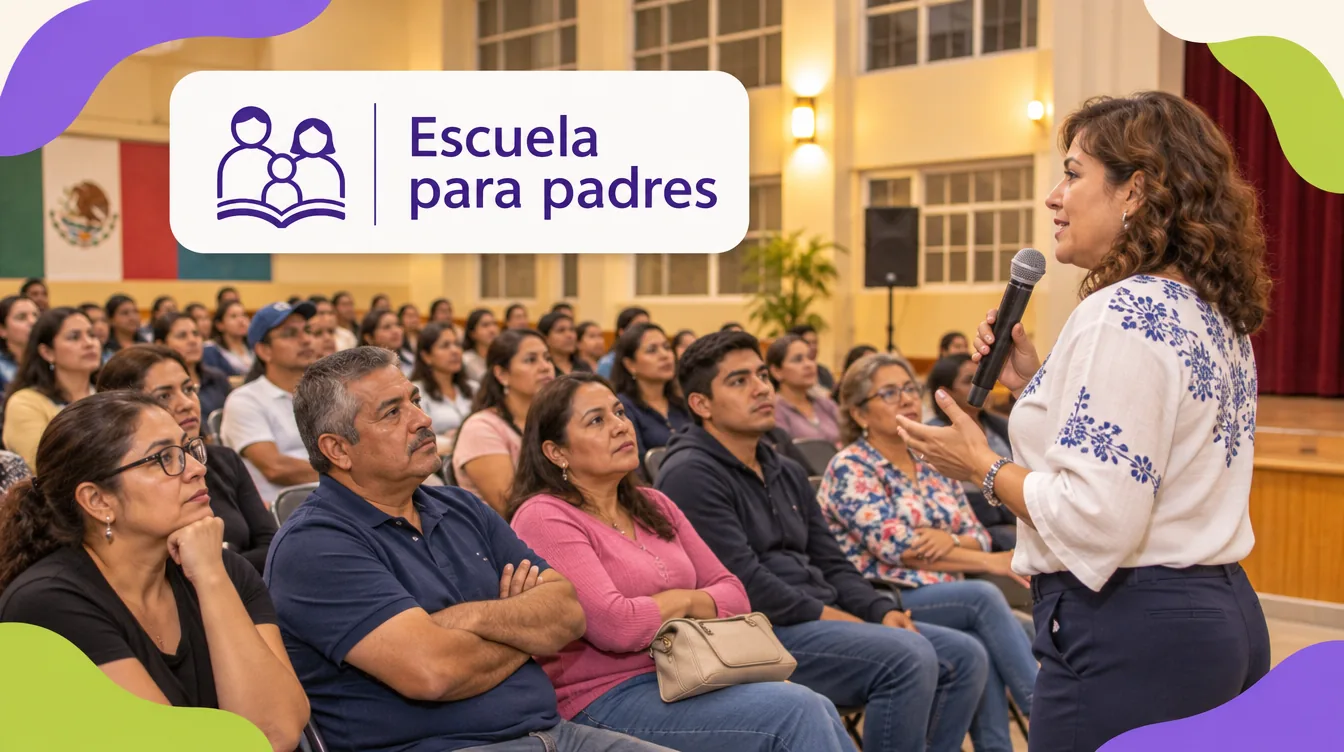
A parent school program for schools is a series of talks and workshops that the institution hires and offers to the mothers, fathers and guardians of its students so that school and family educate in the same direction. At Geedle it is organized in cycles of 3, 6 or 10 sessions of 60 to 90 minutes, with different topics for preschool and primary, for secondary and high school and for all levels, each with exercises in the session and a home application guide.
Because the complaints that wear down the principal's office are rarely academic: they come from families who cannot set limits, who do the homework for the child, who demand grades or who discover bullying or the 3 a.m. phone too late. A one-off talk motivates for a night; a program with continuity changes habits and, along the way, changes the conversation with the school: the family that understands why their child must do the homework alone stops fighting the grade. Traditional parent schools fail when they are only lectures; that is why every session includes an exercise, a guide for the week and a follow-up question. It is the natural complement to the parent communication and difficult conversations workshop for the leadership team: one prepares the school, the other prepares the families.
Cycle design with the principal (topics per section and a calendar that does not clash with meetings or report cards), a ready-to-send invitation, 60-to-90-minute sessions delivered by facilitators with classroom and school leadership experience, exercises in pairs or tables, a home application guide for each topic, 3-minute microcapsules for the school's WhatsApp group that recall the key idea during the week, attendance and satisfaction recorded per session, the recording on the school's e-learning platform for families who could not attend, and a report per cycle for the principal with attendance, best-rated topics and questions families left open. The permanent 10-session package also includes printed materials and a comparison between the start and the end of the cycle.
In three ways the principal can observe. First, complaints about homework, grades and discipline go down, because the family knows the school's criteria before there is a conflict. Second, attendance at meetings and response to notices go up: a family that learned something useful one evening comes back to the next. Third, it weighs on the decision to re-enroll: when the school is the place where the family gets help raising their children, switching schools over tuition costs more. We do not promise figures: we measure with you attendance per session, satisfaction and complaints recorded before and after the cycle, and we cross it with the institutional assessment if you want to see the effect on enrollment and trajectories.
Each session lasts 60 to 90 minutes; the principal chooses the cycle's topics according to the section and the year's problems.
| Topic | Recommended level | What the family takes home |
|---|---|---|
| Raising without overprotecting | Preschool and primary | A list of what the child can already do alone by age and a one-week family agreement |
| Setting limits is also educating | All levels | Three house rules written with clear, sustainable consequences |
| Am I raising an autonomous or a dependent child? | Primary and secondary | A ten-situation self-assessment and a weekly plan of responsibilities |
| My child does not want to study | Secondary and high school | A script for the conversation without scolding and a study schedule agreement |
| My child says they want to be an influencer | Secondary and high school | Questions to explore the interest without mocking and link it to studying |
| Should the school fail them, or should life? | Secondary and high school | Criteria for letting the child face consequences without abandoning them |
| How to help my child without doing the homework | Primary and secondary | A four-step homework routine and the phrases that actually help |
| Grades do not always reflect learning | All levels | How to read a report card and what to ask the teacher instead of fighting the number |
| Phones, social media and study habits | Primary and secondary | A written family screen agreement, with schedules and phone-free zones |
| My child is being bullied, what should I do? | Primary and secondary | Warning signs, what to say at home and how to activate the school protocol |
| What if my child is the one bullying classmates? | Primary and secondary | How to react without denying or punishing blindly and how to repair the harm |
| My child does not know what career to choose | High school | An interests-and-strengths matrix and a decision calendar for senior year |
| How to prepare my child for university | High school | A checklist of autonomy, money and organization habits that university takes for granted |
| Tuition does not replace the responsibility to educate | All levels | A school-family co-responsibility agreement to sign at the start of the year |
A typical cycle is designed in two weeks and starts with the first section meeting.
Choose topics per section and a calendar
With the principal and coordinators we review complaints, discipline cases and the questions families repeat most; from there come the topics for each section (preschool and primary, secondary and high school) and dates that do not clash with meetings, exams or report cards. If you do not know where to start, the free "Express school assessment" includes the family relations dimension.
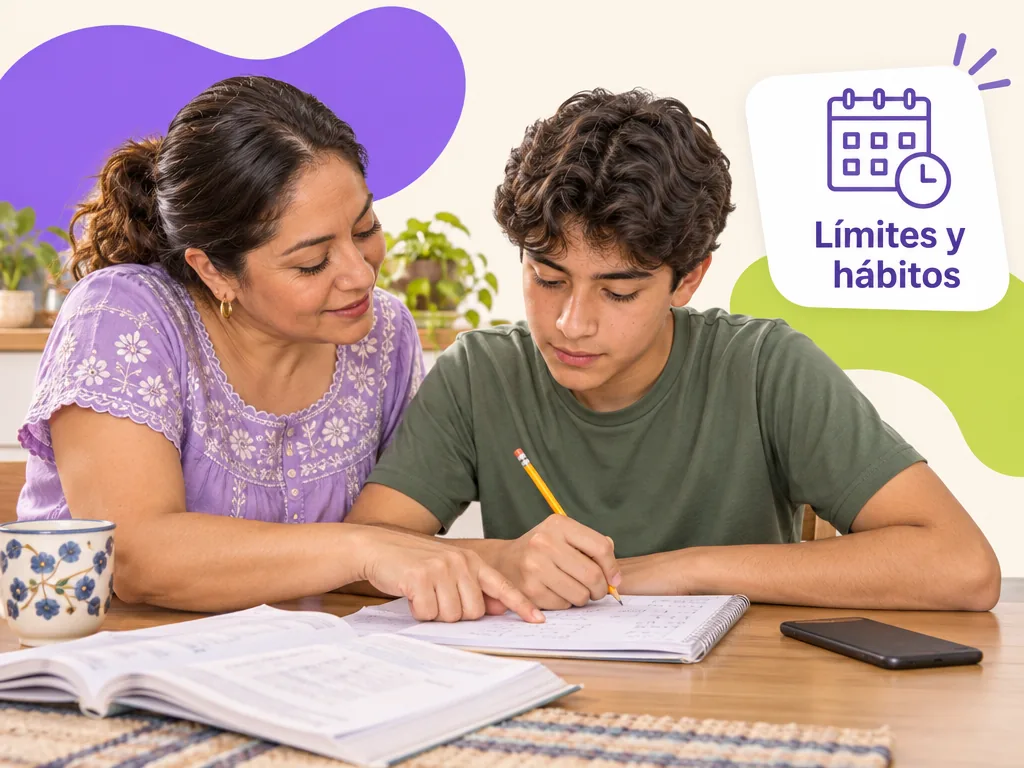
Invite and deliver the sessions
We deliver the invitation ready to send by circular, email and WhatsApp, and the first microcapsule that previews the topic. We run each 60-to-90-minute session in the school auditorium or live online, with table exercises and the home application guide; the recording stays on the platform for families who could not attend.
Reinforce during the week and measure
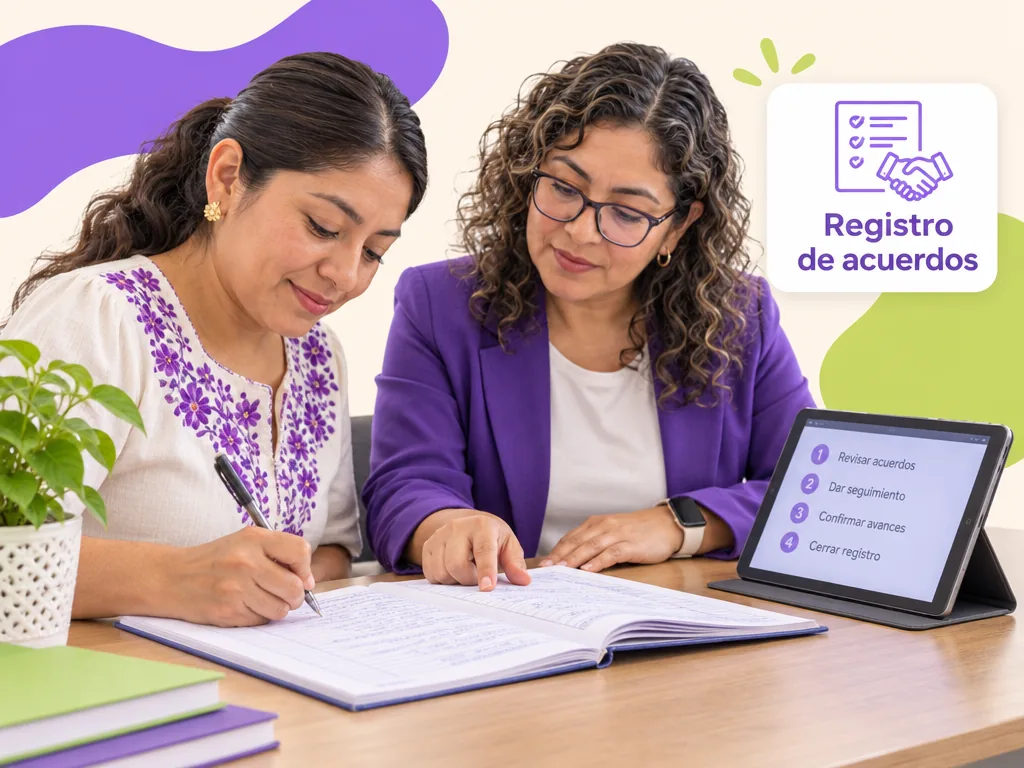
Between sessions, the school's WhatsApp group receives 3-minute microcapsules that recall the key idea and a follow-up question; at the end of the cycle the principal receives the report of attendance, satisfaction and open questions, and the proposal for the next cycle.
Tell us which section worries you and we will propose a three-session cycle to start, free and with no commitment.
Practical, by level, measured and with continuity between sessions.
The mother of a preschooler is not the father of a high-school student who does not want to study: each section has its own cycle.
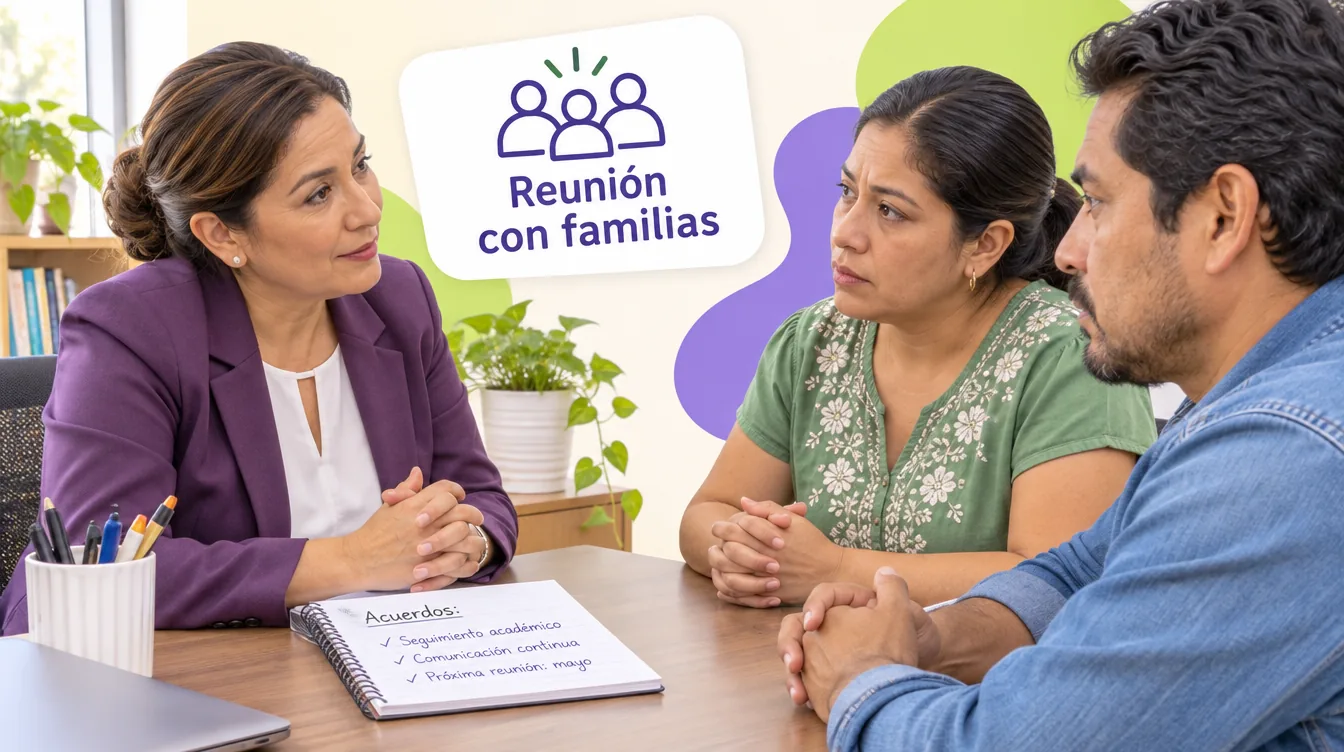
Every session ends with a concrete agreement for the week: three house rules, the homework routine, the written screen agreement.
Between sessions, 3-minute capsules for the school's parent group recall the key idea and keep the conversation alive.
School auditorium, live online session or a recording on the platform for the family that works nights or lives far away.
The principal sees who attended, which session was rated best and which questions were left open; the report serves the board and re-enrollment.
We talk about parenting, limits and habits; when a case requires psychological care or a protocol, we say so and refer it to specialists.
The same program, with different topics and schedules depending on who is invited.
Cycles per section in the school auditorium or online; the program is part of the value proposition that sustains re-enrollment.
Sessions at start-of-year meetings and report-card days, on limits, homework, phones and bullying; complements official programs, does not replace them.
Sessions for parents of first-year students: autonomy, money, habits and how to support without controlling; linked to the tutoring and early alert program.
Wellbeing programs for employees with children within NOM-035 actions, parenting workshops for DIF and municipal governments, savings funds and unions.
From topic assessment to the closing report within a school year or a semester.
Review with the principal and coordinators of complaints, cases and families' frequent questions; topic selection per section.
Cycle per sectionDates that do not clash with meetings or report cards, in-person or online format per session, invitation and first microcapsule ready.
Invitation sent60 to 90 minutes with exercises, home application guide and platform recording; attendance and satisfaction recorded.
Guides delivered3-minute microcapsules and a follow-up question in the school's WhatsApp group between one session and the next.
Capsules sentAttendance, satisfaction, open questions and start-to-end comparison in the permanent package; proposal for the next cycle.
Report for the principalDesigned for working mothers and fathers and for schools with little coordination time.
The parent school pays off more when the leadership team and the teachers already know how to lead a meeting with an upset family. That is why we usually propose it together with the parent communication and difficult conversations workshop and the principal academy: the school sets the criteria and communicates them calmly; the family understands them before there is a conflict. If you also want to answer inquiries and enrollment without overwhelming the front desk, the AI WhatsApp agent for schools serves families around the clock.
The principal academy prepares whoever runs the school to sustain the criteria the parent school communicates to families, and the parent communication workshop trains difficult meetings with voice practice.
In high school and university, sessions for parents of first-year students link to the tutoring and early alert program; to see the effect on enrollment and trajectories, the institutional assessment measures the family relations dimension before and after.
Combine the program with the campus's teacher training and with the microlearning subscription so the parent school microcapsules live alongside the staff's on the same e-learning platform.
Real projects told with facts, not promises.
Train crews spread across restaurants in several Mexican states and the United States with the same standard — and give every employee a clear view of how to grow inside the company.
Read the full caseBring an operation that lives on the road under a quality management system that meets the new ISO 9001:2026 and passes the certification audit.
Read the full caseTell us which section and which problem keeps you up at night: homework, phones, limits or bullying. We reply the same day with a proposed cycle and a quote, free and with no commitment.