
Maintenance and construction contractors
Work at height, hot work, theectrical work and confined spaces; work permits and lockout-tagout.
- Work permit
- Work at height
- LOTO
- Confined spaces
A QR code at the gatehouse, reception or supplier entrance opens your plant's safety induction on the phone: five minutes of video with the rules, the risks of the area they will visit, protective equipment and what to do in an emergency, a short assessment and registration with name, company and date. The contractor enters knowing the rules, security sees on screen who has completed the induction and industrial safety has the evidence ready for audits and your management system.
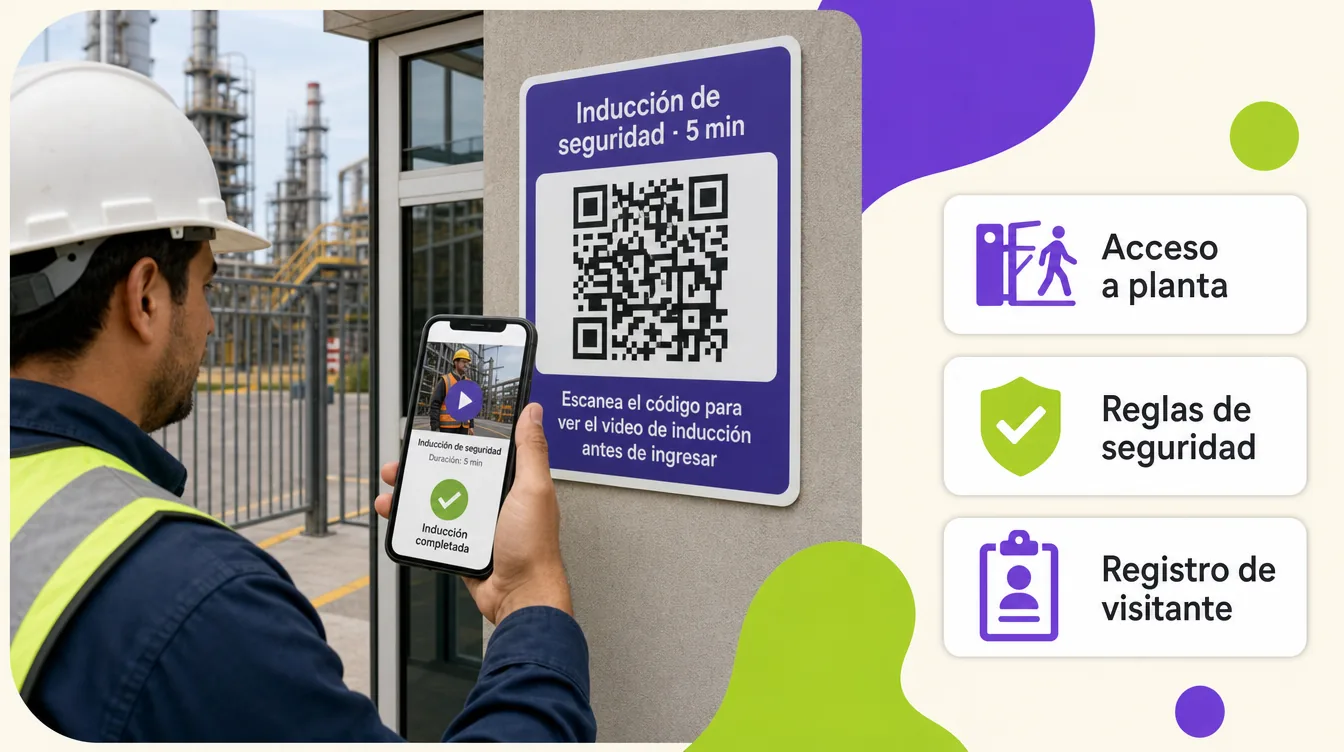
The QR code induction is a safety induction taken on the phone by scanning a code at the plant entrance: a five-minute video with rules, area risks, protective equipment and emergencies, a short assessment and registration of name, company, area and date. Security confirms on screen that the person completed it before entering.
Because the sheet is signed at the gatehouse without reading it, the twenty-minute video is shown in a room that is not always available and the safety person who gave the talk is not on the night shift or on Saturday, when most maintenance contractors come in. The result: suppliers walking through restricted areas, contractors without protective equipment and visitors who do not know where the assembly point is. With the QR code induction, the same approved version is viewed on any shift and at any entrance, and nobody enters without the record.
The script and production of the induction video filmed at your plant (general rules, risks by area, protective equipment, emergencies, signage and conduct), versions by type of person (contractor, supplier, visitor, auditor) and by area, subtitles and English if you receive foreign visitors, the comprehension assessment, the registration form with the data your management system requires, the QR code on signs for the gatehouse and reception, the security screen with each person's status, the induction certificate with configurable validity and the report for industrial safety, the safety committee and audits. It integrates with the QR capsule system at the workstation and with emergency brigade training.
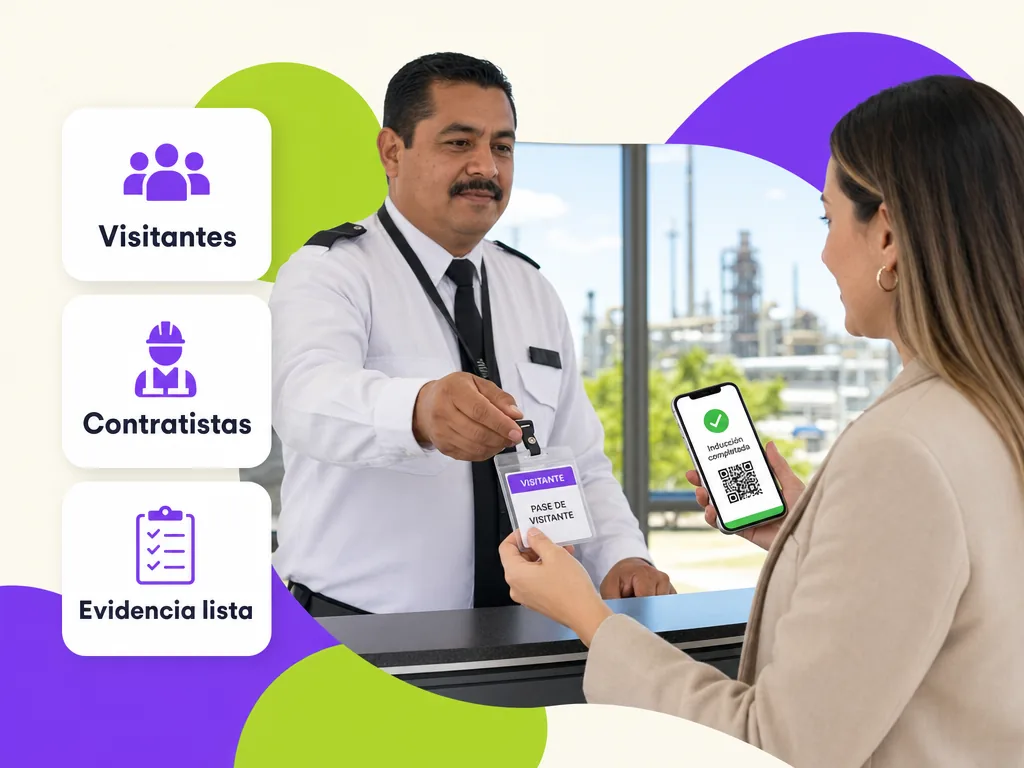
The contractor arrives, scans the QR code on the sign and watches the induction on their phone while waiting; they answer the assessment, fill in the registration and get a green screen with their name and the date. Security checks the screen or scans the person's code and hands over the badge. If the induction is still valid on a later visit, the system recognizes it and only asks to confirm the area; if it expired or the video changed, it asks to watch it again. For visitors without a phone, the gatehouse tablet shows the same induction and security registers the person. Everything goes into the report by date, company and area.
We start from your internal regulations, your safety rules and your contractor requirements.
Rules and profiles
We review with industrial safety the regulations, contractor requirements and risks by area; we define the induction versions (contractor, supplier, visitor, auditor) and the registration data.
5-minute video filmed at your plant
We film at your entrances, corridors and areas: rules, protective equipment, signage, evacuation routes and assembly point. We edit with subtitles and, if needed, in English; we add the comprehension assessment and the registration form.
Signs, screen and report
We install the QR code signs at the gatehouse, reception and supplier entrances, the security screen with each person's status and the report for industrial safety; we train security in one session per shift.
The same approved induction, on every shift, with evidence per person.
The contractor watches the induction at the gatehouse while waiting for the badge; no half-day lost and no skipped talk.
Maintenance contractor, materials supplier, office visitor or auditor: each one sees only the rules that apply to them.
The certificate expires after 30, 90 or 365 days according to your policy; on expiry, the system asks to watch the induction again.
The guard sees who completed the induction, with name, company and time, before handing over the badge.
Record per person, company, area and date, with the approved video version; exported for audits and the safety committee.
Night, weekend and maintenance shutdowns: the induction does not depend on someone from safety being available.
Rules change depending on who enters and where; so does the induction.
Work at height, hot work, theectrical work and confined spaces; work permits and lockout-tagout.
Yard, docks, forklifts and waiting areas; rules for drivers and helpers.
Escorted plant tours, visitor protective equipment and evacuation routes.
Entrances with their own rules: biosafety, explosives, internal traffic and park regulations.
A plant usually has the induction active at every entrance in three to five weeks.
Meeting with industrial safety, security and purchasing; regulations, contractor requirements, entrances and types of person.
Script per versionWe film entrances, signage, protective equipment, evacuation routes and assembly point; we edit with subtitles and in English if needed.
Approved videoWe configure the comprehension assessment, the registration form, validity per type of person and the security screen.
System configuredWe install the QR code signs and the gatehouse tablet; we train security on every shift and launch with the week's contractors.
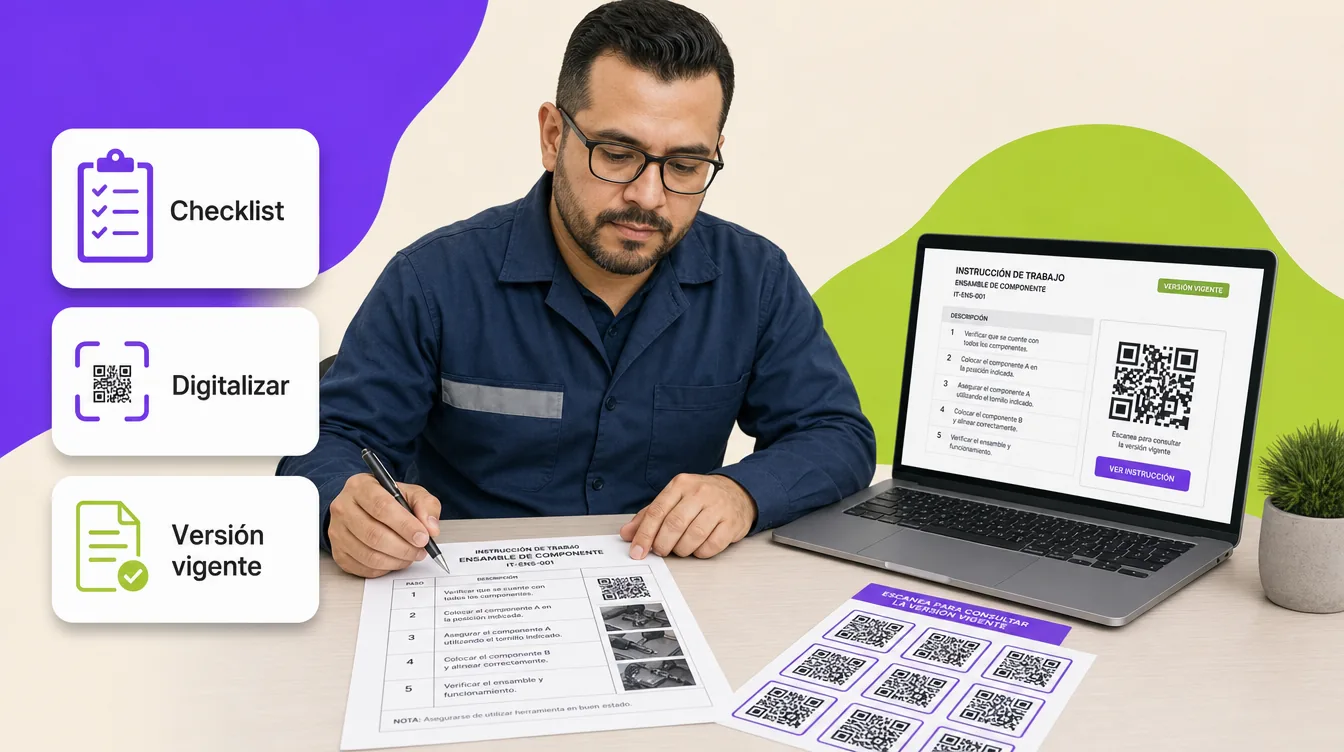
Induction activeWe review records, assessments and incidents with industrial safety; we update the video when rules or areas change, without changing the codes.
Monthly reportDesigned for the gatehouse, reception and supplier entrances, from the phone or the tablet.
All three coexist; this table shows what each one solves.
| Criterion | QR code induction | Signed sheet at the gatehouse | In-person safety talk |
|---|---|---|---|
| When it is taken | At the gatehouse, before entering, on any shift | When signing, without reading it | When someone from safety is available |
| Duration | 5-minute video and assessment | 1 minute | 20 to 40 minutes |
| Current version | Always the approved one, same code | Printed forms that go stale | Depends on who gives it |
| Evidence | Record, assessment and validity per person | Signature | Attendance list |
| Best for | General access and renewals | Meeting an administrative requirement | High-risk work with a work permit |
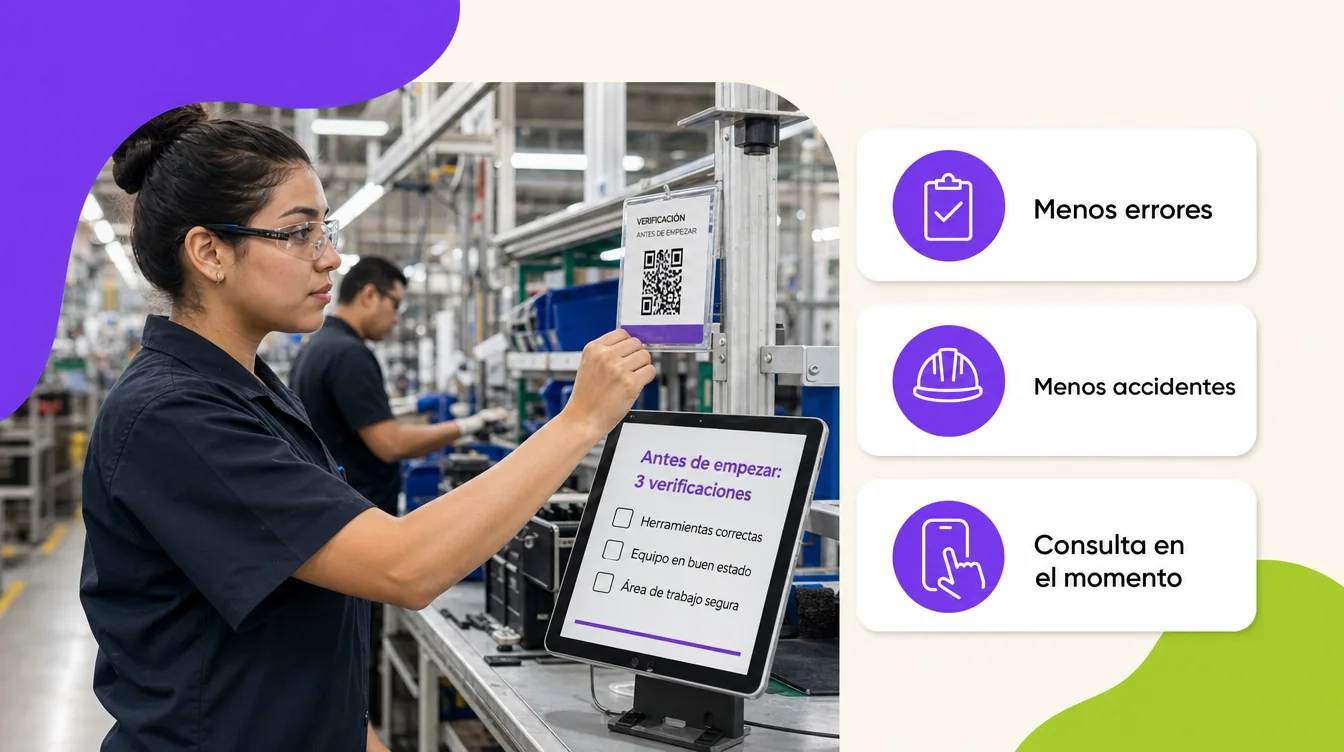
The QR induction connects with the workstation capsules (the contractor who will work on a machine also scans its code and sees the lockout procedure) and with brigade training and drills, so the rules seen at the gatehouse are the same ones the plant practices.
The contractor who enters to work on a piece of equipment scans that equipment's QR code and sees the procedure and the safety rule for that point; see QR code training at the workstation.
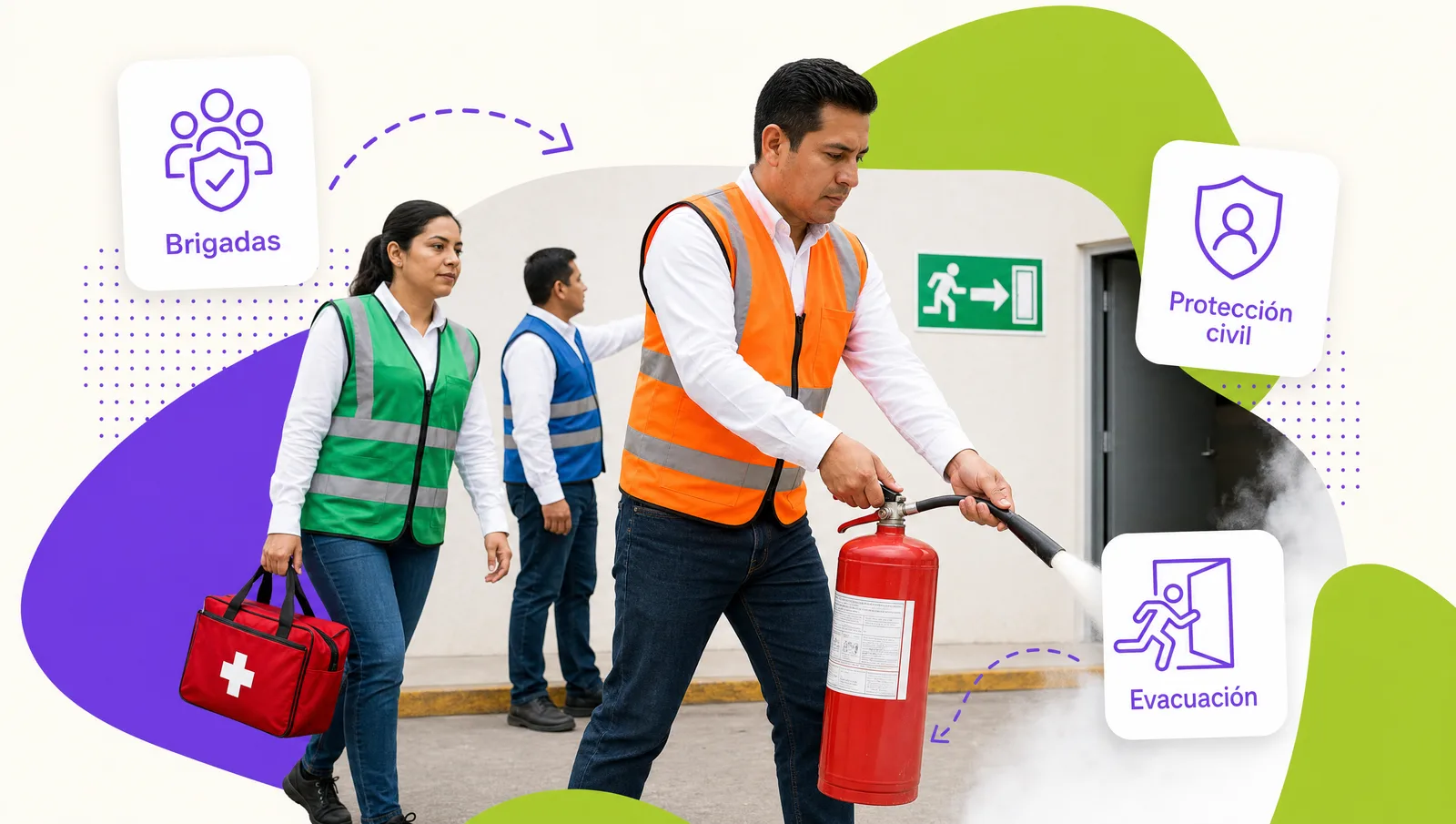
The induction covers evacuation routes and the assembly point; the plant practices them with emergency brigade training and the 360° simulators for evacuation and extinguishers.
For new hires, the safety induction is part of digital onboarding with a virtual tour and DC-3 certificate, and for universities there is the version for labs and workshops.
What to include and how to record the contractor and visitor safety induction, 60-second micro-drills before the shift and just-in-time training for NOM-035 and safety.
Programs sized for large teams, delivered without stopping operations — and with the evidence your auditors ask for.
Update a large faculty — university and high school — on artificial intelligence and inclusive teaching, without stopping classes.
Read the full caseTrain crews spread across restaurants in several Mexican states and the United States with the same standard — and give every employee a clear view of how to grow inside the company.
Read the full caseTell us how many entrances you have, which kinds of contractors you receive and what your management system requires. We reply the same day with a proposal and dates.