What are micro-credentials and what are they for: 2026 guide
Micro-credentials are short, verifiable certifications of a specific skill. This guide explains what they are, how they differ from a diploma, a certificate, or a digital badge, which types exist, what benefits they bring to students, professionals, educational institutions, and companies, and how they are issued and verified with Open Badges 3.0 and blockchain.
In this article
- What are micro-credentials?
- Micro-credential, digital badge, certificate, and diploma: the differences
- Types of micro-credentials
- Benefits of micro-credentials
- For students and professionals
- For employers
- For issuing institutions and companies
- How is a micro-credential issued and verified?
- Want to see a micro-credential issued under your brand?
What are micro-credentials?
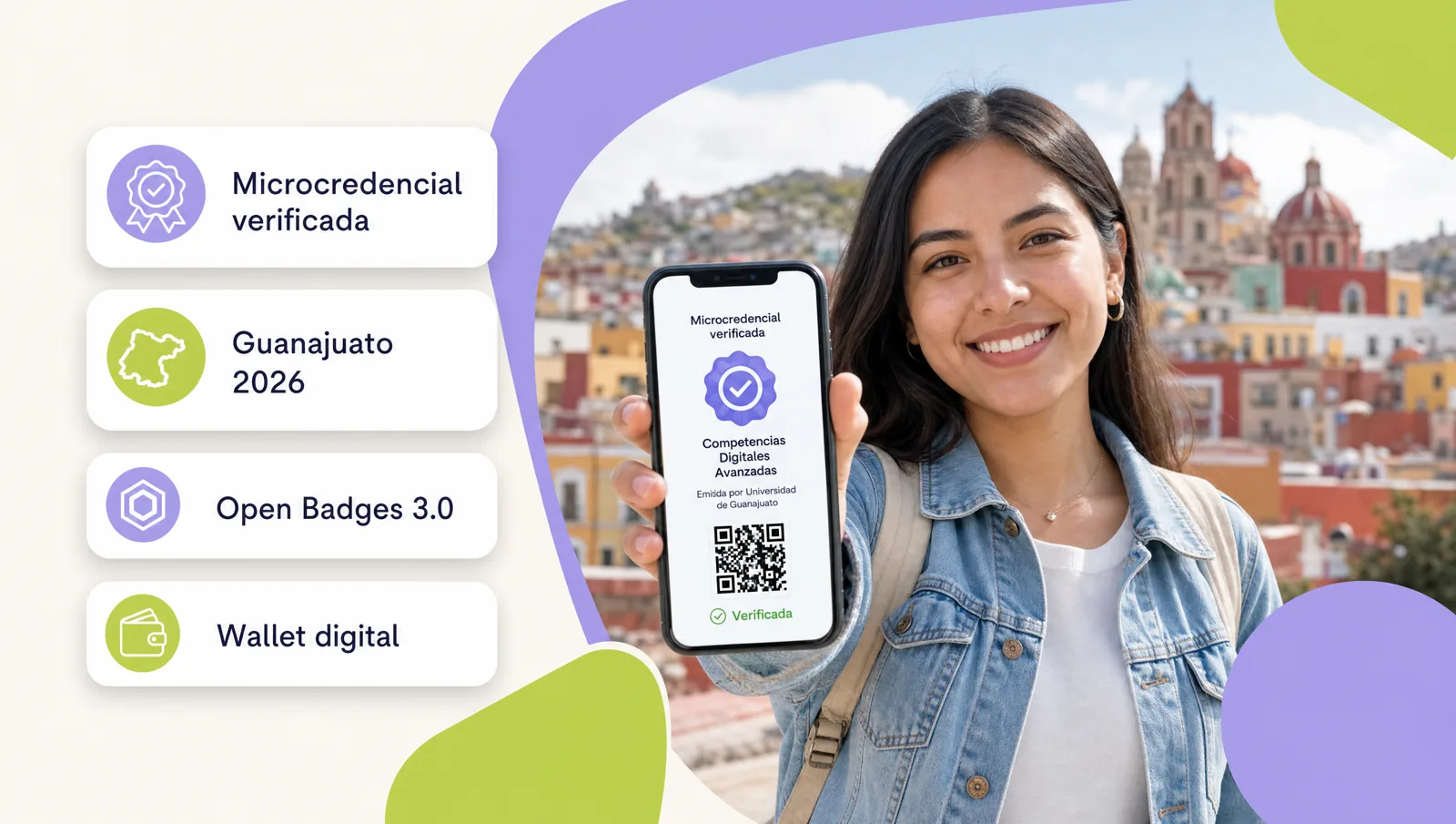
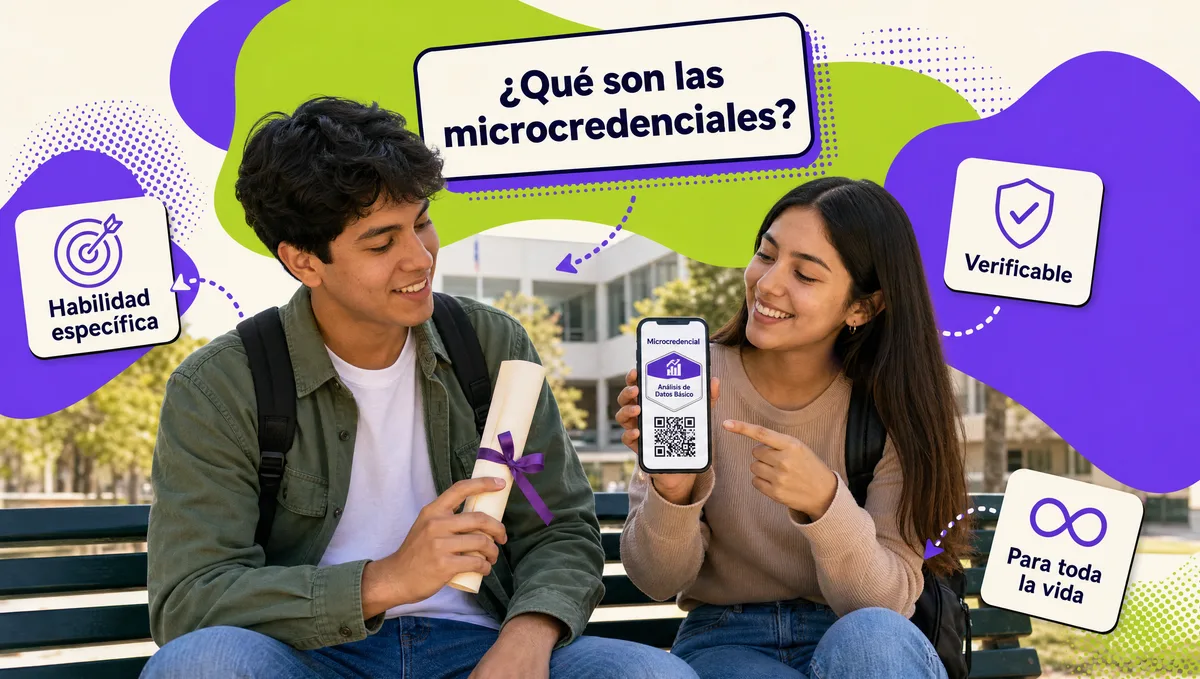
A micro-credential is a digital certification attesting that a person demonstrated a specific skill, competency, or achievement: a data-analytics module, an industrial-safety course, a leadership path, an internal company certification. Unlike a degree or diploma that sums up years of study, a micro-credential is short, focused on one concrete learning outcome, and carries verifiable data: who issued it, to whom, when, under which criteria, and with what evidence.
The term grew up in higher education around lifelong learning, but today high schools, companies with corporate universities, chambers, and government programs use it too. What sets micro-credentials apart from a traditional certificate is that they are verifiable (any employer confirms authenticity without contacting the issuer), portable (they travel in the person's wallet and LinkedIn profile), and stackable (several micro-credentials form a learning path).
Micro-credential, digital badge, certificate, and diploma: the differences
| Concept | What it certifies | Format | Verification |
|---|---|---|---|
| Micro-credential | A specific skill or competency | Digital, with metadata and evidence | Public, via QR or link; immutable with blockchain |
| Digital badge | The visual representation of a micro-credential | Image with Open Badges metadata | Same as the micro-credential it represents |
| Certificate | Attendance or passing a course | Paper or PDF | Contact the issuer; easy to forge |
| Diploma or degree | A full program of study | Paper, sometimes officially registered | Paperwork with the institution or authority |
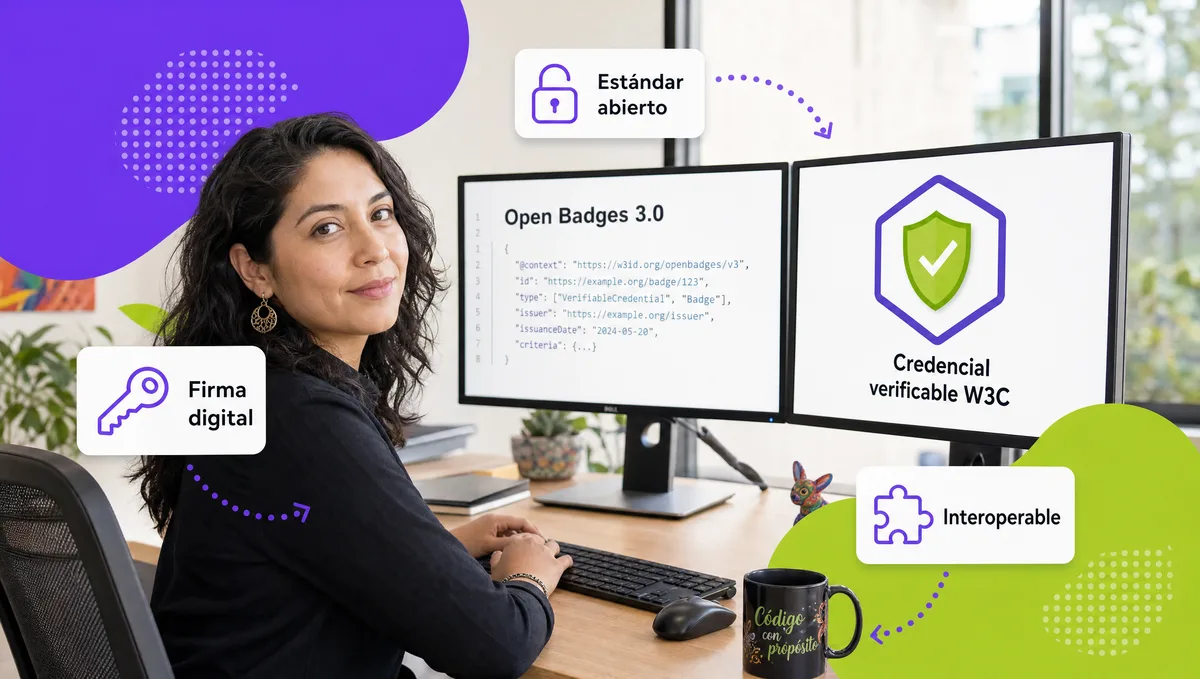
In practice, a modern micro-credential is a digital badge: the image you see is only the visible face of a JSON-LD document signed under Open Badges 3.0 and W3C Verifiable Credentials.
Types of micro-credentials
- Academic: issued by universities for modules, diploma programs, continuing education, or recognition of prior learning, usually with hours, level, and learning outcomes.
- Employability skills: competencies employers ask for (digital skills, English, sales, customer service). These are the ones high schools and workforce programs push.
- Technical and compliance: industrial safety, quality, equipment operation, protocols. In Mexico they often accompany the DC-3 certificate and serve as audit evidence.
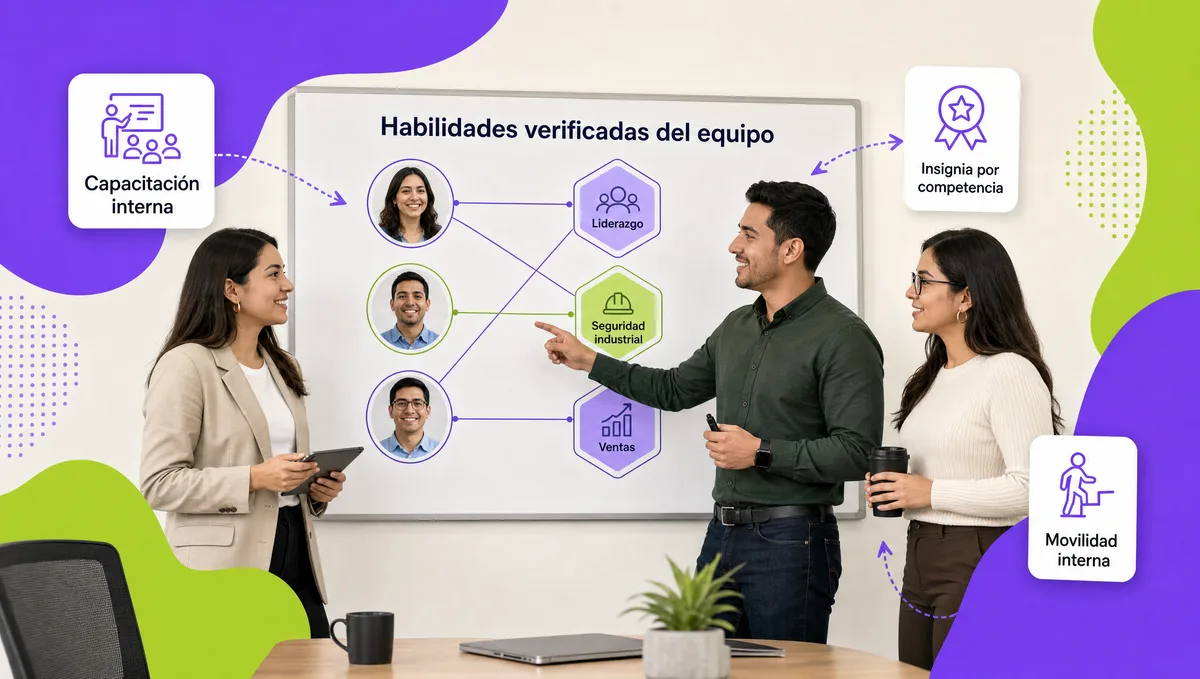
- Corporate: internal onboarding, leadership, or product paths certified by the company itself, often from a corporate university.
- Stackable: micro-credentials that belong to a path with prerequisites and, together, add up to a larger certification.
Benefits of micro-credentials
For students and professionals
Flexibility to acquire specific knowledge without waiting for a long program, concrete evidence of skills shown on LinkedIn and a public profile, and a trajectory that grows over a lifetime.
For employers
Hiring for skills verified in seconds instead of trusting a PDF or calling the institution. More and more companies evaluate concrete competencies rather than formal studies alone, and micro-credentials make that evaluation fast and reliable.
For issuing institutions and companies
A more attractive continuing-education offering, real ties with industry, and data a diploma never generates: which programs are in demand, which badges recruiters verify most, and where graduates work. See micro-credentials for companies and micro-credentials in Mexico.
How is a micro-credential issued and verified?
- Design: the institution defines the competency, assessment criteria, evidence, and badge image with its brand.
- Issuance: individual or bulk via CSV; with Moodle, automatic on passing the course.
- Signature and record: the credential is digitally signed and its hash anchored on a public blockchain (Ethereum or Polygon); image and metadata go to IPFS.
- Delivery: the person gets a notification, accepts the credential, and saves it to Apple Wallet, Google Wallet, or a public profile.
- Verification: anyone scans the QR or opens the public link and confirms in real time that the credential is authentic, unaltered, and not revoked.
With a micro-credentials platform the whole flow takes under 60 seconds per batch. If your organization is in Mexico, we have pages with local context: micro-credentials in León, Monterrey, Guadalajara, and Mexico City.
Want to see a micro-credential issued under your brand?
Now that you know what micro-credentials are, the next step is seeing them work with your own program catalog. Book a 30-minute demo: message us on WhatsApp, fill out the contact form or open this site's live chat. We show you issuance, QR verification, and the wallet in your colors, no cost and no commitment. The whole platform is described at verifiable micro-credentials platform.