Micro-credentials in Mexico: the 2026 landscape for institutions and companies
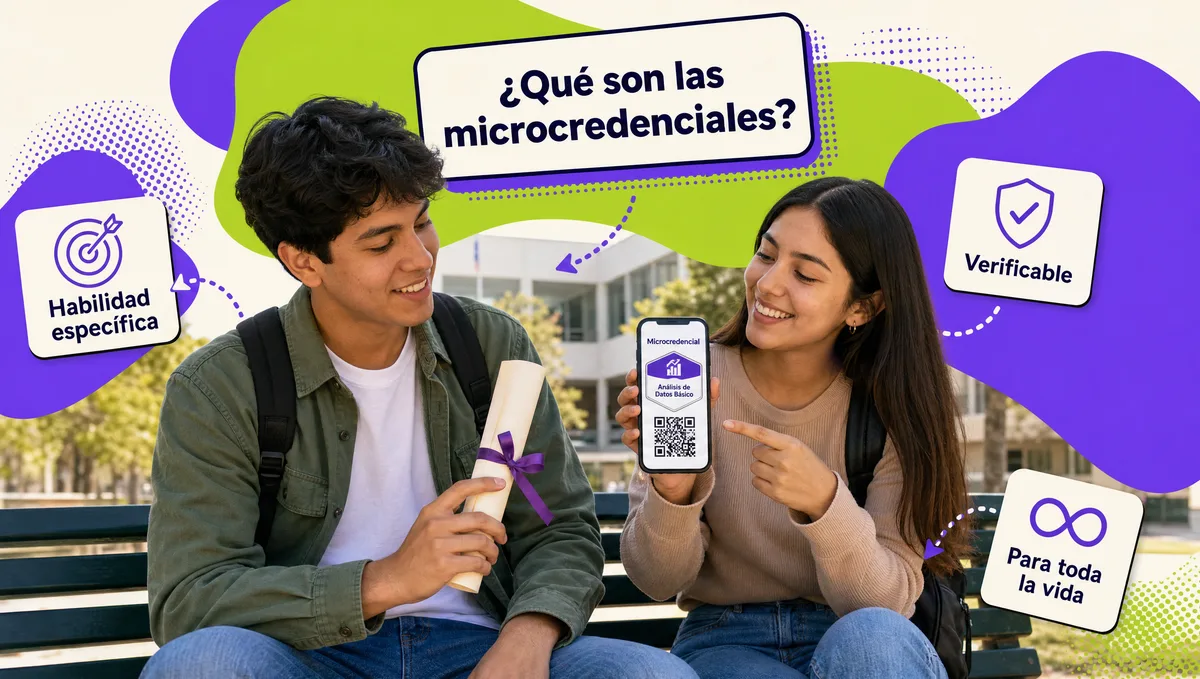
Micro-credentials stopped being a conference trend and started showing up in state laws, national programs, and continuing-education catalogs. We summarize the Mexican landscape in 2026 (SEP, Guanajuato, Ceneval, programs with universities and companies), what is still missing, what universities and companies are doing, and where to start.
In this article
Where micro-credentials stand in Mexico in 2026
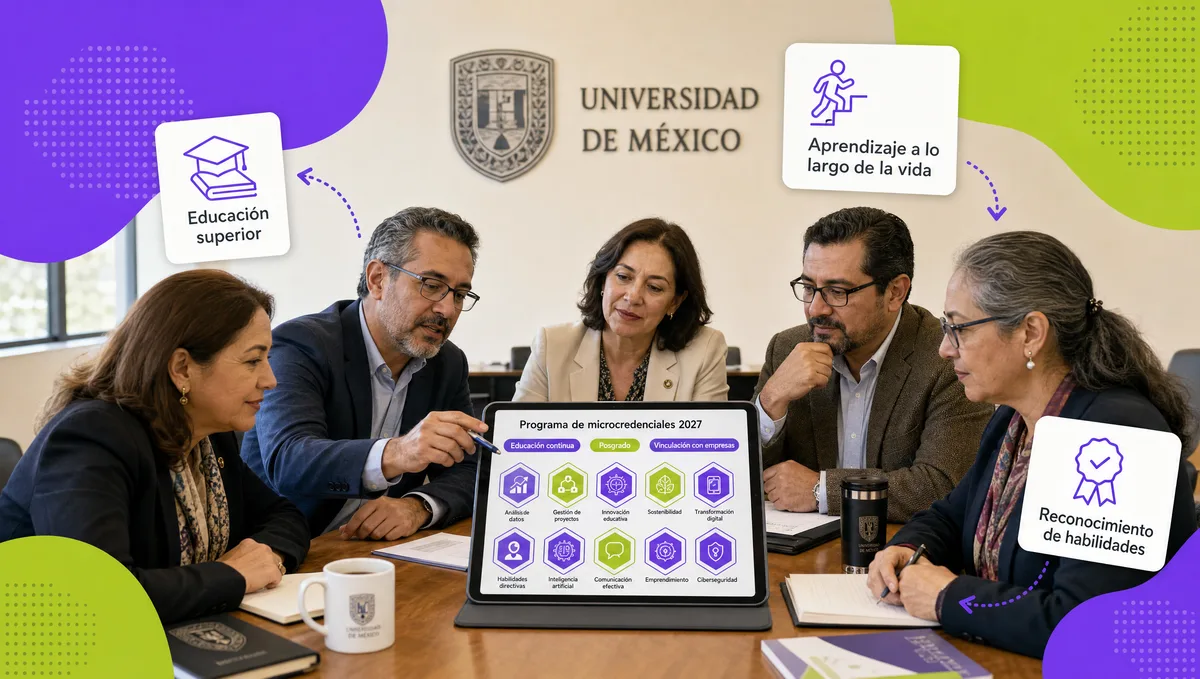
Three years ago, micro-credentials in Mexico meant a couple of private universities and foreign platforms. The landscape is different now. According to reports, the Ministry of Public Education (SEP) set up a National Commission for Lifelong Learning in 2025 to articulate a federal micro-credentials framework, and is working on a national skills-recognition platform. In parallel, programs involving Ceneval, financial groups, and Tecnológico de Monterrey have brought dozens of public and private universities on board to issue employability micro-credentials, and states such as Aguascalientes run state programs in AI, data, and cybersecurity with their universities.
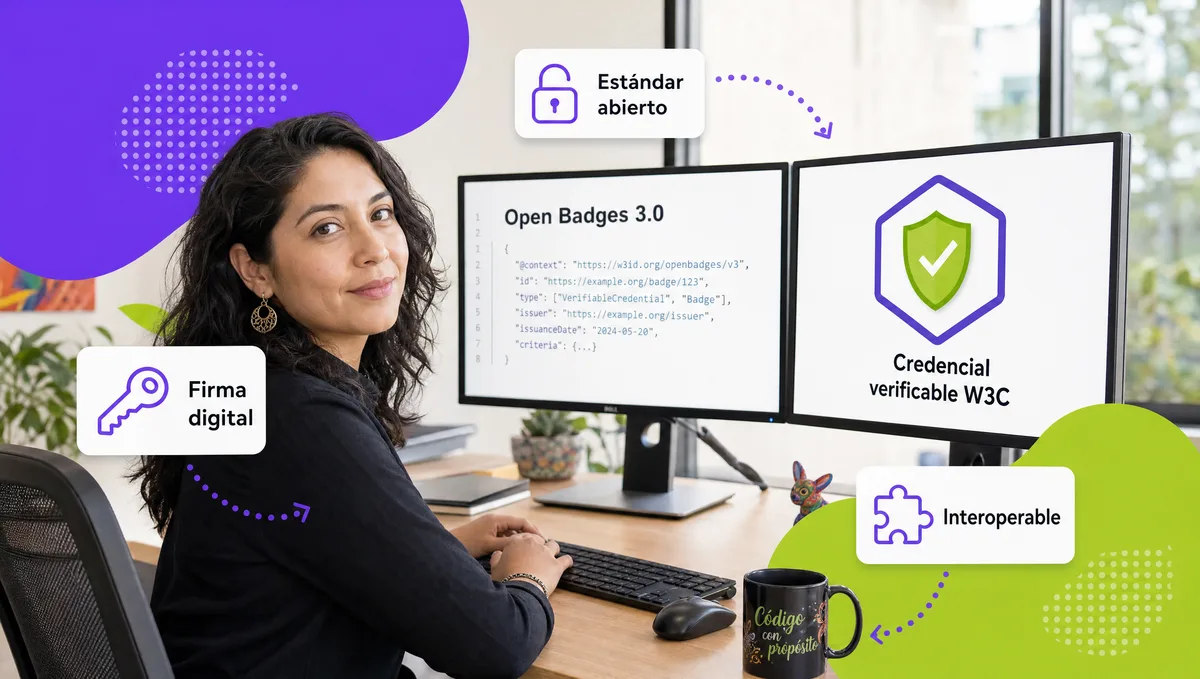
What still does not exist is a single federal regulatory framework. Each institution defines its own micro-credentials today, which makes it more important, not less, that they be verifiable and follow open standards: a credential issued under Open Badges 3.0 will still be readable and checkable when that framework arrives.
Guanajuato: the pioneer state
Guanajuato was the first state to expressly recognize micro-credentials in its Higher Education Law (2024). The state government promotes them as official skills certifications that complement the high-school diploma, so that young people graduate with a document that attests to what they can do and opens doors in the job market. For high schools, technological universities, and companies in the industrial corridor, the question shifts from "should we issue micro-credentials?" to "with which platform, and when?". We cover that context at micro-credentials in Guanajuato and León.
What universities are doing
- Continuing education: diploma programs and short courses that end in a verifiable badge instead of a PDF, with specialization paths chaining several micro-credentials.
- Industry partnerships: dual and employability programs where the institution certifies competencies defined with industry and the company verifies them when hiring.
- Recognition of prior learning: accrediting skills acquired outside the classroom with clear evidence and criteria.
- Institutional strategies: some public universities already run their own badge and digital-credential platforms; others prefer a platform under their brand and domain so they do not have to build or maintain the technology.
What companies are doing
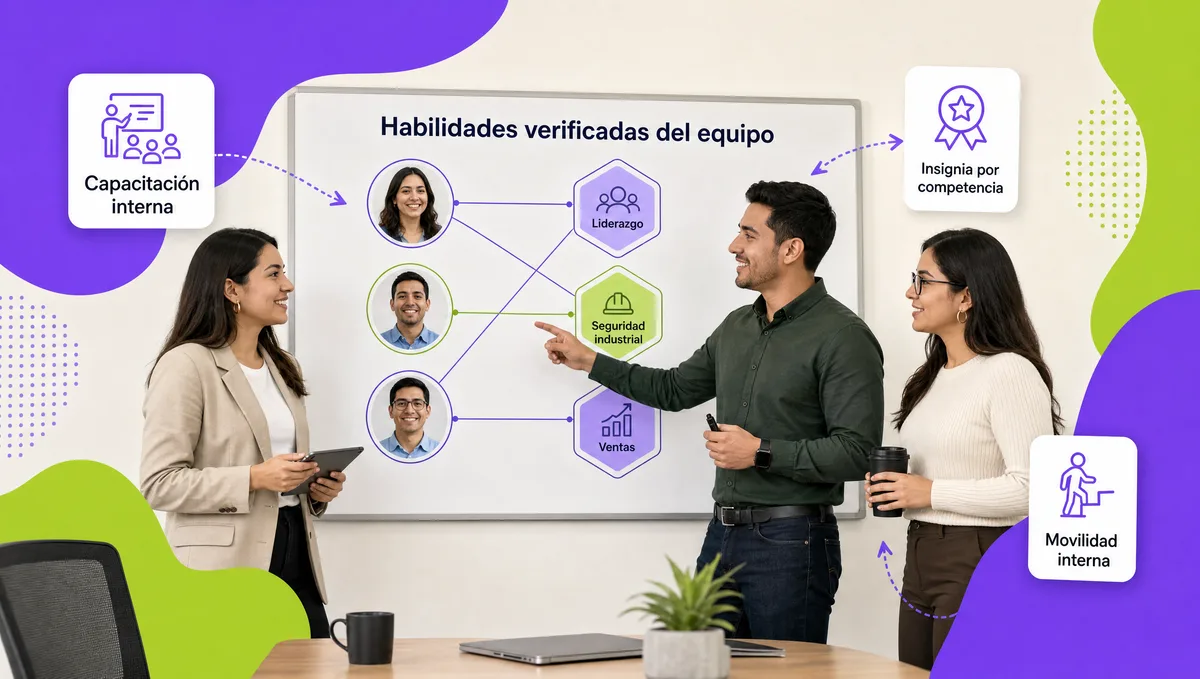
Skills-based hiring is no longer just talk: talent teams evaluate concrete competencies and ask for evidence. Companies use micro-credentials to certify onboarding, safety, quality, and leadership paths in their corporate university, with the DC-3 certificate accompanied by a verifiable badge. In nearshoring hubs such as Nuevo León and Querétaro, certifying technicians in bulk and verifying their skills with one scan became an operational need. Details in micro-credentials for companies.
What is still missing (and how to cover it today)
| Pending in Mexico | What you can do now |
|---|---|
| A single federal micro-credentials framework | Issue under Open Badges 3.0 and W3C VC: any future framework will be compatible |
| A national credential registry | Anchor every credential on a public blockchain: an immutable record anyone can verify |
| Recognition between institutions | Full metadata (competency, criteria, evidence, hours) so another institution can assess them |
| A verification culture among employers | Public QR verification without sign-up: if it is easy, it gets used |
Where to start
- Pick a program with clear demand (a diploma program, an onboarding path, a safety course) and define its competencies and criteria.
- Design the badges with your brand and decide whether they stand alone or form a path with prerequisites.
- Issue the first batch via CSV or from your LMS, and measure acceptance and verifications.
- Scale to more programs and publish your graduates' public profiles.
For the concept from scratch, read what micro-credentials are. And if your institution is in Mexico City, Puebla, Guadalajara, or Monterrey, we have local context for each.
Want to see a micro-credential issued under your brand?
The national framework will come; your graduates and employees can hold verifiable credentials starting this term. Book a 30-minute demo: message us on WhatsApp, fill out the contact form or open this site's live chat. We show you issuance, QR verification, and the wallet in your colors, no cost and no commitment. The whole platform is described at verifiable micro-credentials platform.