NOM-035 in 2026: what it requires, who it applies to and what the fines are
NOM-035-STPS-2018 has been fully in force for several years and in 2026 the STPS inspects it like any other occupational safety and health standard. Even so, many companies still wonder what they must do depending on their size and what happens if they don't. Here is the answer on a single page, with the table of obligations and the references to verify it in the current text.
In this article
What is NOM-035 and since when is it mandatory?
NOM-035-STPS-2018 is the Mexican official standard that requires workplaces to identify, analyze and prevent psychosocial risk factors and to promote a favorable organizational environment. It was published in the Official Gazette (DOF) on October 23, 2018 and took effect in two stages: the first on October 23, 2019 (policy, prevention measures, identification of workers exposed to severe traumatic events and dissemination) and the second on October 23, 2020 (identification and analysis of risk factors, evaluation of the organizational environment and records). It has been fully enforceable since then.
Who does NOM-035 apply to?
It applies to every workplace in Mexico, regardless of industry, and what changes with headcount is the scope of the obligations. The standard distinguishes three ranges: up to 15 workers, 16 to 50 and more than 50. The count is per workplace, not per legal entity, so a company with several branches may have different obligations at each one. If you are unsure how to count temporary or outsourced staff, consult the current text of the standard and its reference guide.
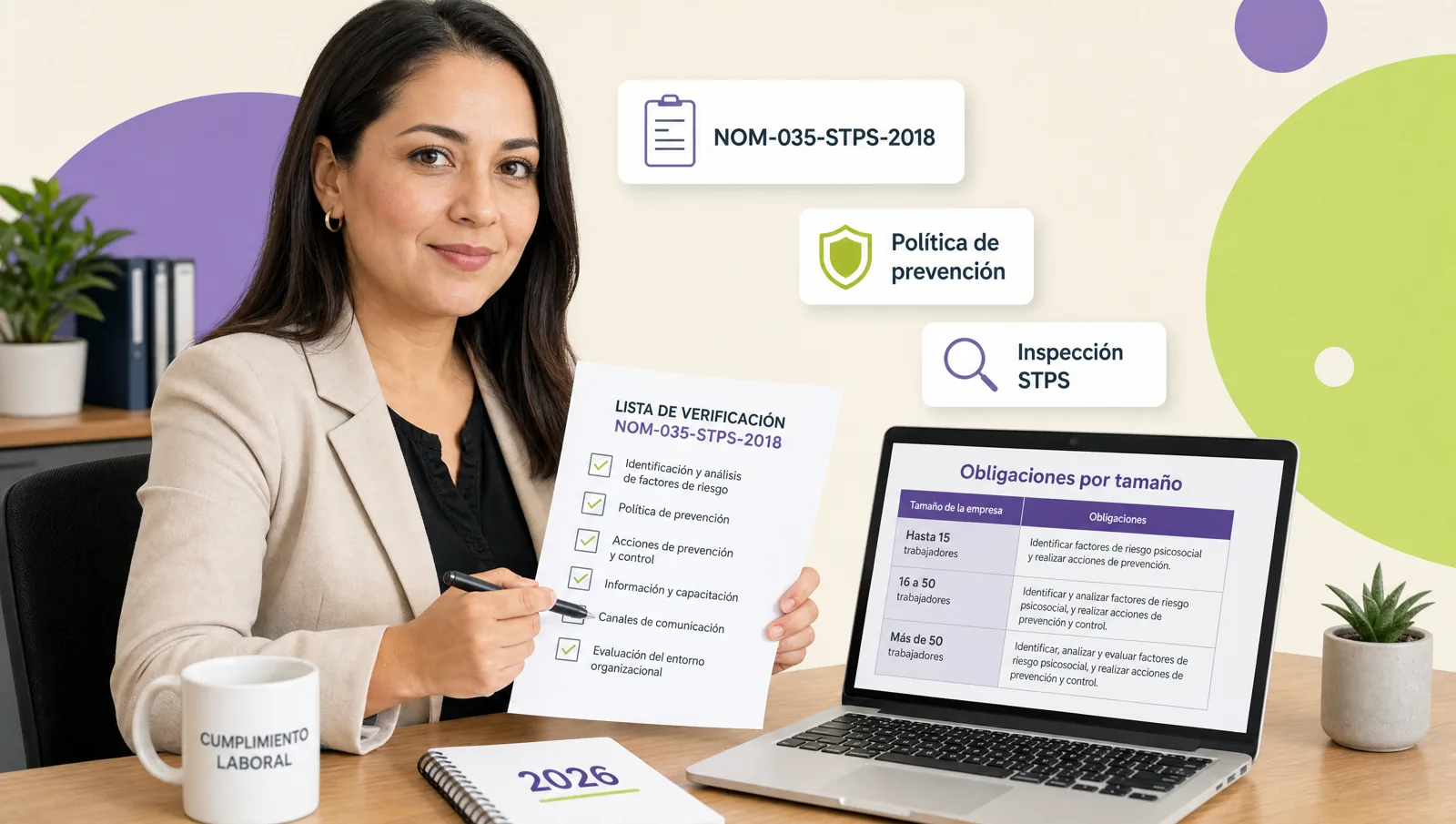
What does it require by workplace size?
The obligations stack: each range includes everything from the previous one and adds a block.
| Workplace size | Obligations under the standard | Reference guide |
|---|---|---|
| Up to 15 workers | Prevention policy; prevention measures; identify workers exposed to severe traumatic events; dissemination of information | Guide I |
| 16 to 50 workers | All of the above plus identify and analyze psychosocial risk factors; records | Guides I and II |
| More than 50 workers | All of the above plus evaluate the organizational environment (sampling allowed); records | Guides I and III |
The reference guides are the questionnaires included in the standard itself; we explain which one applies and how to use it in NOM-035 reference guides I, II and III.
What results does the evaluation produce?
The questionnaires are scored by risk level: null or negligible, low, medium, high and very high, and each level sets which actions follow under the standard. A low level calls for reviewing and reinforcing prevention measures; from medium upward an intervention program with actions, owners and dates is required, and at high and very high the standard also contemplates clinical assessment for those who need it. What never changes is that everything gets documented: results, program, follow-up. To capture, score and keep those records without fragile spreadsheets there is the NOM-035 software.
How often must it be repeated?
Under the standard, the identification and analysis of psychosocial risk factors and the evaluation of the organizational environment are carried out at least every two years, and records must be kept. If your last application was in 2024, 2026 is due again; if it was in 2025, schedule it now for 2027 so you are not late. The prevention measures and the policy, on the other hand, are permanent and get reviewed when workplace conditions change.
What are the fines for non-compliance?
The Federal Labor Law, in article 994 section V, provides fines of 250 to 5,000 times the Unit of Measurement and Update (UMA) for each breach of occupational safety and health standards, and the STPS applies them after an inspection. Two details weigh more than the number: the fine is per breach, so a missing policy, an expired evaluation and absent records can add up to separate penalties, and the inspection starts by requesting documentary evidence. Check the current UMA value to size it and see what they ask for in NOM-035 evidence for an STPS inspection.
Where to start in 2026?
- Count workers per workplace and find your range.
- Check that the policy exists, is signed by management and has been disseminated (what it must include, with a template).
- Confirm the date of your last evaluation and schedule the next one.
- Build the evidence folder: policy, measures, questionnaires, results, program, dissemination.
- Train middle managers: the leadership and relationships categories are fixed with skills, not memos; the NOM-035 course with DC-3 covers the standard and the stress management course the prevention measures.
Want to bring this to your team?
We run your diagnostic, apply the guides by sampling or census, deliver the intervention program and leave the folder ready for the STPS. Message us on WhatsApp, fill out the contact form or open this site's live chat: we send a proposal with three scope options and a closed price in under 24 business hours, with the DC-3 certificate and Geedle Bot included. The full program is at NOM-035 compliance service and the catalog at training courses for companies.