NOM-035 reference guides I, II and III: which one applies and how to apply it
The reference guides are the questionnaires NOM-035 includes to identify severe traumatic events (Guide I), psychosocial risk factors (Guide II) and the organizational environment (Guide III). Choosing the wrong one or applying it badly invalidates the diagnostic and leaves the company without evidence. This guide explains which one to use for your size, how to apply it and what to do with the results.
In this article
What are the NOM-035 reference guides?
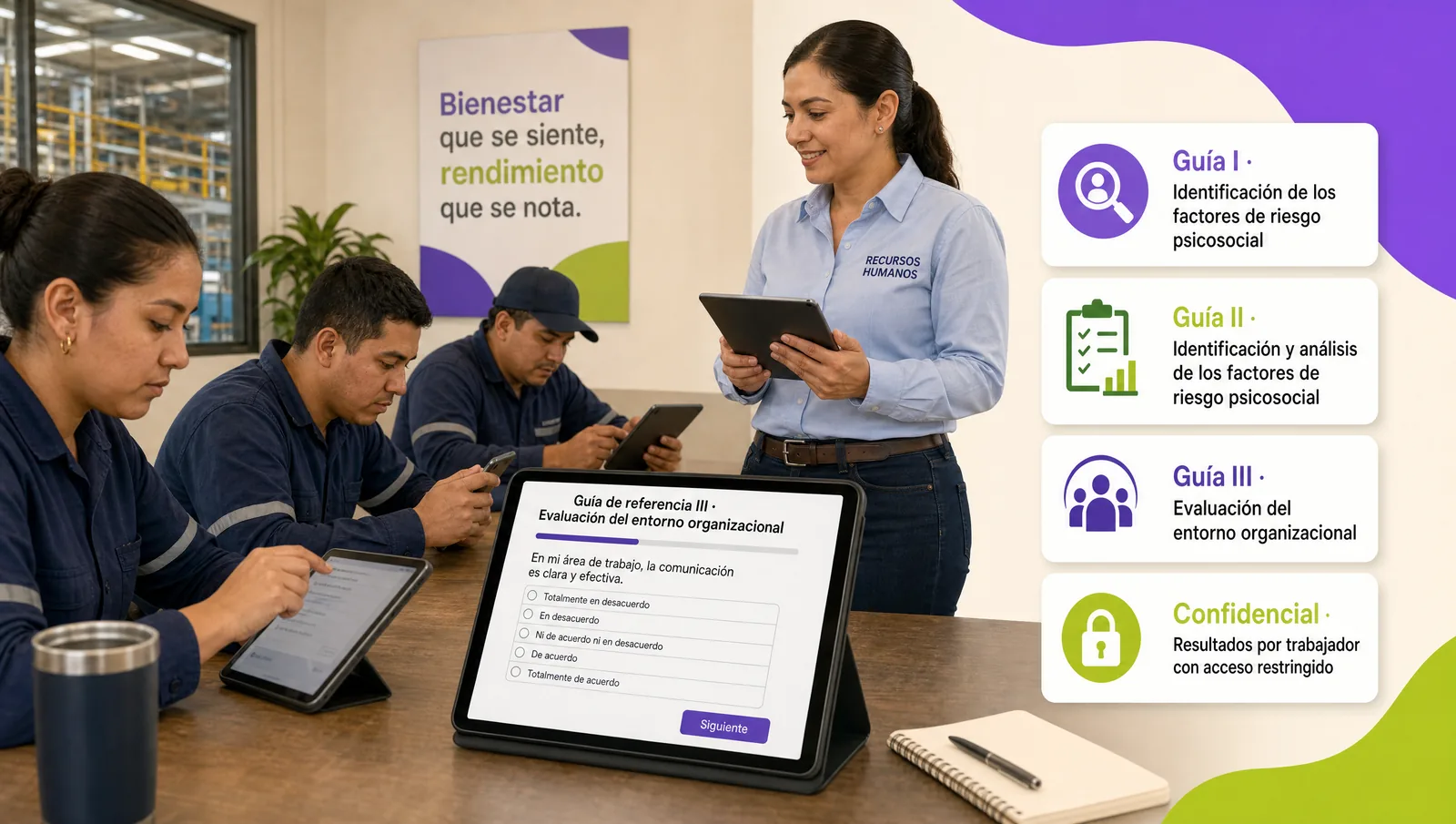
They are the instruments the standard itself includes as a reference for meeting its obligations: three questionnaires with their scoring criteria, plus guides for the policy and the records. The standard allows other instruments as long as they meet the requirements it sets, but the reference guides are the direct route because the STPS knows them and their scales are already defined. The three that matter for the diagnostic are Guide I (severe traumatic events), Guide II (psychosocial risk factors) and Guide III (psychosocial risk factors and organizational environment).
Which guide applies to my workplace?
It depends on the number of workers at the workplace: Guide I applies to everyone; Guide II to workplaces with 16 to 50; Guide III to workplaces with more than 50.
| Guide | What it identifies | Who it applies to | How it is applied |
|---|---|---|---|
| Guide I | Workers exposed to severe traumatic events | All workplaces | To each worker; anyone identified is referred for assessment |
| Guide II | Psychosocial risk factors | 16 to 50 workers | To all workers at the workplace |
| Guide III | Psychosocial risk factors and organizational environment | More than 50 workers | May be applied by sampling, following the guide's method |
The summary of obligations by size, with dates and fines, is in NOM-035 in 2026: what it requires, who it applies to and what the fines are.
How is Guide I applied?
Guide I is applied to all workers and looks for those who have witnessed or suffered a severe traumatic event in connection with their work, such as a serious accident, an assault or a robbery, in order to refer them for care. It is short: one section asks whether an event occurred, and the following ones explore persistent memories, avoidance and disturbances. Anyone identified must be referred for assessment, and the workplace keeps the record of the identification and the referral. Applying this guiofmands tact and confidentiality; that is why we include middle managers in the active listening course before running it.
How is Guide II applied?
Guide II is applied to all workers at workplaces with 16 to 50 people and explores four categories: work environment, factors specific to the activity (workload, lack of control), organization of working time (shift length, work-family interference) and leadership and relationships at work (leadership, relationships, violence). Good application practices:
- Explain the purpose before applying it: it is neither a performance review nor a climate survey.
- Guarantee confidentiality in the analysis (per-worker results are visible only to designated leaders); without trust, answers get dressed up.
- Apply it during working hours and in a space free of pressure from the direct supervisor.
- Score with the guide's criteria, by domain and by category, not just the total.
How is Guide III applied, and what is sampling?
Guide III is applied at workplaces with more than 50 workers, adds the organizational environment domain (performance recognition, insufficient sense of belonging and instability) and the standard allows applying it by sampling with the method the guide itself describes. Sampling lowers cost and time, but it requires calculating the right sample size and keeping the calculation as part of the records; a badly calculated sample is a finding in an inspection. If you prefer certainty, applying it to the whole workforce with the NOM-035 software takes a few days and ends the debate.
What do you do with the results?
Results are scored by risk level (null or negligible, low, medium, high and very high) for the total, by domain and by category, and each level defines the actions the standard requires. From medium upward an intervention program with actions, owners and dates is due; the domains at high and very high are addressed first. Most often, leadership, workload and working hours rank among the worst, and that is fixed with manager training and work organization, which you can integrate into the STPS training plan and program. Everything is repeated at least every two years, keeping records.
Want to bring this to your team?
We apply the guide that matches your workplace, calculate the sample when applicable and deliver results by domain with an intervention program. Message us on WhatsApp, fill out the contact form or open this site's live chat: we send a proposal with three scope options and a closed price in under 24 business hours, with the DC-3 certificate and Geedle Bot included. The full program is at NOM-035 compliance service and the catalog at training courses for companies.