Team building for hybrid and remote teams: dynamics that actually work
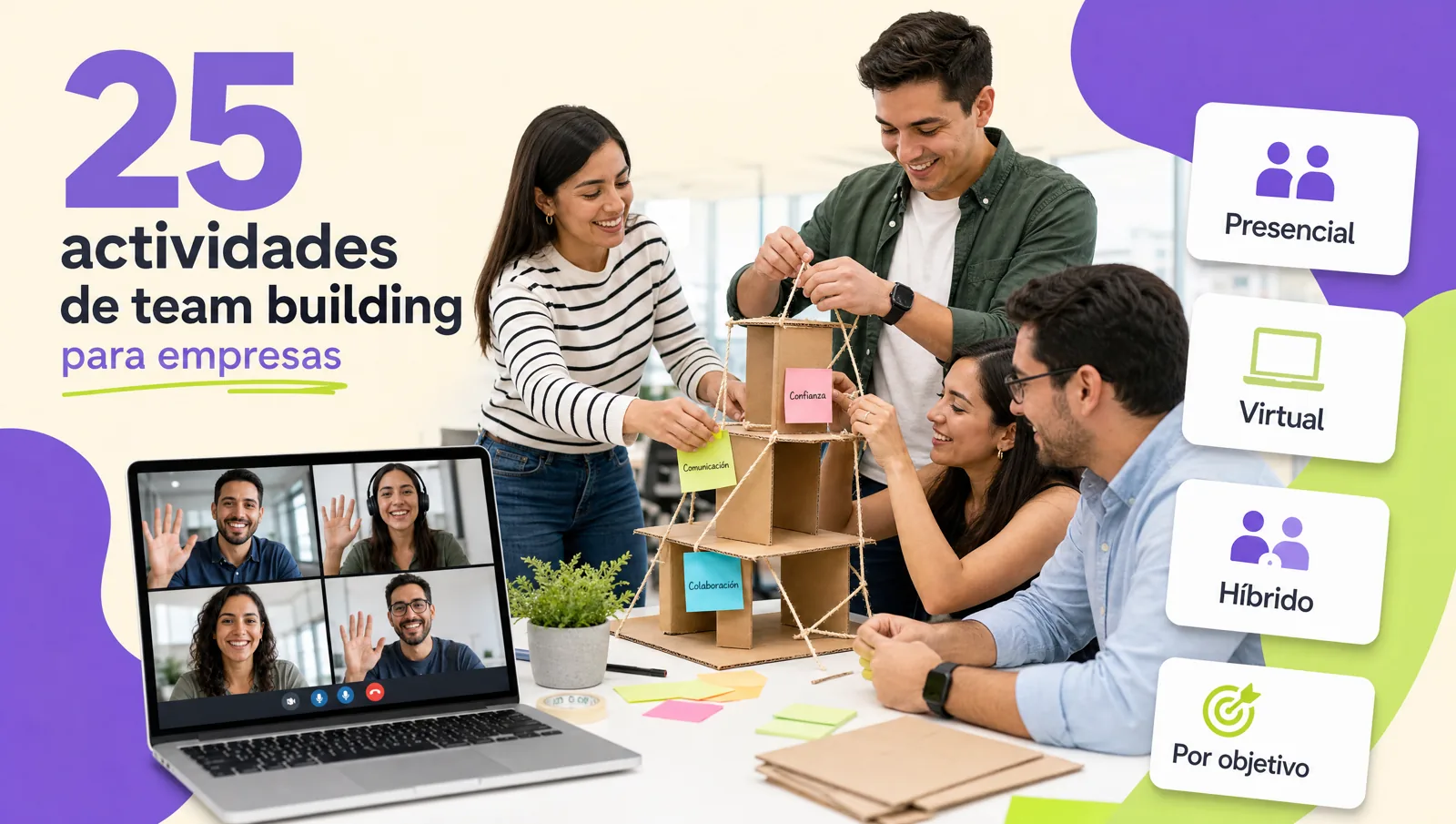
Hybrid team building almost always fails for the same reason: an in-person dynamic gets a camera pointed at it. Remote people watch, in-person people play and nobody integrates. The ten dynamics in this guide were designed for the screen and for the mix of meeting room and video call, with step-by-step instructions, duration and a 90-minute session plan.
In this article
- Why does traditional team building fail with hybrid teams?
- Four rules before you start
- The 10 hybrid and virtual dynamics, with instructions
- Plan for a 90-minute hybrid session
- What the dynamic does not fix: time and communication
- How to measure whether the hybrid session worked
- Want to bring this to your team?
Why does traditional team building fail with hybrid teams?
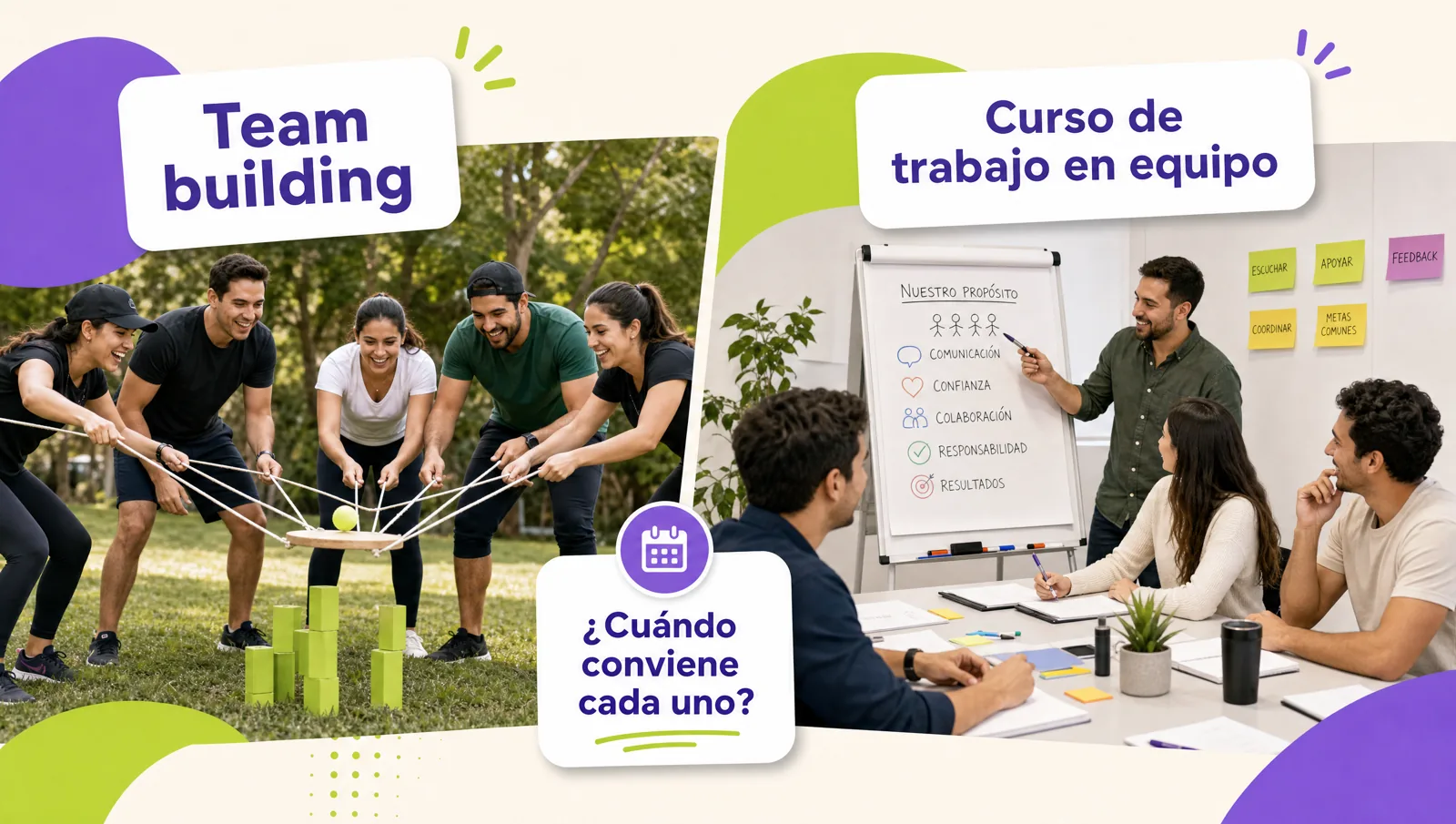
Because the room always wins: people who are together coordinate through gestures and low voices, and people on the video call are late to everything. A hybrid dynamic only works if the remote person has a role without which the room cannot move forward.
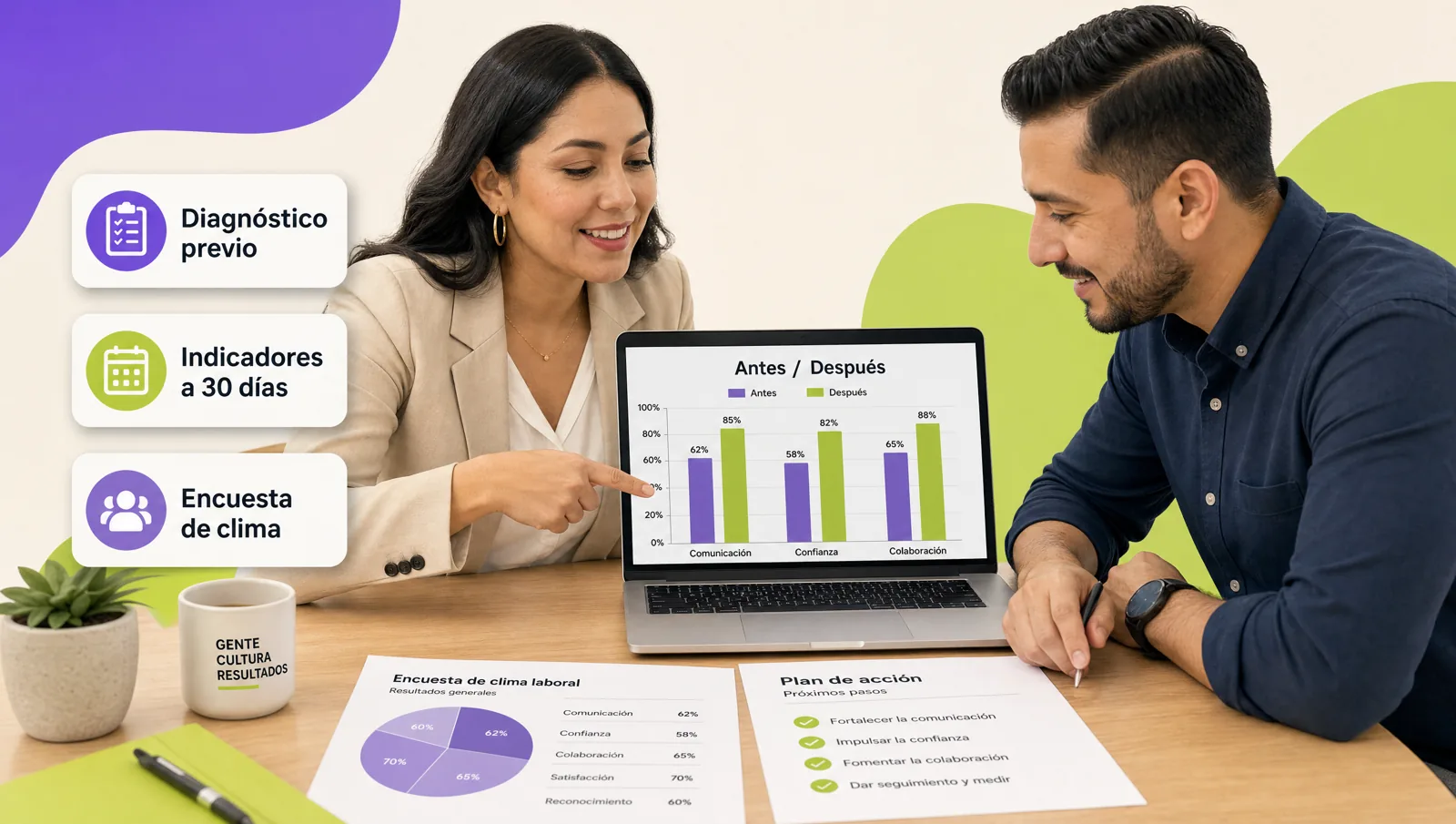
The second reason is energy. A 45-minute in-person dynamic feels endless on screen, and a full day over video call wears anyone out. The format that pays off is a 60 to 90 minute session with three or four short dynamics, cameras on and small breakout rooms, repeated every month, instead of an annual event. And as with any team building, the objective is defined beforehand with a short diagnostic, so the session works on communication, integration or trust and does not just entertain.
Four rules before you start
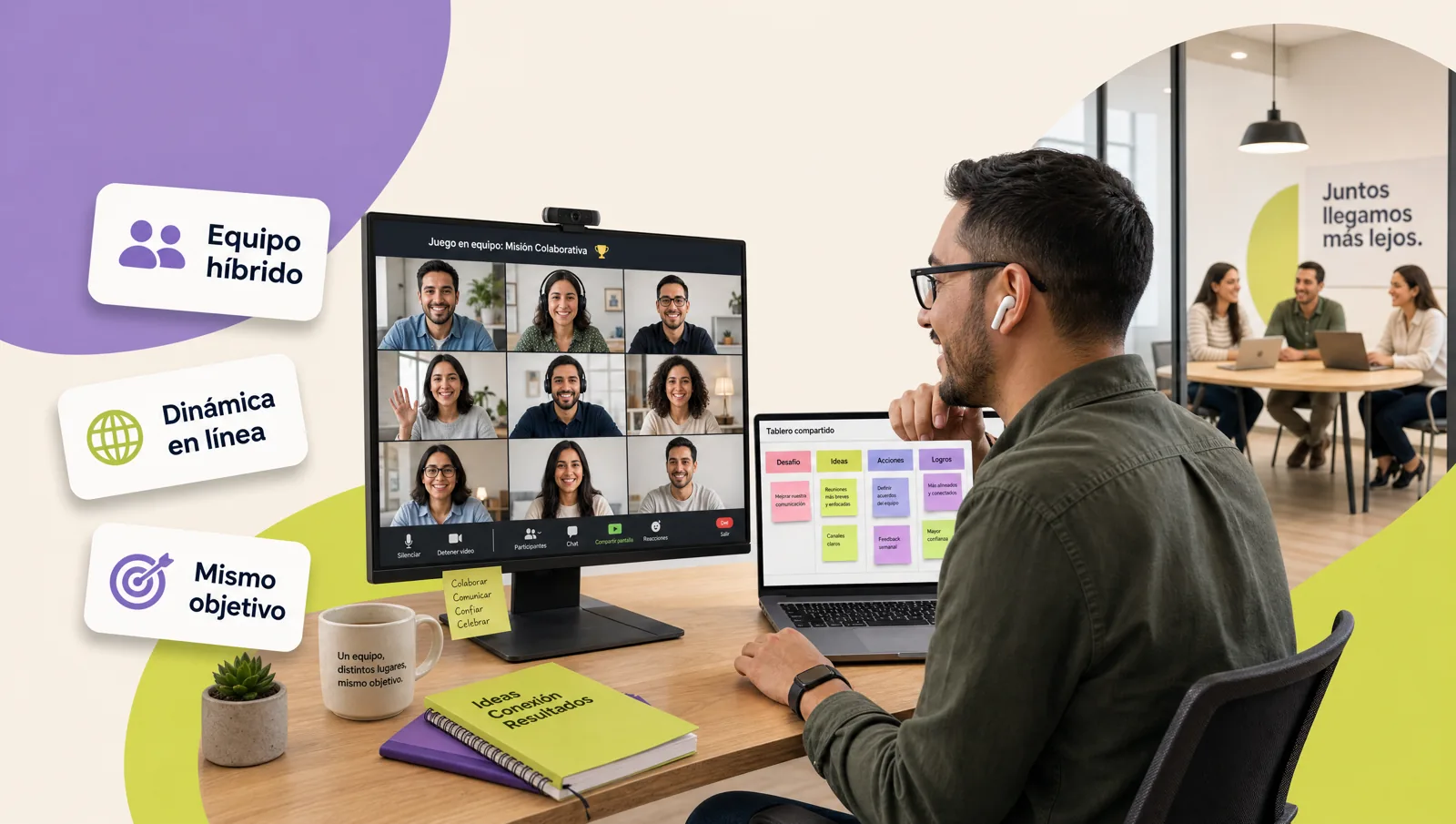
One person per camera even when they share a room, a remote facilitator in addition to the in-person one, mixed teams and a clock everyone can see. With those four rules most hybrid dynamics stop limping.
- One camera per person. In-person people join from their own laptop with headphones; that way everyone is the same size on screen and has the same access to the chat.
- Remote facilitator. Someone connected from outside watches the chat, the breakout rooms and the timing; the in-room facilitator cannot keep an eye on remote people.
- Always mixed teams. Never "the office against the people at home". Every subgroup has at least one remote and one in-person member.
- Visible clock and turns. Every dynamic has a fixed time and a speaking order; awkward silence on screen lasts longer than in a room.
The 10 hybrid and virtual dynamics, with instructions
The first five work on communication and integration; the last five on trust and collaboration. Each one states duration, size and steps, and all of them work with the video call and digital whiteboard tools the company already uses.
- Introduction by object (10 min · 5-20). Each person has 60 seconds to bring an object from their desk to the camera that says something about how they work. The facilitator writes down one word per person and reads them at the end.
- Dictated drawing on the whiteboard (20 min · pairs). In rooms of two, one person describes a simple figure and the other draws it on the shared whiteboard without asking; second round with questions allowed. Both drawings are compared in plenary.
- Dependency map (25 min · 6-15). On the whiteboard, each person posts a note with their name and draws arrows to the people they depend on to deliver. Arrows that only go one way are the conversation of the session.
- Instruction chain over chat (15 min · 6-12). A five-step instruction travels by private message through six people; the last one reads it out loud and it is compared with the original.
- Hybrid blind build (30 min · 6-18). In-person people have the pieces; remote people have the plan and can only describe it by voice. Nobody in the room may look at the screen.
- Crossed strengths (25 min · 6-16). Each person privately writes three strengths of their own; the team writes three for each person on the whiteboard. Lists are compared and one match and one surprise per person are discussed.
- Recognition chain (15 min · 6-20). The first person recognizes something specific someone else did this month and passes the turn; nobody may repeat a person already named.
- Trivia by stations (30 min · 10-40). Questions about customers, history and areas; each mixed team answers from its breakout room and sends the answer by chat to the remote facilitator, who keeps the score on screen.
- Crossed-clue challenge (45 min · 10-30). In-person people find physical clues around the office that only make sense with information remote people receive in a shared document. Nobody moves forward without the other.
- One-page retrospective (20 min · 5-15). Three columns on the whiteboard: what helped us coordinate today, what got in the way, what we change this week. Each person posts one note per column and the team votes on the three agreements it takes away.
Plan for a 90-minute hybrid session
A short opening, one communication dynamic, one trust dynamic, the main challenge and a retrospective that turns the session into agreements. It is the plan we use as a base and it adjusts to the objective that came out of the diagnostic.
| Block | Dynamic | Minutes |
|---|---|---|
| Opening | Introduction by object (1) | 10 |
| Communication | Dictated drawing on the whiteboard (2) or instruction chain (4) | 20 |
| Trust | Crossed strengths (6) | 25 |
| Main challenge | Hybrid blind build (5) | 30 |
| Closing | One-page retrospective (10) | 5-10 |
What the dynamic does not fix: time and communication
If the hybrid team coordinates badly because nobody knows when anyone is available, or because messages get read differently in each city, team building opens the conversation but does not settle it; that is worked on through training.
The two most frequent problems that come up in remote team retrospectives are time management (clashing schedules, replies at odd hours, meetings that could have been a message) and written communication (ambiguous messages, tone that gets misread, decisions lost in the chat). The time management course gives the team availability and priority agreements; the effective communication course works on messages and on-screen meetings. When the problem is how managers listen at a distance, it is complemented with the active listening course.
How to measure whether the hybrid session worked
With the short diagnostic repeated at 30 days and two indicators: participation in virtual meetings (how many people speak) and response time between people working from different cities. The full method is in how to measure team building results.
At Geedle, hybrid and virtual sessions are designed from that diagnostic, with gamified dynamics for the team's objective, a closing workshop with a DC-3 certificate and the 30-day review. Every one of the team building activities in the catalog has an in-person, a virtual and a hybrid version.
Want to bring this to your team?
We design your hybrid or virtual session from a short diagnostic, with a remote facilitator in addition to the in-person one, a closing workshop with a DC-3 certificate and measurement at 30 days. Message us on WhatsApp, fill out the contact form or open this site's live chat: we send a proposal with three scope options and a closed price in under 24 business hours, with the DC-3 certificate and Geedle Bot included. The full program is at team building for companies and the catalog at training courses for companies.