AI voice agents for training: what they are, how they work and how they differ from a call center
Almost everything written about AI voice agents is about phone calls: answering the line, booking appointments, collecting payments. It is the most visible use, but not the only one and not the most valuable for a training team. A voice agent can also teach an English lesson, run an audit interview or play a difficult customer, with a face that lip-syncs in real time. This guide explains what a voice agent is, how it works inside and what changes when you use it to teach instead of to serve.
In this article
- What is an AI voice agent?
- How does a voice agent work inside?
- How is a voice agent for training different from one for calls?
- What do companies use a voice agent for in training?
- What does a company need to have its own voice agent?
- How much does it cost and how is spending controlled?
- Try it, or have us build yours
What is an AI voice agent?
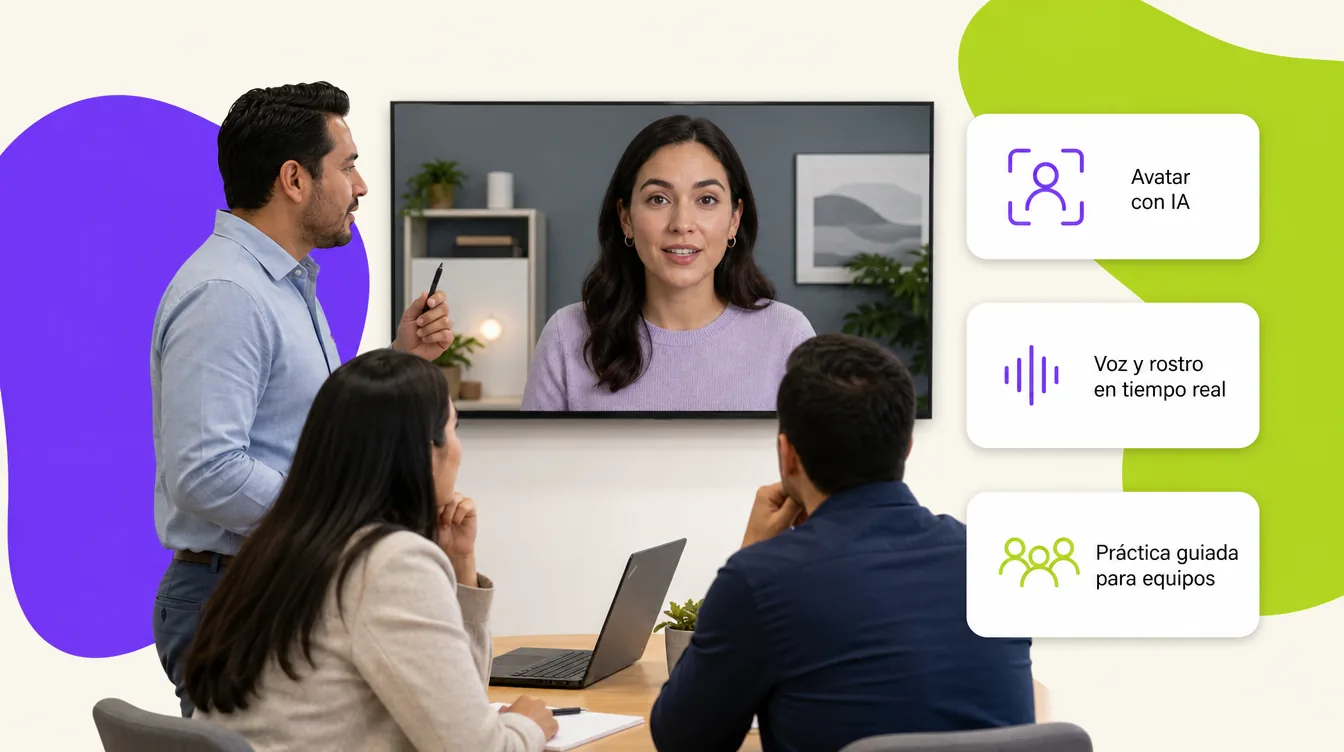
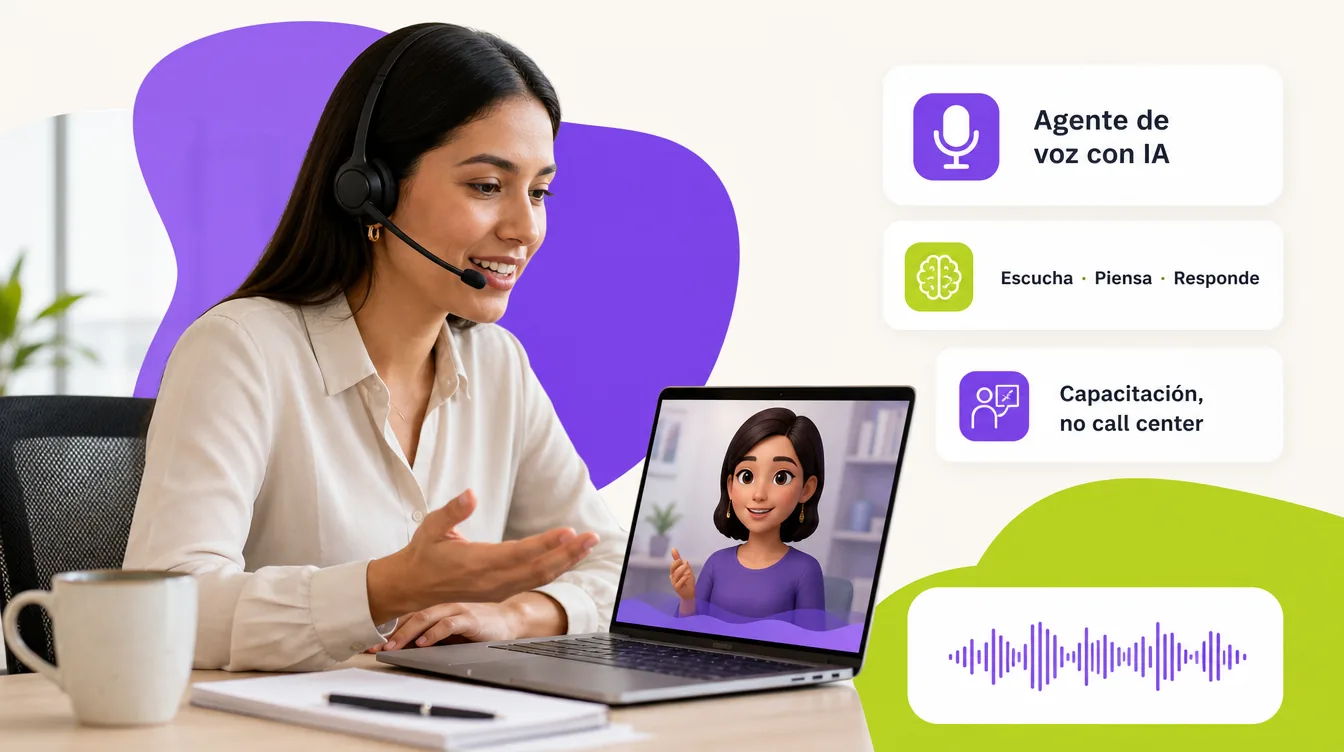
An AI voice agent is a program that listens to what you say, understands the intent, decides what to answer or do and replies out loud with a natural voice, in a continuous conversation rather than a menu of options. Unlike an IVR ("press 1 for sales") or a button chatbot, a voice agent follows the thread, accepts interruptions and changes topic when you do. When it also shows a face synchronized with the voice it is called a voice agent with avatar, the format we use for Geedle's AI agents with avatar.
The definition matters because the market mixes three different things: the voice assistant on a phone, the voice agent that answers calls in a contact center and the voice agent that teaches, interviews or coaches. They share an engine; the role, the content and the way results are measured change. For the comparison with text bots, see AI agents vs chatbots.
How does a voice agent work inside?
A voice session chains three services working in milliseconds:
- Speech to text (STT). Microphone audio becomes text as you speak, with detection of when you finished a sentence and when you want to interrupt.
- Language model (LLM). The text reaches a model with a system prompt that defines the agent's role, limits and tone, plus the documents it may consult and the tools it may use (search a catalog, record a value, call an API).
- Text to speech (TTS). The answer becomes a natural voice, in the chosen language and personality, played almost as it is generated.
The newest real-time speech models merge the three steps into one: they listen and speak directly, with no intermediate text, which cuts latency and keeps tone. If the agent has an avatar, a fourth service receives the voice and renders a face with synchronized lips, gestures and gaze, streamed as video through a WebRTC room. That is what makes the conversation feel like a video call rather than an answering machine.
How is a voice agent for training different from one for calls?
A contact-center voice agent optimizes resolved calls and average handling time; a training voice agent optimizes what the person learns and the evidence it leaves. The practical differences:
| Aspect | Voice agent for calls | Voice agent for training |
|---|---|---|
| Role | Company representative | Teacher, auditor, customer, coach |
| Channel | Phone, SIP, WhatsApp | Web page, LMS, kiosk; almost always with avatar |
| Source of truth | CRM, orders, calendar | Syllabus, rubric, catalog, procedures |
| What it measures | Calls handled, time, transfers | Estimated level, corrected errors, score, transcript |
| End of session | Closes or transfers to a human | Summarizes, scores and hands over a next step |
| Integration | Telephony and CRM | LMS (SCORM or xAPI), credentials, email to the team |
The biggest change is in the content: an agent that teaches needs a pedagogical script (what it corrects, in what order, when it raises difficulty) and a way to close with a result someone can review. That is why in our projects the agent is designed with the training team, not the IT team.
What do companies use a voice agent for in training?
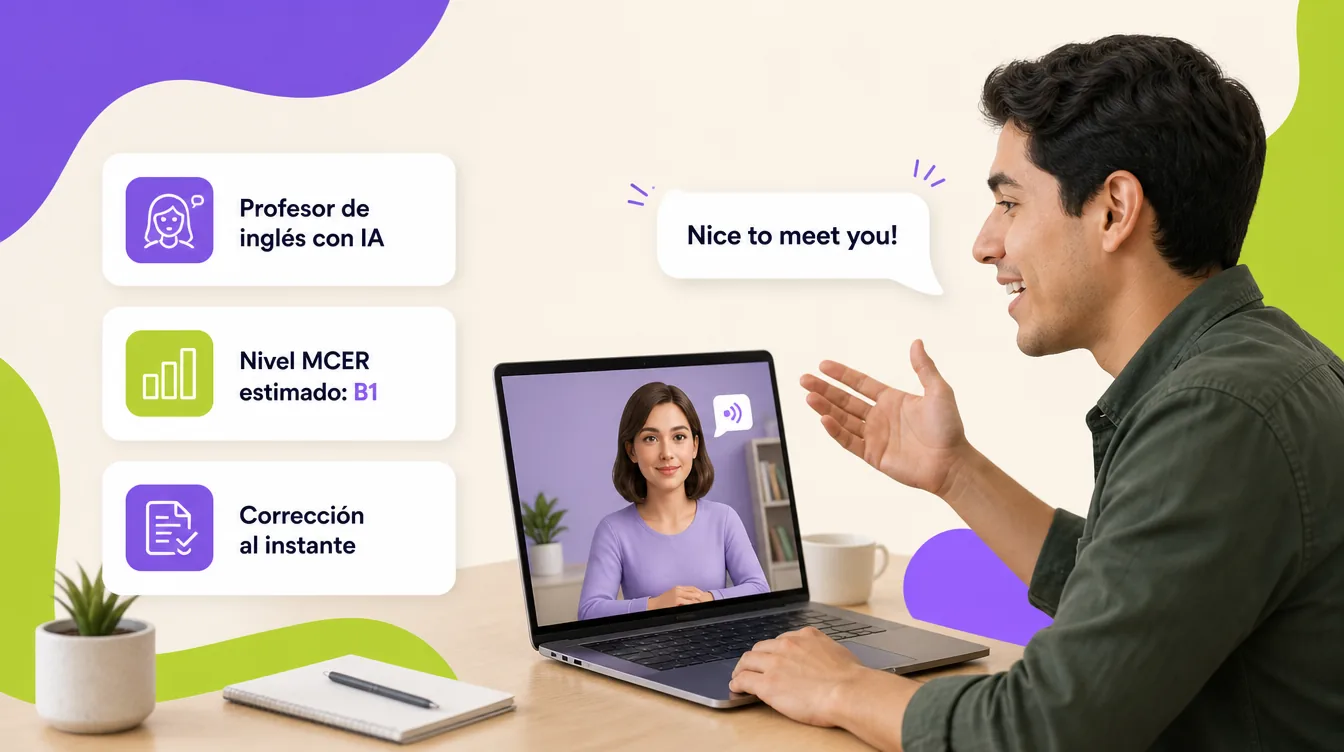
- Language practice at scale. A patient partner available at any hour that corrects one thing at a time and estimates the level. It is what the AI English teacher with avatar does and what a corporate English program uses to place groups.
- Interview and audit rehearsal. The agent asks what the external auditor or the interviewer would ask and points out gaps tactfully. See the virtual ISO auditor.
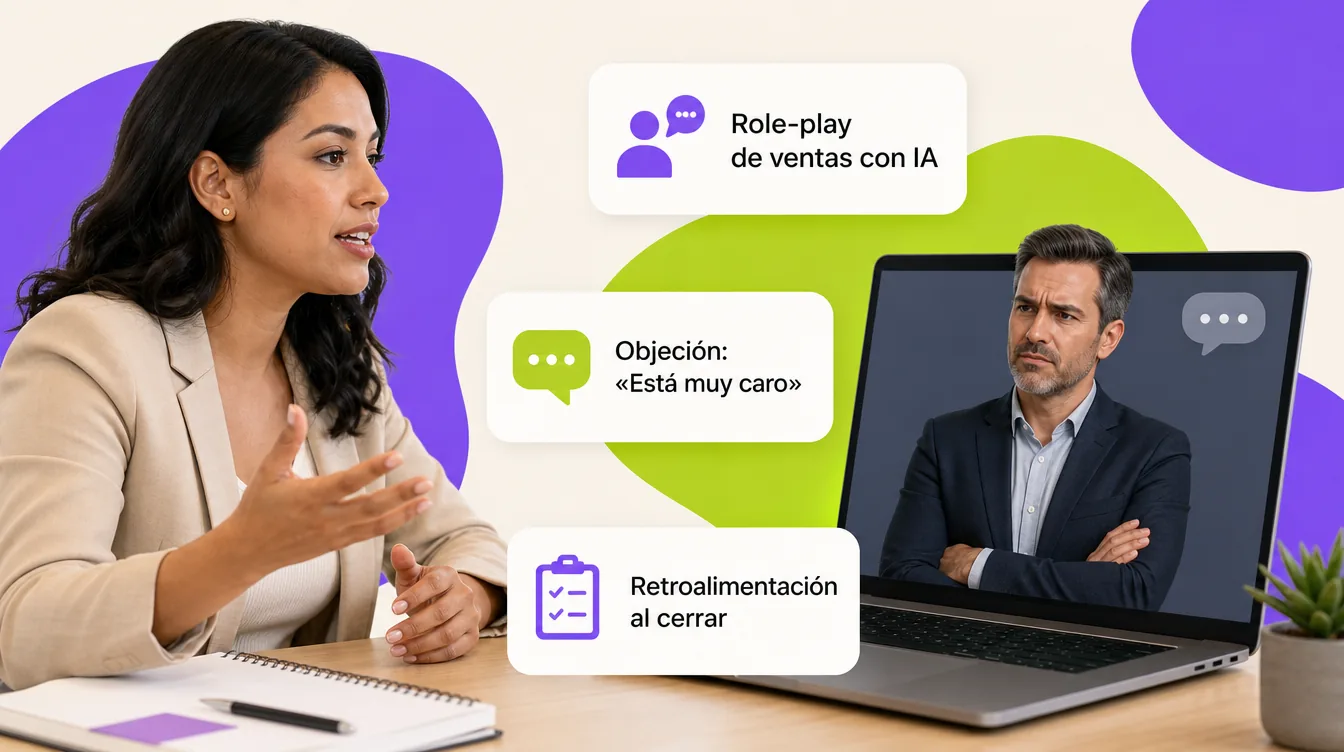
- Sales and service role-play. Difficult customers, objections and complaints, with a score per attempt. We explain it in AI sales role-play.
- Guided onboarding. A face for policies, processes and the catalog, connected to company documents so it answers only with what is written. See AI voice agent for onboarding.
- Tutor inside the course. The same agent embedded in Moodle or your platform with the course content as its only source, as Geedle Bot does by text.
What does a company need to have its own voice agent?
Less than it seems, if the order is respected. First, a concrete role and a measurable result: "estimate a candidate's English level in two minutes", not "help with English". Second, the content the agent may use: syllabus, rubric, catalog or procedures, clean and current. Third, the limits: what it must not promise, when it must say "I don't know" and whom it should transfer to. Fourth, the channel: a page on the site, a block in the LMS or a kiosk at reception. With that, the first prototype is built in days and tested with twenty real conversations before opening it to everyone. Companies that already have n8n workflows can reuse them: the step by step is in how to build an AI agent without coding and in the AI agents course.
How much does it cost and how is spending controlled?
A voice agent is paid per minute of conversation (voice and model) plus, if it has an avatar, the minute of video, and the build separately. We break it down in how much an AI voice agent costs. Spending is controlled where the session is issued: daily caps, free minutes before asking for details and automatic closing. It is exactly what our demos do: two free minutes, a form to continue up to ten and a summary by email.
Try it, or have us build yours
If you want to hear the difference between an answering machine and an agent that teaches, there is no need to imagine it. Try the AI English teacher first: two free minutes in the browser, no account. If you want one with your content, your voice and your avatar, message us on WhatsApp or fill out the contact form: we reply the same day with a scope and a closed price. The full catalog is at AI agents with avatar.