AI sales role-play: how to train objections with a virtual buyer
Objections are learned by hearing them, not by reading them. An AI sales role-play puts your salespeople in front of a virtual buyer who has no time, already has a supplier and doubts your price, and gives them unlimited attempts at the same uncomfortable conversation. This guide explains how an AI sales simulator works, which objections are worth training, how each attempt is scored and how to fit it into sales training without turning it into a game.
In this article
- What is an AI sales role-play?
- How does an AI sales simulator work inside?
- Which objections should the virtual buyer train?
- How is the sales role-play scored and what feedback does the salesperson get?
- How to integrate AI sales role-play into sales training
- What an AI sales simulator does not do
- Try it, or have us build yours
What is an AI sales role-play?
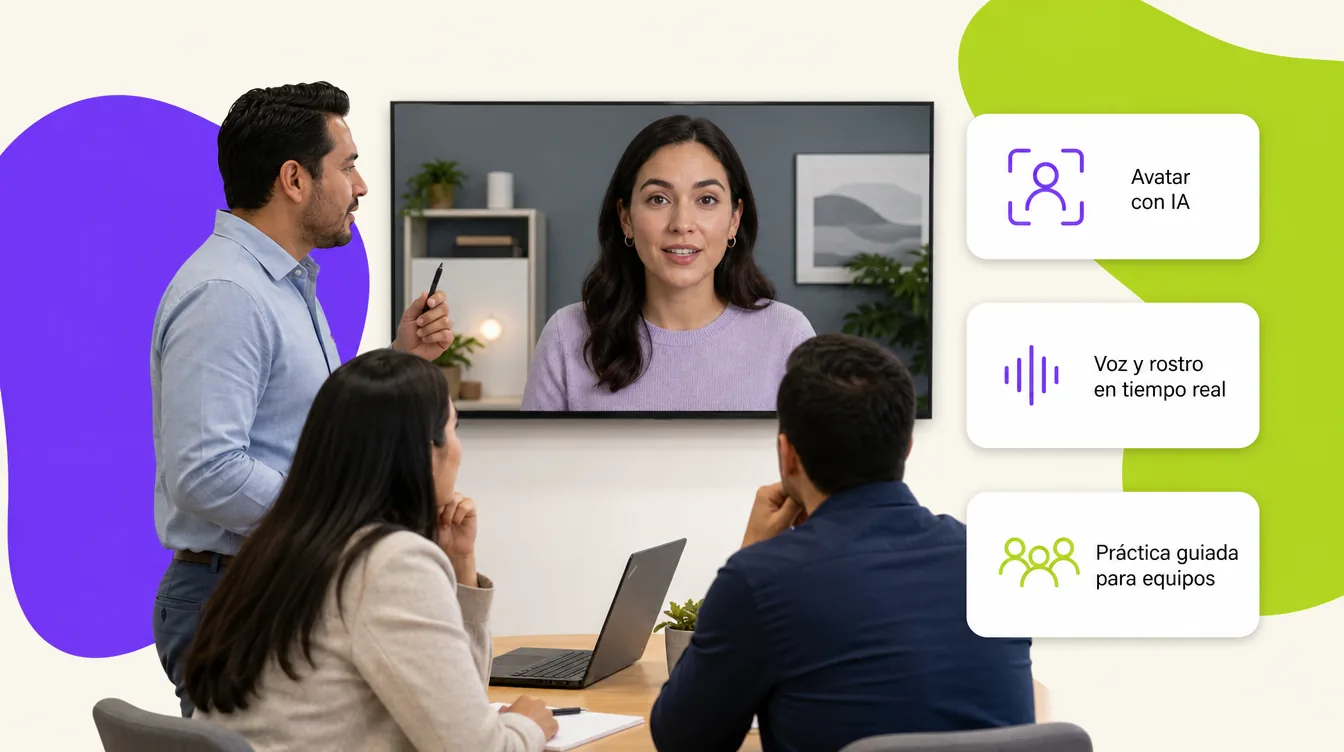
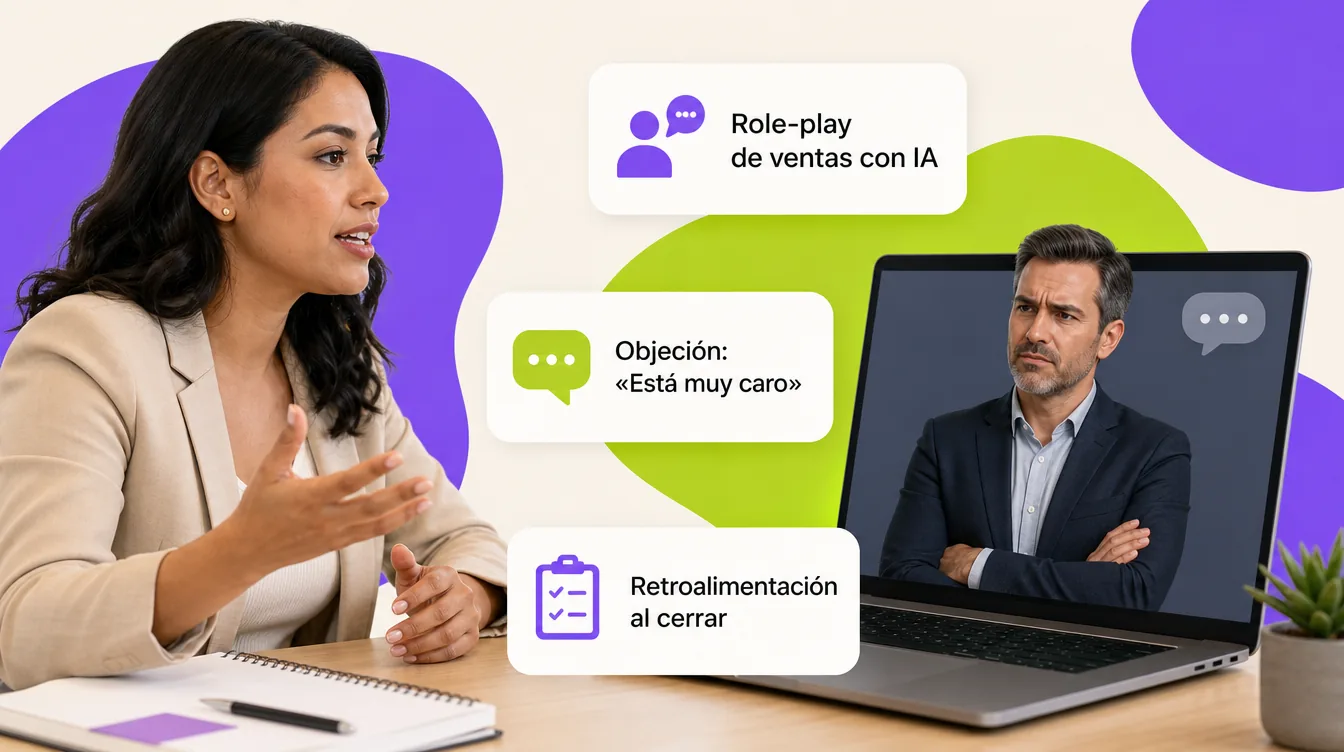
An AI sales role-play is a simulation in which a conversational agent plays a customer with a defined personality, context and objections, reacts to what the salesperson says and, at the end, steps out of character to score and give feedback. Unlike role-play between colleagues, the virtual buyer does not laugh, does not soften and is available at eleven at night before the important visit. When the agent has voice and an avatar, the practice feels a lot like a video call with a real customer; it is the format of Geedle's sales role-play with avatar.
How does an AI sales simulator work inside?
The simulator is built from four pieces:
- A character with a script. The prompt describes the buyer: role, priorities, current supplier, budget, mood and the objections it will raise. It includes the rule of never breaking character and of reacting badly to pressure or manipulative techniques.
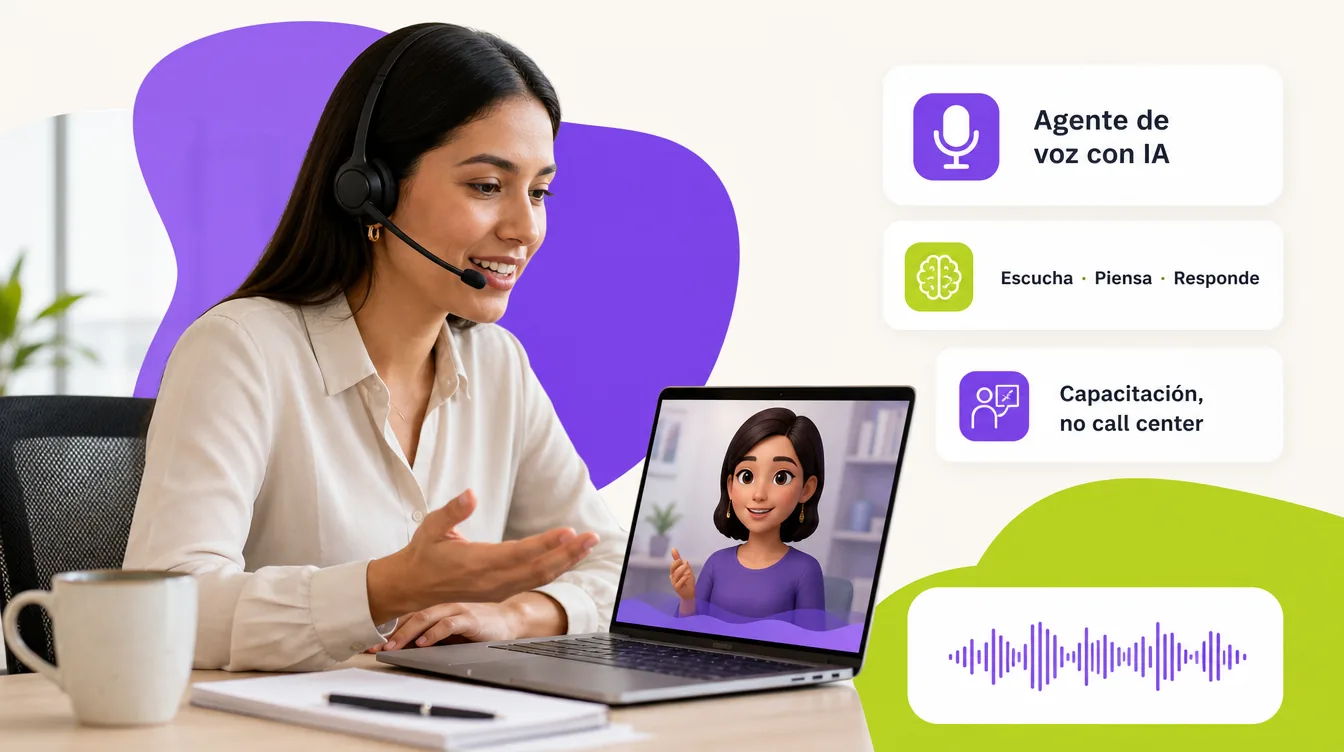
- A real-time voice engine. It listens to the salesperson, answers in the character's voice and allows interruptions, like a call.
- A rubric. What is assessed: listening, discovery questions, handling of each objection, value proposition, closing and next step.
- The close out of character. At the end the agent stops being the buyer, scores from 1 to 10 against the rubric and gives two concrete tips; the transcript and the score stay with the sales manager.
It is the same architecture as any AI voice agent; what changes is that the content is a character and a rubric instead of a syllabus.
Which objections should the virtual buyer train?
The ones that repeat most in your team's real conversations. For a B2B salesperson in Mexico, the five that almost always come up:
| Objection | What is usually behind it | What the role-play trains |
|---|---|---|
| "It's too expensive" | They do not see the value or compare with something else | Asking what they compare against and quantifying the cost of not changing |
| "We already have a supplier" | Fear of change and of migration cost | Acknowledging what works and proposing a limited trial |
| "Just send me the information" | They want to cut the call short | Agreeing on which information and a date to review it together |
| "It's not the right time" | Quarter priorities or budget | Understanding the calendar and leaving a dated next step |
| "I have to check with someone" | They are not the decision maker | Mapping the decision maker and asking for the joint meeting |
In the workshop we load your products, your list prices and the objections your sales manager hears every week; the virtual buyer uses them in the order and with the intensity you define. The consultative-selling fundamentals the simulator assesses are in the B2B consultative selling course.
How is the sales role-play scored and what feedback does the salesperson get?
The numeric score is for comparing attempts by the same person, not for comparing people: what is useful is seeing the same salesperson go from 5 to 8 on the price objection after three sessions. Feedback must be concrete and short: "you asked what they compared against before defending the price: good; you did not close with a date: that is the next step". For the manager, the simulator consolidates which objections cost each salesperson the most, who practices consistently and where the whole team has gaps. That turns the role-play into input for weekly coaching, not an isolated game.
How to integrate AI sales role-play into sales training
- Before a course. A diagnostic session with the virtual buyer shows each salesperson's starting point and lets you adjust the program.
- Between sessions. Homework: three attempts at the objection covered in class, with the transcript sent to the facilitator.
- After the course. Monthly practice with new scenarios (angry customer, renegotiation, tender) so the skill does not rust.
- In customer service. The same engine plays a customer with a complaint and measures satisfaction at the close; it pairs well with service-oriented team building activities.
What an AI sales simulator does not do
It does not replace visits with an experienced salesperson nor teach the product: it trains the conversation. It should not be used as an exam with consequences from day one either; the value is in repetition without risk. And it needs real objections: a virtual buyer with generic objections produces salespeople with generic answers.
Try it, or have us build yours
Nothing explains an AI sales role-play better than losing the first negotiation to the virtual buyer. Try the sales role-play with avatar first: two free minutes in the browser, no account. If you want one with your content, your voice and your avatar, message us on WhatsApp or fill out the contact form: we reply the same day with a scope and a closed price. The full catalog is at AI agents with avatar.