Time management techniques for hybrid teams: 8 that actually work
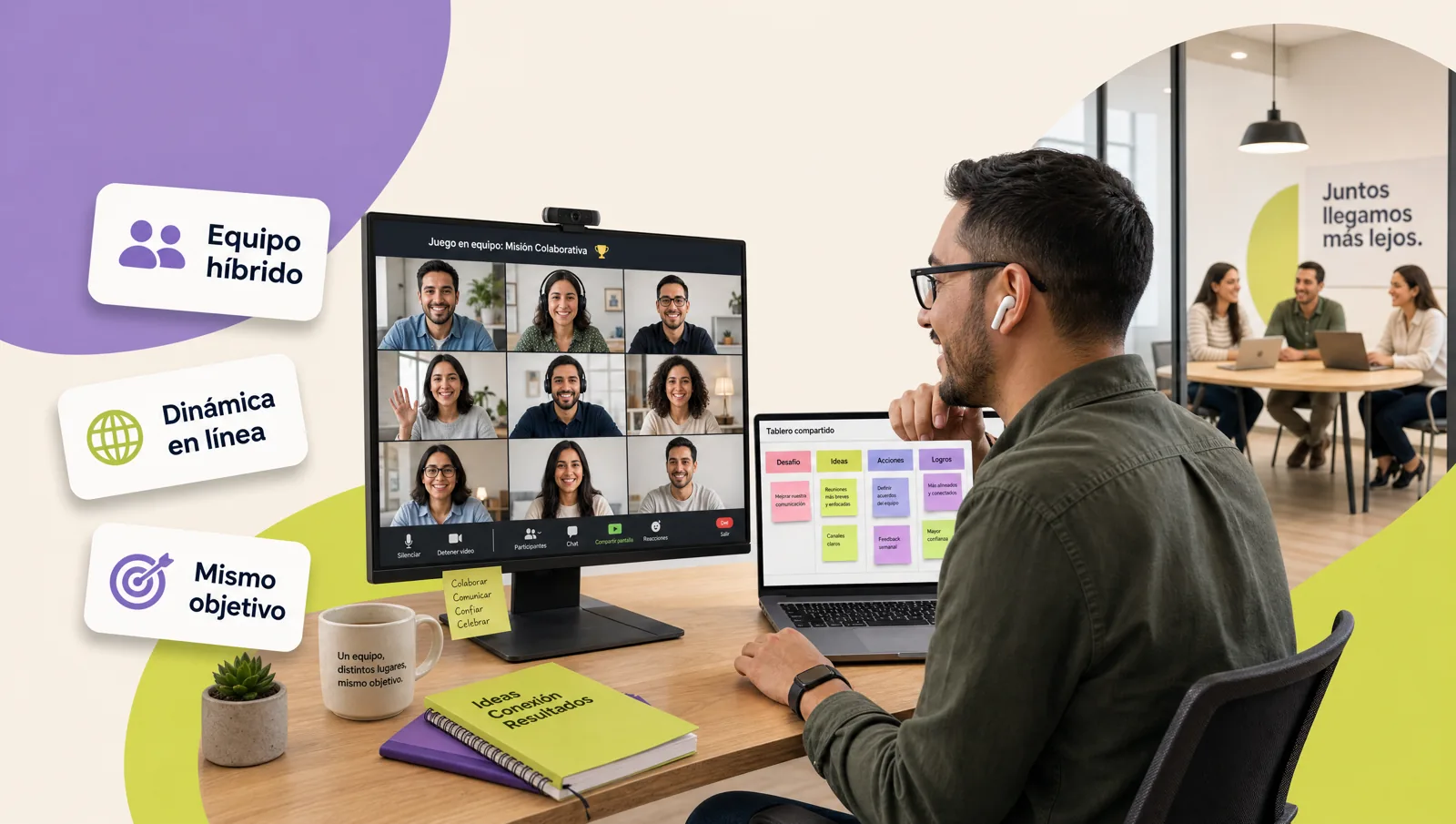
A hybrid team does not have a time problem: it has a coordination problem. Some people are in the office, others at home, and interruptions, meetings and messages multiply because nobody agreed when people work heads-down and when they are available. These eight time management techniques target exactly that and can be rolled out in a month, two at a time.
In this article
- Why does time management change in a hybrid team?
- The 8 time management techniques that actually work
- The minimum agreement each technique needs
- How to roll them out without turning them into one more rule nobody follows
- What this has to do with stress and NOM-035
- How we work on it in the course
- Want to bring this to your team?
Why does time management change in a hybrid team?
Because the physical cues disappear. Nobody sees that you are concentrating, so they interrupt you; nobody sees that you left, so they message you at eight in the evening. Without explicit agreements, the chat manages your time.
The symptoms repeat in almost every company that contacts us: meetings that grow in number and in attendees, a reply within minutes as an unwritten rule, and workdays that start at eight and end when the last message goes quiet. Individual time management (lists, Pomodoro, a calendar) does not solve this, because the problem is not inside one person but between several.
The 8 time management techniques that actually work
They are team agreements, not individual habits: focus blocks, availability hours, meetings with an owner, a no-meeting day, one channel per message type, weekly planning, a daily sign-off and a workload review. Each fits in one line of a shared document.
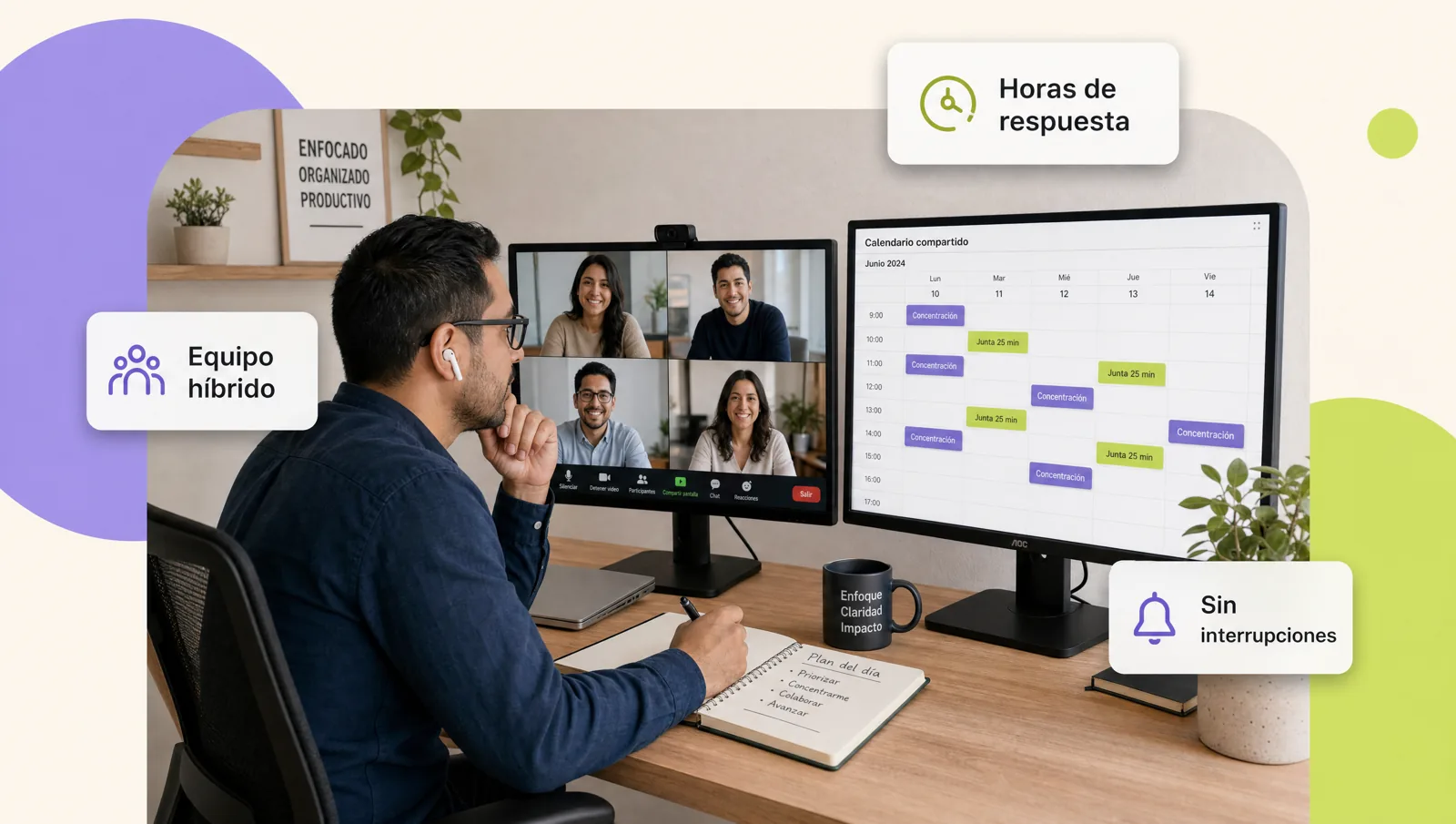
- 90-minute focus blocks. Each person reserves two blocks a day on the shared calendar, notifications off. They are respected like meetings with a customer: nobody books over them and nobody expects a reply during that time.
- Availability agreements (core hours). The team defines a window, for example 10 a.m. to 1 p.m., in which everyone replies within an hour. Outside it, a reply is expected the next day and nobody takes it badly. It is the agreement that reduces stress the most and the easiest to write.
- Meetings with a goal, an owner and a wrap-up. No written goal in the invitation, no meeting. The owner sends the decision in five lines when it ends; whoever was not needed reads those five lines and does not attend.
- One no-meeting day a week. Usually Wednesday. It is the quadrant II day from the Eisenhower matrix: documenting, planning, training, thinking.
- One channel per message type. Chat for what gets solved in two minutes; email for what needs a record; a call for anything past three messages. Written on one page and posted where everyone sees it.
- 15-minute weekly planning. On Monday, each person brings their seven classified tasks and the team reviews the shared matrix. It is the one meeting that never gets cancelled.
- Five-minute daily sign-off. Before disconnecting, each person writes down tomorrow's three tasks and posts "signing off" in the channel. It marks the end of the workday for everyone, the manager included.
- Biweekly workload review. A 15-minute 1:1: what did not get done and why. That is where overload gets caught before it turns into stress, and it is direct input for NOM-035.
The minimum agreement each technique needs
No technique works without a written agreement and a signal that tells you whether it is being kept. The table summarizes both so the team can adopt them without an hour of debate.
| Technique | Minimum agreement | Sign that it works |
|---|---|---|
| Focus blocks | They show on the shared calendar and nobody books over them | Less work at night and fewer leftovers on Friday |
| Core hours | Window written down and visible on each profile | Nobody demands an immediate reply outside it |
| Meetings with an owner | Invitation with goal, owner and duration | 30-minute meetings that end in 30 |
| No-meeting day | Blocked by the manager on every calendar | Quadrant II deliverables ship on time |
| Channel per message | One-page rule | Chat threads under five messages |
| Daily sign-off | Sign-off message accepted by the manager | The workday ends at the agreed time |
How to roll them out without turning them into one more rule nobody follows
Start with two techniques, not eight: core hours and focus blocks. Measure them for a month and add the rest one every two weeks. A team that tries everything at once drops everything at once.
- The manager goes first. If they book over a focus block or message at nine in the evening expecting a reply, the agreement is dead even if it is still written down.
- Write it on one page. Not in a twenty-page manual. Availability agreements, the channel rule and the meeting rule fit on half a sheet.
- Review it after a month. What was kept, what needs adjusting, what is unnecessary. An agreement nobody keeps gets fixed or removed; it is not left as decoration.
- Keep time management separate from surveillance. This is not about measuring hours online but about deliverables on time. If the team feels the techniques are control, they will stop using them.
What this has to do with stress and NOM-035
Workload and working hours are among the psychosocial risk factors NOM-035 covers, and a hybrid team without availability agreements pushes them up without anyone having decided it.
Messages at nine in the evening, meetings over lunch and workdays that never end show up later in the questionnaire as risk. Beyond productivity, the eight techniques are concrete measures that fit in the prevention policy, with an owner and evidence. If your company is in that process, our NOM-035 compliance service and the stress management course complement this work.
How we work on it in the course
In the time management course the team builds its agreements during the session, on its real calendar from the previous week, and leaves with the agreements page written and accepted by the manager. When the problem is how managers assign and escalate, we address it in the leadership course. The rest of the soft skills topics are in the catalog.
Want to bring this to your team?
We work on your hybrid team's real calendar: core hours, focus blocks and the meeting rule get written in the session, and the manager signs them before we close. Message us on WhatsApp, fill out the contact form or open this site's live chat: we send a proposal with three scope options and a closed price in under 24 business hours, with the DC-3 certificate and Geedle Bot included. The full program is at the time management course and the catalog at training courses for companies.