AI virtual tutor in e-learning: conversational learning objects
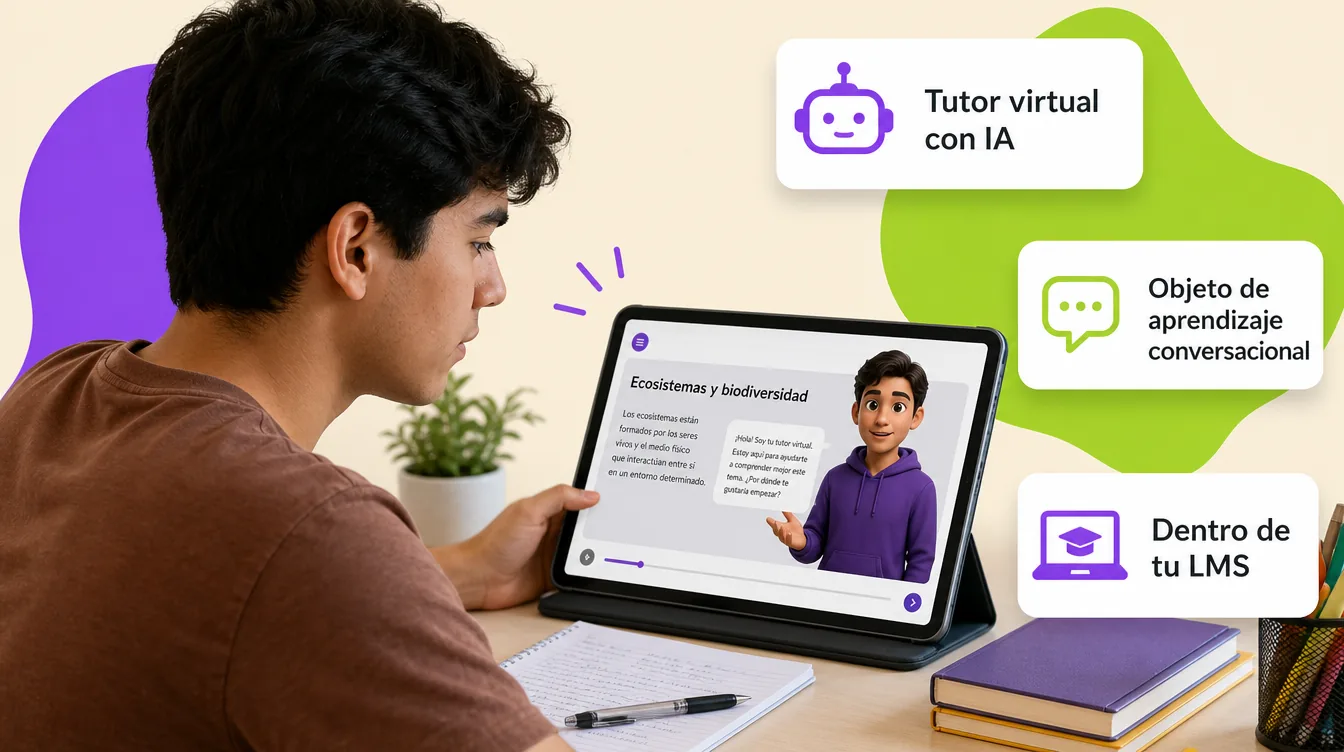
An AI virtual tutor is no longer a chat in the corner of the platform: it can be a learning object with voice and avatar, embedded in the lesson, that converses with the learner about that topic with the course content as its only source. This guide explains what a virtual tutor with artificial intelligence is, how it becomes a conversational learning object, how it integrates into Moodle or another LMS and what changes for those who learn and those who teach.
In this article
What is an AI virtual tutor?
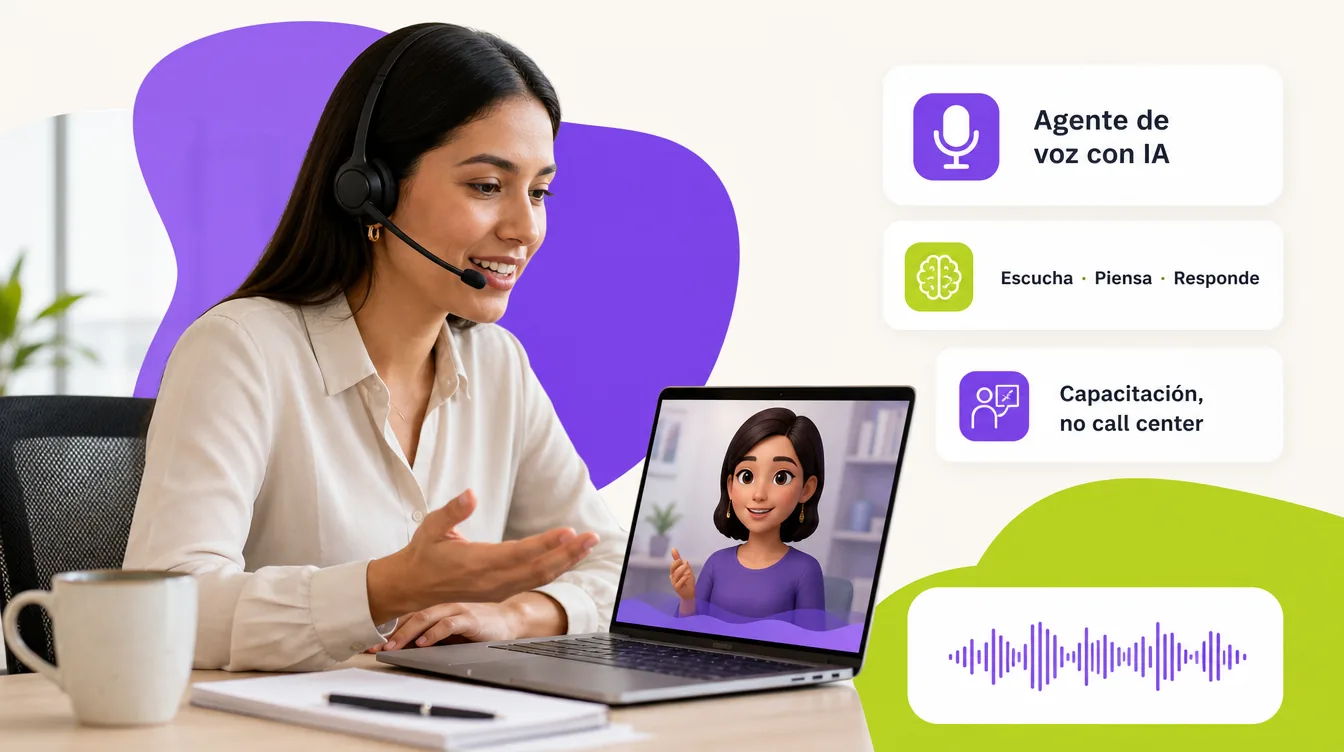
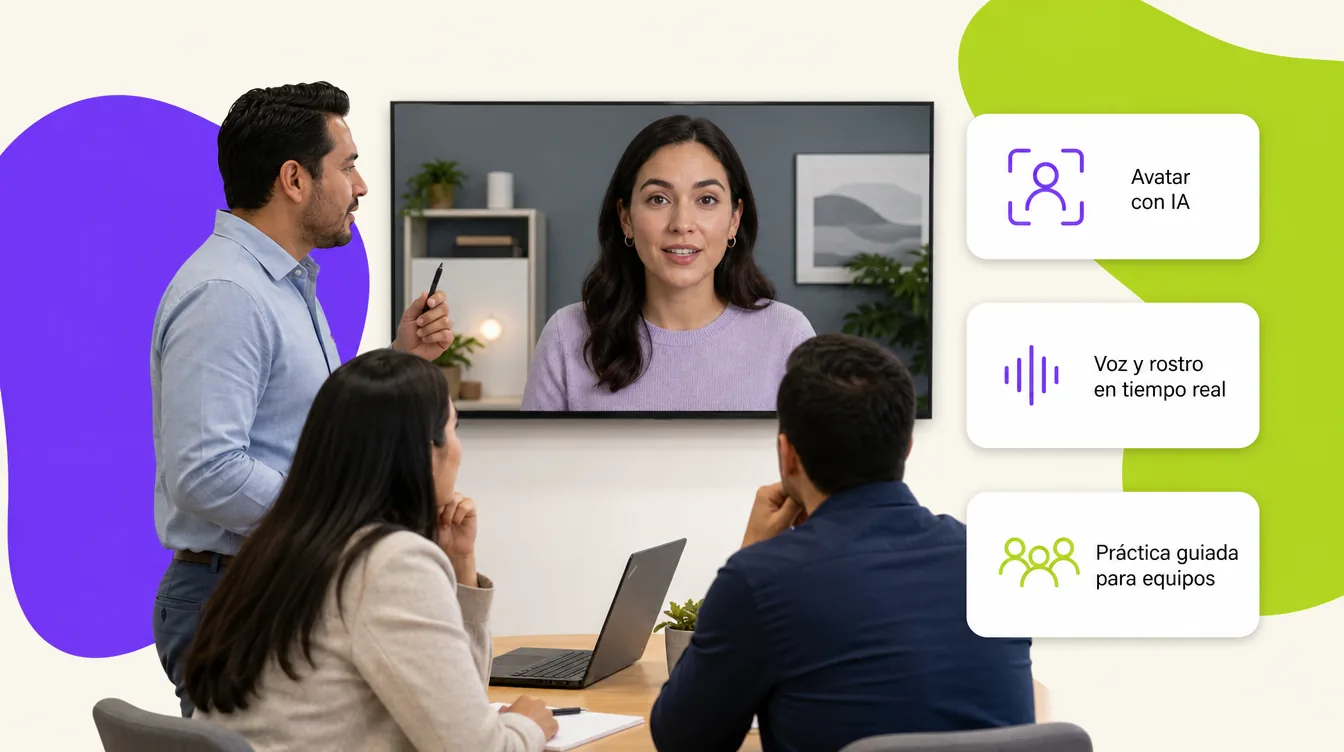
An AI virtual tutor is a conversational agent that accompanies the learner inside a course: it answers questions, explains with other examples, asks review questions and points out what to study again, available at any hour. The simplest virtual tutors work by text and answer from the course materials; the most complete ones speak and listen, have an avatar and run an activity with its own objective. Geedle Bot is an example of the first kind: it answers with the validated course content and jumps to the recording at the exact minute. The AI agents with avatar are the second kind.
What is a conversational learning object?
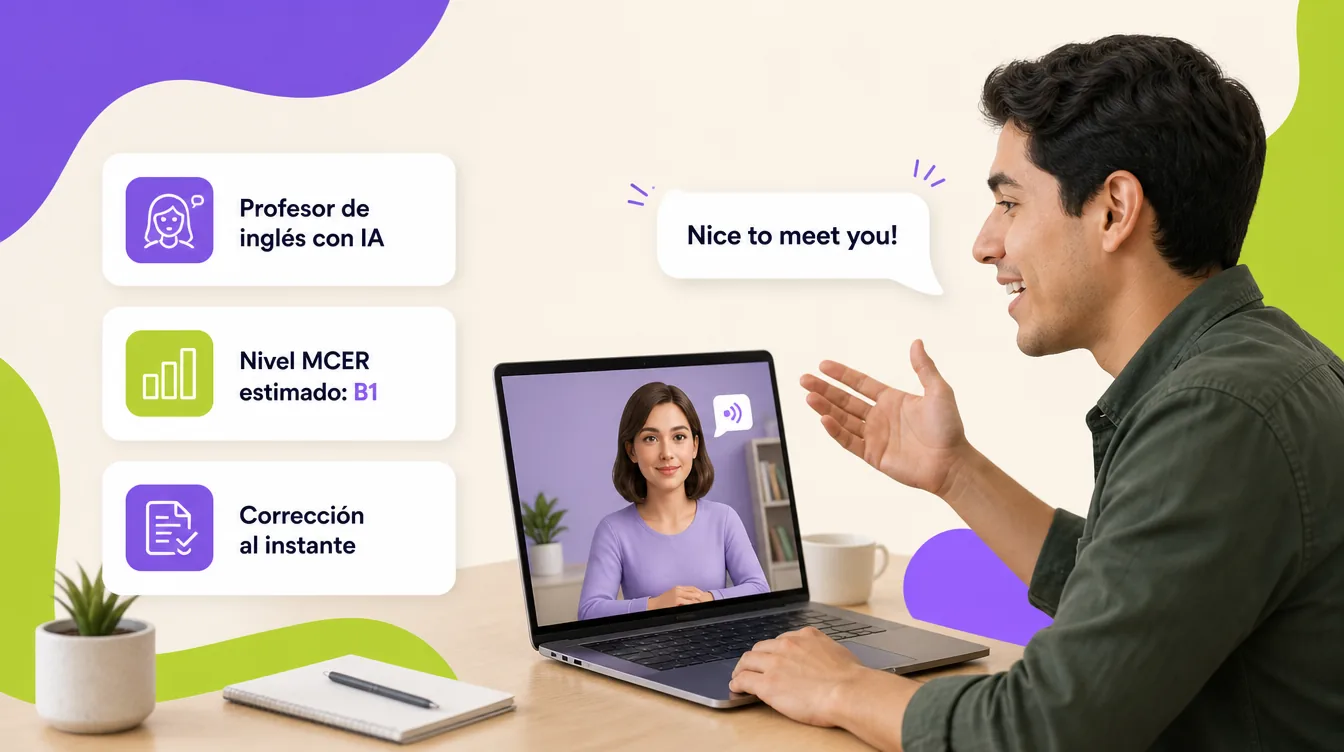
A learning object is a short, self-contained, reusable piece that teaches one concept with its own interaction and assessment. A conversational learning object meets the same definition, but the interaction is a spoken conversation with a virtual tutor: the learner introduces themselves in English and gets a correction, answers an auditor asking for evidence, handles a customer who objects. It has an objective (for example, "hold a one-minute presentation in English"), a bounded duration, a rubric and a result reported to the LMS. And it is reusable: the same object serves in the English course, in onboarding and in the customer-service program.
The difference from a video or a quiz is that the conversational object forces production: speaking, arguing, deciding. That is why it fits where the skill is a conversation, and why we produce it within the interactive learning objects service alongside simulators, branching scenarios and quizzes.
How does an AI virtual tutor integrate into Moodle or another LMS?
- As a block or activity. The tutor embeds in the lesson with a code block or a SCORM package that opens the voice and avatar session inside the platform, without leaving the course.
- With the course as its source. The agent receives the syllabus, readings, rubrics and, if they exist, class transcripts; it answers only with that and says "it is not in the course" when appropriate.
- With a reported result. At the close, the object sends the platform what the platform understands: completed, score and, through xAPI, the transcript or the estimated level.
- With usage limits. Minutes per session, sessions per person and per day, and schedule, so the cost is predictable.
If your platform is Moodle managed by us, the integration is part of the e-learning platform service; if it is another, the object is delivered as SCORM or as a secure link.
What changes for learners and teachers with virtual tutors?
| For whom | Before | With an AI virtual tutor |
|---|---|---|
| Learners | Questions wait for the forum or the next class | Immediate answer with the course content and spoken practice without embarrassment |
| Teachers | The same ten questions every week | Analytics on what is asked most and where in the course; time for what truly needs a person |
| Coordinators | Low completion in self-paced courses | An available companion and evidence of practice per participant |
| Training area | Oral practice only in live sessions | Practice at scale with a common criterion and a report per person |
The virtual tutor does not replace the teacher: it takes the repeated questions away and gives back data. The rule we use is that the tutor explains and practices, and the person assesses what has consequences.
Which kinds of AI virtual tutor should be produced first?
- Text review tutor for courses with lots of material: the case of Geedle Bot and the educational virtual agents that answer with verified sources.
- Language partner with avatar: the conversational object with the most use; see the AI English teacher.
- Interviewer for audits, certifications and competence assessments, like the virtual ISO auditor.
- Difficult customer or colleague for sales, service and leadership, like the sales role-play.
- Onboarding guide that explains policies and processes to the new hire; we detail it in AI voice agent for onboarding.
Short conversational objects work best inside a microlearning strategy: five to ten minutes, one objective, one result.
Try it, or have us build yours
If you produce courses, the fastest way is to see a conversational learning object working. Try the AI English teacher with avatar first: two free minutes in the browser, no account. If you want one with your content, your voice and your avatar, message us on WhatsApp or fill out the contact form: we reply the same day with a scope and a closed price. The full catalog is at AI agents with avatar.