Official transition timeline for ISO 9001:2026 and ISO 14001:2026 (Global ACI)
The ISO 9001:2026 and ISO 14001:2026 transition dates are no longer a forecast: they are set by Global ACI, the body that replaced the IAF, in two documents that are mandatory for accreditation and certification bodies. Here they are side by side, with what they mean for a certified company and for one about to certify.
In this article
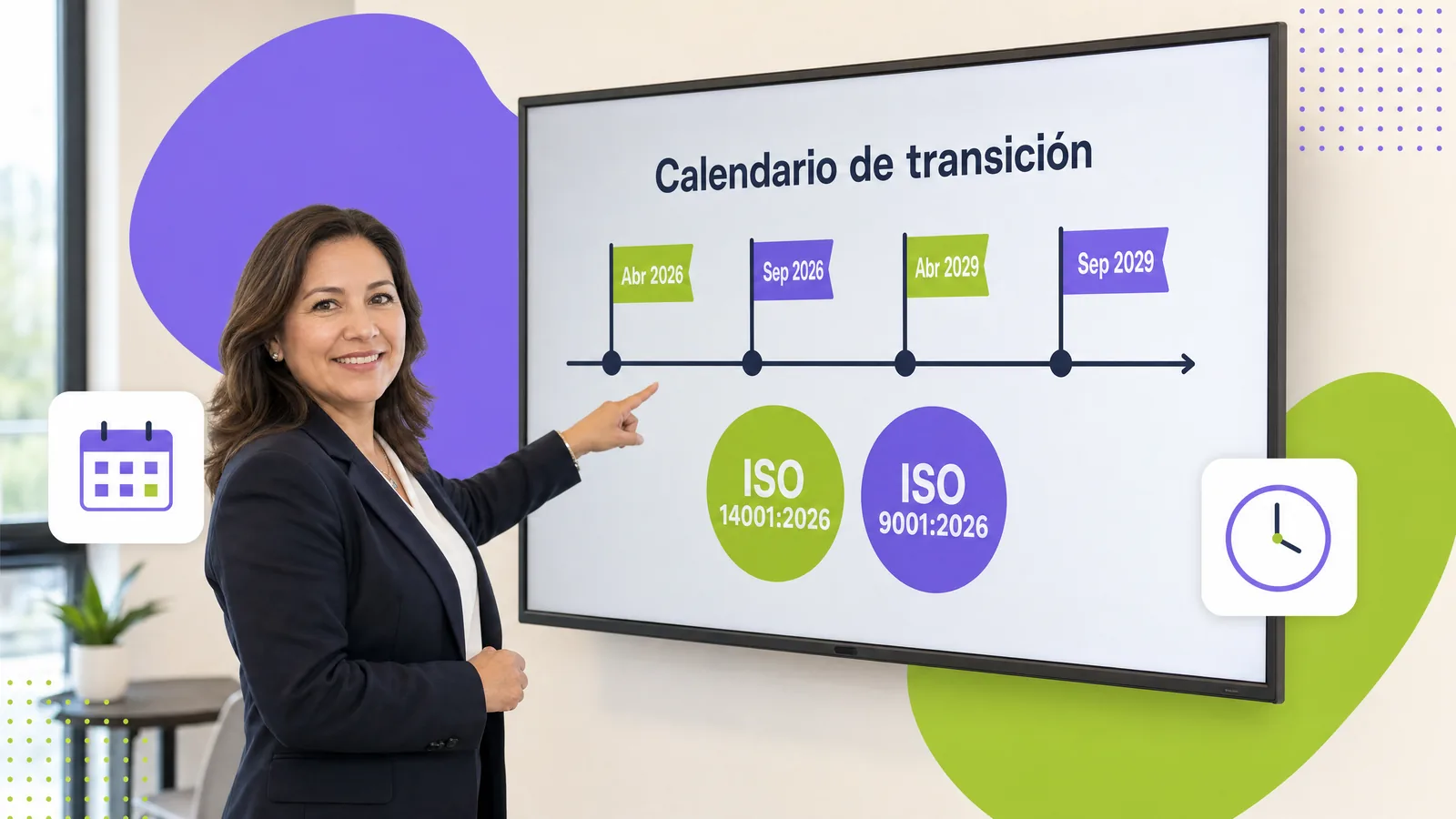
The transition dates, in one table
| Milestone | ISO 14001:2026 | ISO 9001:2026 |
|---|---|---|
| Publication of the standard | 15 April 2026 | 16 September 2026 |
| Transition document | Global ACI-TECH-3-TR 2029-04-30 (M) | Global ACI-TECH-3-TR 2029-09-30 (M), issued 4 September 2026 |
| Accreditation bodies ready to assess the new edition | 31 October 2026 | 31 March 2027 |
| Transition declaration by certification bodies | 31 January 2027 | 30 June 2027 |
| Accreditation decisions for certification bodies completed | 30 April 2027 | 30 September 2027 |
| Last date for an initial certification to the 2015 edition | 30 October 2027 | 31 March 2028 |
| 2015 edition certificates no longer valid | 30 April 2029 | 30 September 2029 |
Who sets the dates: Global ACI, not the IAF
Through 2025 and much of 2026 consultant and certifier guides said that “the IAF will formalize the transition period”. The IAF (International Accreditation Forum) and ILAC merged into Global Accreditation Cooperation Incorporated, Global ACI, which operates since 1 January 2026 and publishes the mandatory transition documents in the TECH-3-TR series. Accreditation bodies —in Mexico, the EMA— and accredited certification bodies are bound to follow them. If your certification body gives you different dates, they can only be earlier, never later.
How to read the timeline if you are already certified
- Your 2015 certificate remains valid until the end-of-validity date: 30 April 2029 for ISO 14001 and 30 September 2029 for ISO 9001. The certificate does not need to be modified to reflect that expiry; the date rules anyway.
- The transition audit can take place in a surveillance audit, at recertification or in a special audit. It must review the changed requirements, the changes in your context and system, and the effectiveness of the updated system.
- Your certification body has its own deadline to transition its accreditation: 30 April 2027 (14001) and 30 September 2027 (9001). Until it does, it cannot issue you a certificate to the new edition. Ask when it will be ready.
- If you do not transition in time, the 2015 certificate expires even if your three-year cycle is not over.
How to read it if you are certifying for the first time
There is a cut-off for initial certifications to the 2015 edition: 30 October 2027 for ISO 14001 and 31 March 2028 for ISO 9001. A 2015 certificate issued near those dates lasts less than two years. For a project starting now —4 to 8 months of implementation— the sensible path is to certify directly to the new edition: ISO 9001:2026 certification or ISO 14001:2026 certification. The decision, with its two exceptions, is in certify to ISO 9001:2026 or 2015?.
Both transitions at once
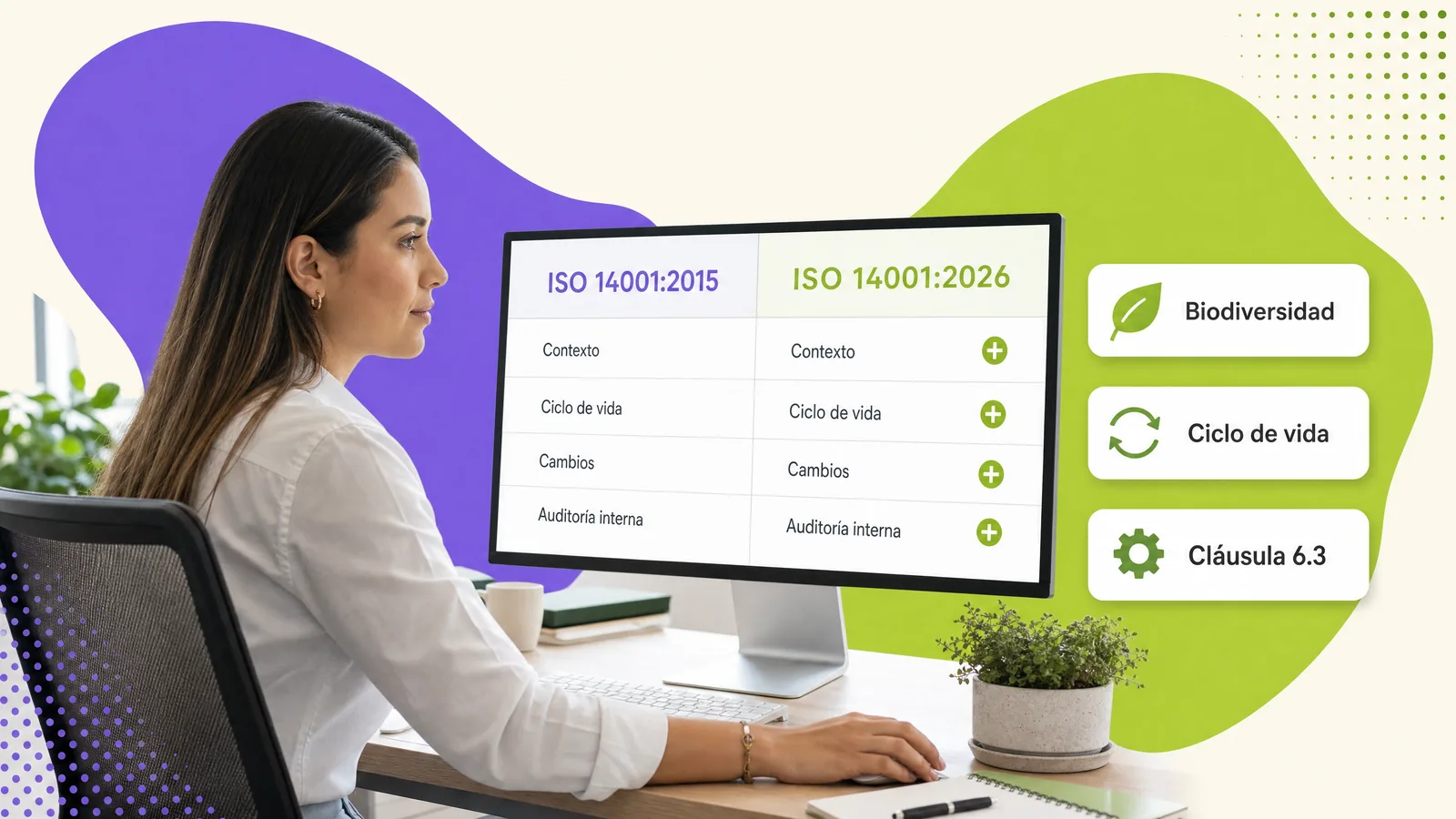
Companies with an integrated system have five months between the two calendars. The efficient move is to schedule both transitions in the same combined audit before 30 April 2029 (the earlier date), with a single planning of changes procedure —new in ISO 14001:2026 and reinforced in ISO 9001:2026— and a management review covering the inputs of both standards. The phased plans are at ISO 9001:2026 transition and ISO 14001:2026 transition; the changes of each standard, in ISO 9001:2026 changes and ISO 14001:2026 changes.
Why not wait until 2028
There are more than one million accredited ISO 9001 certificates in the world and the sector schemes (IATF 16949, AS9100, TL 9000, ISO 22163, ISO 29001) build on the standard: the Global ACI document itself acknowledges that certification bodies will need considerable audit-day effort to transition their clients. In Mexico, where a large share of certificates sits in supply chains transitioning at the same time, the 2028 and 2029 audit calendars will fill up. A gap analysis in 2026 costs little and leaves the transition scheduled in your 2027 surveillance audit.
Where do you start? Get the free assessment
If you want to know how much your system changes with the new edition and in which audit the transition should happen, start with the assessment. Answer eight questions in the free ISO systems assessment and get your level and what to do first; or message us on WhatsApp or through the contact form. No cost, no commitment. We have already taken a trailer transport company to ISO 9001:2026 certification: read the case study.