ISO 14001:2026 transition plan step by step: seven steps, checklist and dates
ISO 14001:2015 certificates stop being valid on 30 April 2029. This is the plan we follow to transition to ISO 14001:2026 inside the normal audit cycle, with no parallel project: seven steps, a gap checklist by clause and the official dates set by Global ACI, the body that replaced the IAF.
In this article
How do you transition to ISO 14001:2026?
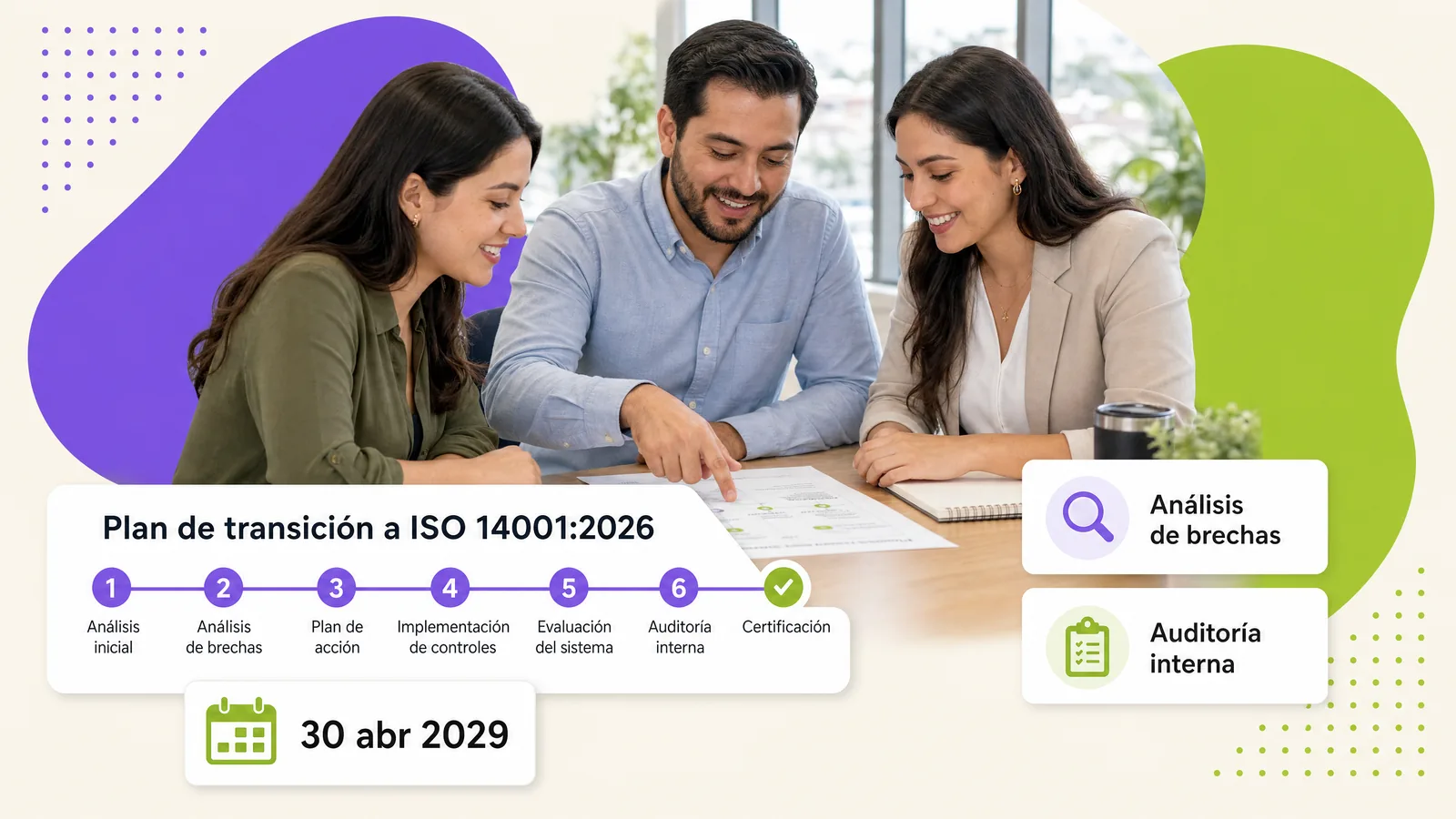
In seven steps: get the standard and train the team, run a gap analysis, broaden the context and review the aspects register with a life cycle perspective, reorganize risks and opportunities and create the planning of changes, extend operational control to external providers, audit internally with defined objectives and hold the management review in the new format, and agree with the certification body in which audit the transition will take place.
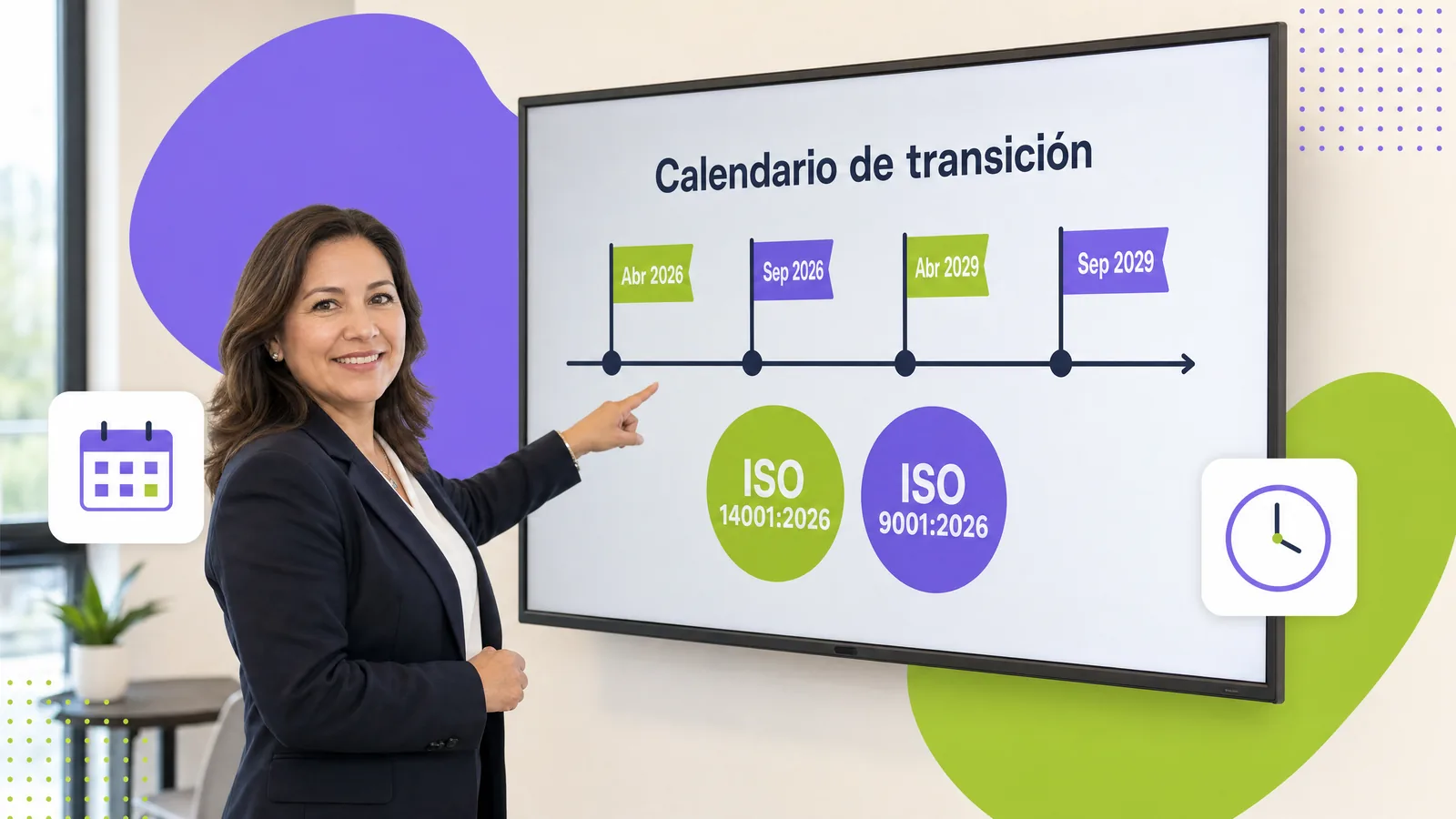
The dates that rule
| Milestone | Date | Source |
|---|---|---|
| Publication of ISO 14001:2026 | 15 April 2026 | ISO |
| Accreditation bodies ready to assess the 2026 edition | 31 October 2026 | Global ACI-TECH-3-TR 2029-04-30 |
| Accreditation decisions for certification bodies completed | 30 April 2027 | Global ACI-TECH-3-TR 2029-04-30 |
| Last date for an initial certification to ISO 14001:2015 | 30 October 2027 | Global ACI-TECH-3-TR 2029-04-30 |
| ISO 14001:2015 certificates no longer valid | 30 April 2029 | Global ACI-TECH-3-TR 2029-04-30 |
The transition audit can be done in a surveillance audit, at recertification or in a special audit. The cheap option is to attach it to the surveillance or recertification you already have scheduled: that is why the plan starts by looking at your certificate calendar.
The seven steps
- Train whoever will lead the transition. The system manager, process owners and internal auditors need an update course, not to memorize clauses but to tell what changes from what does not. The ISO courses with DC-3 records cover the update and the internal auditor.
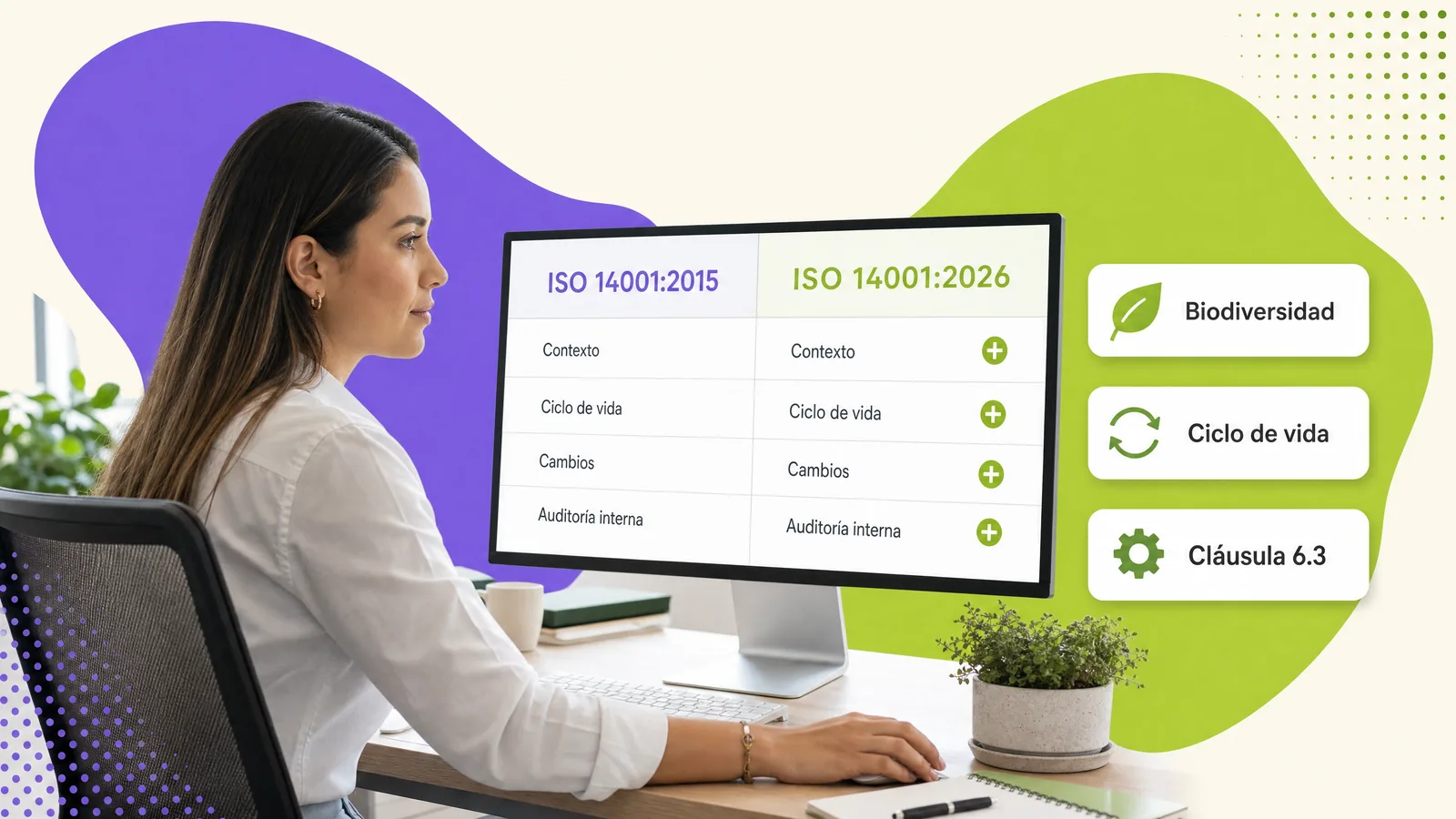
- Run a gap analysis. Compare your environmental management system with ISO 14001:2026 clause by clause. In most companies the gaps concentrate in 4.1, 6.1.2, 6.3, 8.1, 9.2.2 and 9.3. The ISO gap analysis gives you the compliance percentage and the estimated effort.
- Broaden the context and review the aspects register. Name the environmental conditions of your surroundings (water, air, biodiversity, waste) and check that the aspects and impacts register covers the life cycle you control or influence, abnormal conditions and potential emergencies.
- Reorganize risks and opportunities and create the planning of changes. Separate the determination of risks and opportunities from the actions, and write the planning of changes procedure (6.3): which changes are planned, who approves them, how they are communicated and how their results are reviewed. If you already hold ISO 9001, reuse its procedure.
- Extend operational control to external providers. Define the type and extent of control over externally provided processes, products and services with environmental impact: waste haulers, maintenance, raw materials. The legal requirements register must reflect the obligations that fall on them.
- Audit internally and hold the management review against the new edition. Schedule the ISO 14001 internal audit with defined objectives (9.2.2) and use the inputs-and-outputs format of 9.3. Close the findings before the transition audit.
- Agree the transition audit with your certification body. Confirm it is already accredited for the 2026 edition, in which audit the transition will take place and whether it adds days. Document the agreement.
Gap checklist by clause
- 4.1: does the context name climate change, biodiversity, pollution and resource availability?
- 4.2: did you identify climate-related requirements from customers, authorities or the community?
- 5.1: is there evidence of environmental leadership among supervisors and middle managers?
- 6.1.2: does the aspects register cover life cycle, abnormal conditions and emergencies?
- 6.1: are risks and opportunities determined and evaluated before planning actions?
- 6.3: is there a planning of changes procedure with records?
- 8.1: does operational control cover externally provided products and services?
- 9.2.2: does each internal audit have defined objectives?
- 9.3: does the management review follow the general, inputs and outputs format?
How long it takes and when to start
In an SME with an up-to-date system, the transition takes four to eight weeks of work spread over two or three months; in a multi-site plant or one with high environmental complexity, three to six months. What you should not do is leave it for 2028 or 2029, when consultants and certification bodies get saturated with the ISO 14001 and ISO 9001:2026 transitions at the same time. If your environmental system lives next to a quality system, plan both transitions in the same audit; the official timeline for both standards puts them side by side. And if your company is not certified yet, the path is direct ISO 14001:2026 certification.
Where do you start? Get the free assessment
The phased plan, applied to your city or state, is at ISO 14001:2026 transition. Answer eight questions in the free ISO systems assessment and get your level and what to do first; or message us on WhatsApp or through the contact form. No cost, no commitment. We have already taken a trailer transport company to ISO 9001:2026 certification: read the case study.