ISO 14001:2026 and climate change: what evidence the auditor asks for (and what it does not)
The most repeated question in the ISO 14001:2026 transition is whether you now have to measure your carbon footprint or publish an ESG report. The answer is no: the standard asks you to consider climate change and the other environmental conditions in the context, in risks and opportunities and in the management review, and to evidence it. Here, clause by clause, is what the auditor will ask for.
In this article
- What does ISO 14001:2026 ask about climate change?
- Clause 4.1: the context
- Clause 4.2: interested parties
- Clause 6.1: risks and opportunities
- Clauses 6.1.2 and 8: aspects and controls
- Clause 9.3: management review
- What ISO 14001:2026 does NOT require
- How to prepare it in a week
- Where do you start? Get the free assessment
What does ISO 14001:2026 ask about climate change?
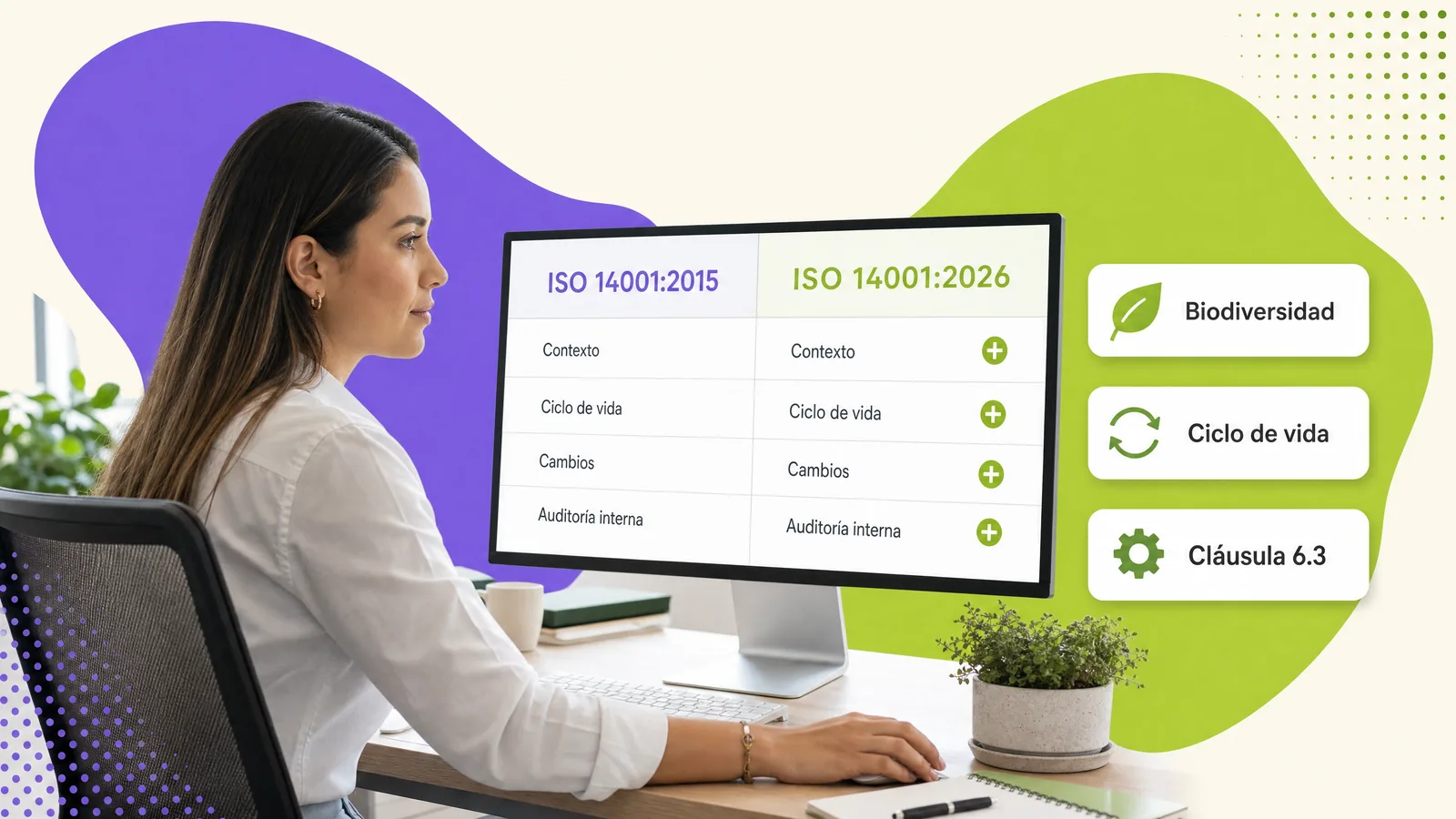
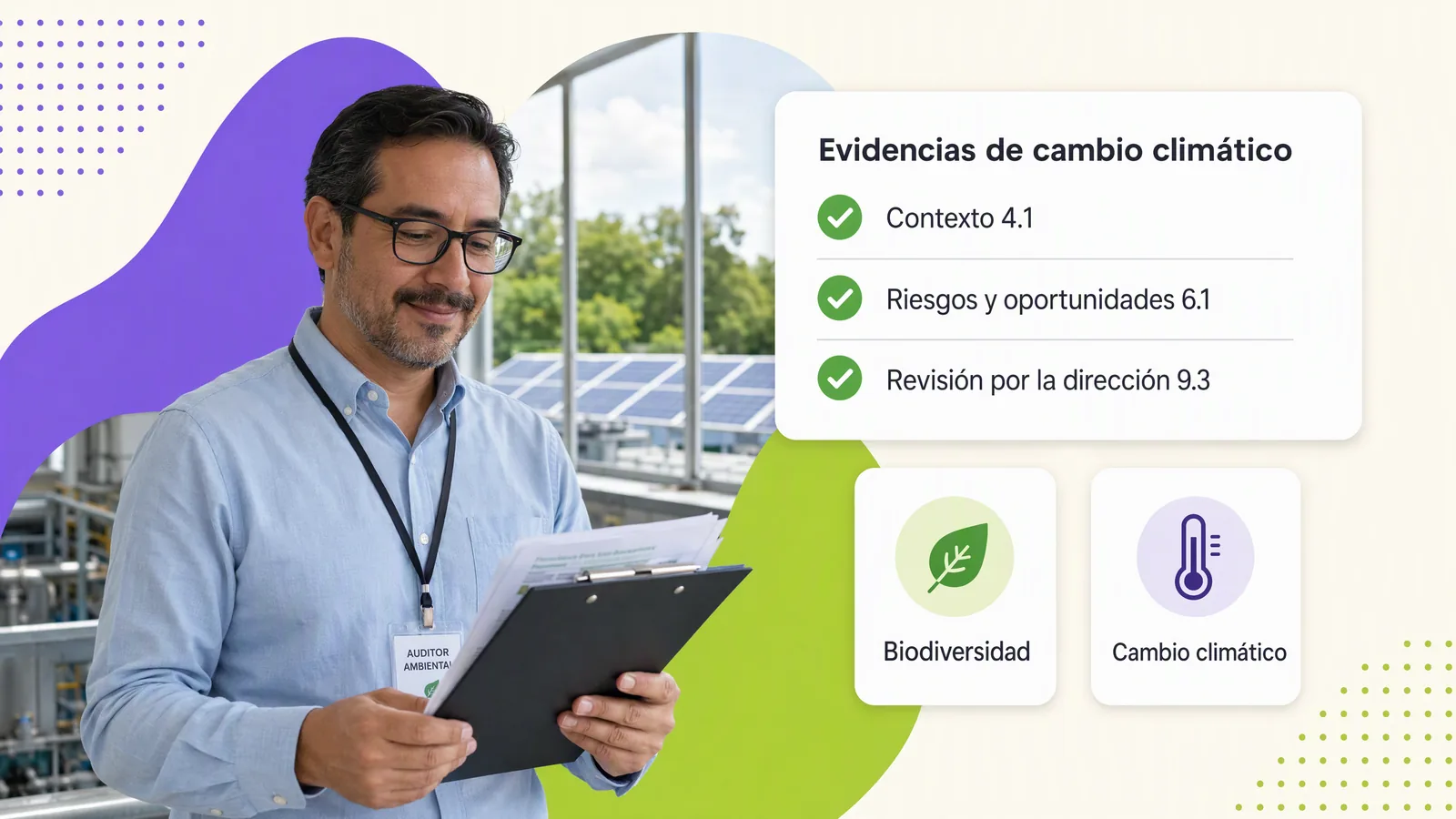
Three things: determine whether climate change and the other environmental conditions —biodiversity and ecosystem health, pollution and the availability of natural resources— are relevant issues for your organization (4.1); identify whether your interested parties have climate-related requirements (4.2); and, if they are relevant, treat them as risks and opportunities (6.1) with actions, objectives and follow-up in the management review (9.3). It does not ask for an emissions inventory, a neutrality target or a sustainability report. The 2024 amendment already introduced climate in 4.1 and 4.2; the 2026 edition extends the list of environmental conditions and carries them through the rest of the system.
Clause 4.1: the context
The auditor will look for a context analysis that names the environmental conditions of your surroundings and says whether they are relevant and why. Evidence that works: a table of external and internal issues that includes climate (drought, flooding, extreme heat, emissions regulation), water (availability, concessions, basin water stress), air (contingencies, licences), biodiversity (nearby protected areas, ecosystems your operation affects) and resources (scarce raw materials, energy). A generic sentence copied from a template does not work.
Clause 4.2: interested parties
Customers asking for emissions data in their supplier questionnaires, head offices with reduction targets, authorities with contingency programs, banks with environmental criteria, neighbours. Evidence: the interested-parties register with a column for climate-related requirements and the decision on which ones the system addresses.
Clause 6.1: risks and opportunities
This is the practical change of 2026: a context issue does not automatically become a risk. It has to be evaluated. Evidence: the risk and opportunity register with climate evaluated —for example, risk of water shortage in the dry season, risk of shutdown due to an atmospheric contingency, opportunity to cut energy or to sell to customers that reward low emissions— and, separately, the planned actions (6.1.5), with owner and date. If you decide climate is not a relevant risk, document the reasoning.
Clauses 6.1.2 and 8: aspects and controls
If climate or water are relevant, the aspects and impacts register must reflect them with a life cycle perspective and under abnormal and emergency conditions: water use at production peaks, emissions at start-up, waste from an unplanned shutdown. Operational controls (8.1) and emergency plans (8.2) close the loop: what you do in case of shortage, contingency or flooding.
Clause 9.3: management review
The management review, now in three parts, must receive as input the changes in the context —including climate— and in interested parties, and produce outputs: decisions, resources and objectives. Evidence: the minutes with those points discussed, not a form with ticked boxes.
What ISO 14001:2026 does NOT require
| Requirement | Required by the standard? | When it pays to do it anyway |
|---|---|---|
| Emissions inventory (carbon footprint) | No | If a customer, headquarters or financing asks for it; the system is the natural base |
| Neutrality or reduction target | No | If you set it as an environmental objective, the system will manage it with indicators |
| ESG or sustainability report | No | If you are listed or your chain requires it; reuse the system data |
| Physical climate risk analysis | Only as part of 6.1 if climate is relevant | Whenever you operate in areas with drought, flooding or contingencies |
| Assessing suppliers on climate | Only if it falls under operational control (8.1) of external providers | When external products or services weigh in your aspects |
How to prepare it in a week
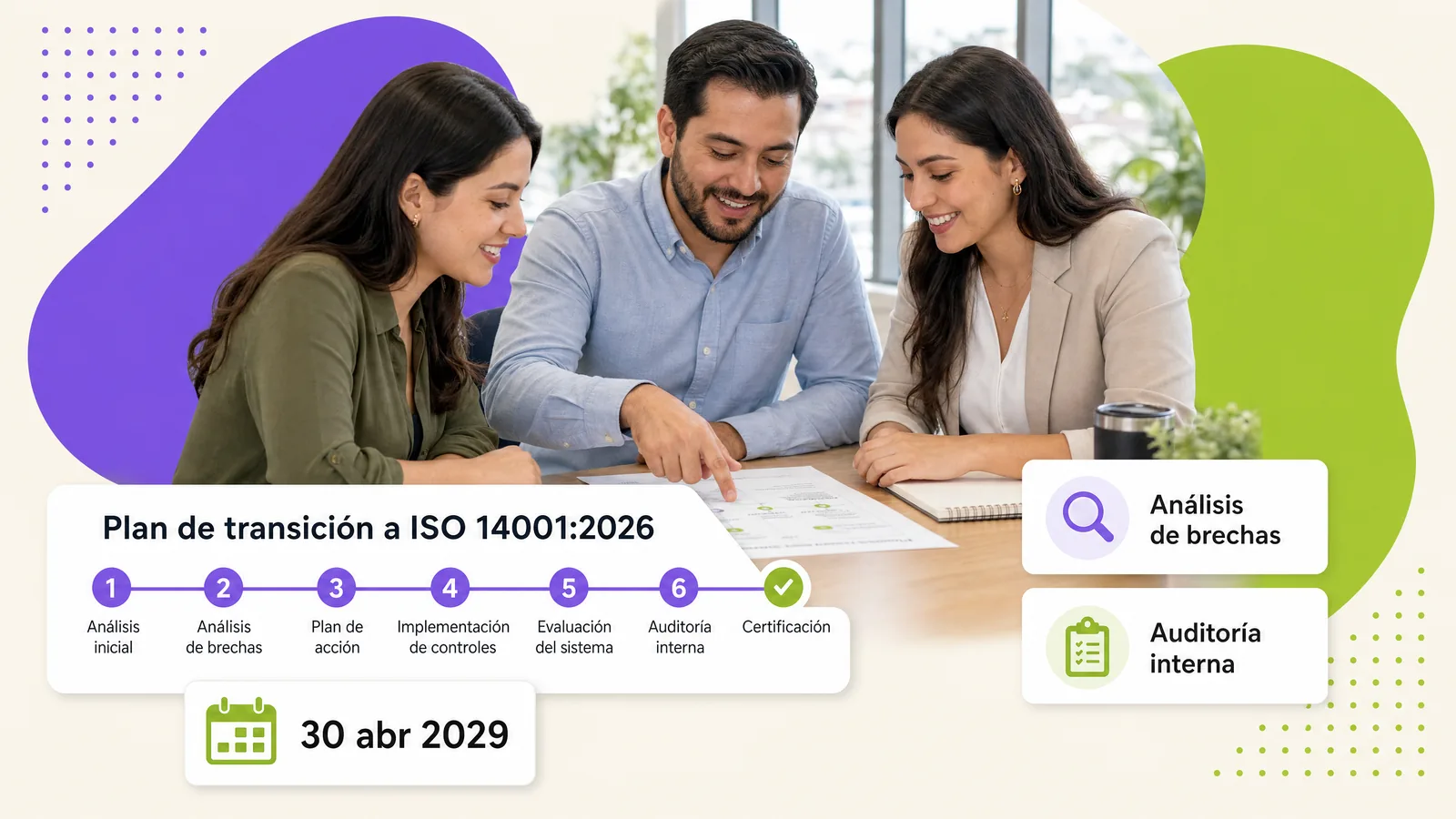
Extend the context table, add the climate column to interested parties, evaluate climate in the risk and opportunity register and take the topic to the next management review. It is part of the ISO 14001:2026 transition plan and of the gap analysis we run in the ISO 14001:2026 transition. The rest of the changes are in ISO 14001:2026 changes clause by clause.
Where do you start? Get the free assessment
If you do not know whether climate is a relevant issue for your system, the assessment tells you in a few days. Answer eight questions in the free ISO systems assessment and get your level and what to do first; or message us on WhatsApp or through the contact form. No cost, no commitment. We have already taken a trailer transport company to ISO 9001:2026 certification: read the case study.