Meta Pixel Saltar al contenido
Logo Geedle
Soft skills courses

Patient communication course for companies

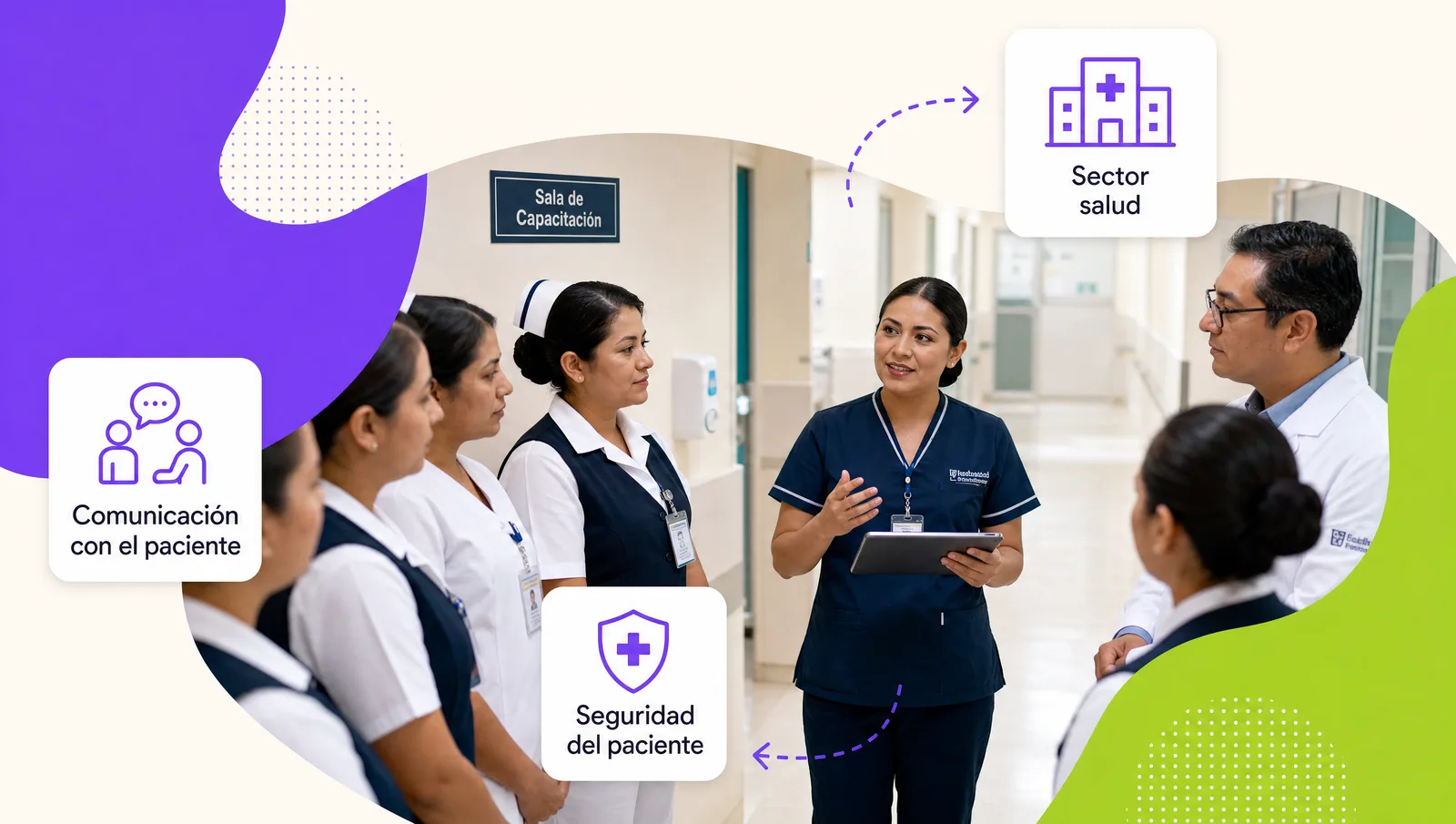
A patient communication course for the staff who face patients every day: nurses, physicians, reception, admissions and social work. Through observed role-plays we practice how to listen, explain in plain language, deliver bad news with a protocol, hold an informed-consent conversation and stay calm in front of a distressed family. With a DC-3 certificate and Geedle Bot between shifts.

Patient communication course

What is the patient communication course?

It is an 8-hour program that trains healthcare staff to communicate with patients and their families with clarity and empathy: listening, explaining in plain language, delivering bad news with a protocol, holding informed-consent conversations and handling tense situations. It runs live virtual, on-site or self-paced, with a DC-3 certificate filed with Mexico's STPS.

Course sheet

The essentials at a glance.

Duration

8 hours

Formats

Live virtual · On-site · Self-paced

Certificate

DC-3 · STPS

AI agent

Geedle Bot answers questions 24/7 with the exact minute of the recording

What your team will be able to do

Learning objectives observable on the job.

  • Listen to and understand the patient

    Ask, paraphrase and confirm before explaining; notice what the patient is not saying.

  • Explain in plain language

    Translate clinical terms into everyday words and check understanding with simple techniques.

  • Deliver bad news with a protocol

    Prepare the setting, pace the information and support the emotional reaction of the patient and family.

  • Stay calm in difficult situations

    Respond to anger, fear and distress without getting defensive or escalating.

Syllabus

Course syllabus

Six modules; each one leaves a deliverable you can apply in your operation.

  1. Communication in healthcare: why it fails and what it costs

    Common barriers between staff and patients, family expectations and the weight of treatment in the patient experience.

    Map of critical moments in your department
  2. Active listening and empathy in short windows

    Techniques to listen and show empathy in the minutes a shift allows; nonverbal communication.

    Opening and closing script for the interaction
  3. Plain language and checking understanding

    Explaining diagnoses, instructions and paperwork without jargon; the technique of confirming what the patient understood.

    Plain-language glossary for your department
  4. Informed-consent conversations

    How to explain a procedure, its alternatives and risks in accessible language, leave room for questions and respect the decision.

    Checklist for the conversation
  5. Bad news and supporting the family

    Step-by-step protocol for delivering difficult news, handling silence and emotional reactions, information with one voice.

    Adapted bad-news protocol
  6. Difficult situations and application plan

    Anger, fear, large families, language barriers and patients with limitations; commitment to apply in the department.

    30-day application plan
01

Who is this course for?

Nurses, physicians, reception, admissions, cashiers, social workers and orderlies in hospitals, clinics, laboratories and medical offices. Also for company medical services and diagnostic centers. The content is adjusted to each department: communication in the emergency room is not the same as in outpatient care or a sample-collection lab.

02

What changes in the unit after the course?

Patients who understand their diagnosis and instructions, families who get information on time and with one voice, fewer complaints about treatment and less tension in the hallways. We measure with a learning assessment, an observation rubric in the role-plays and, if you want, your own patient-satisfaction surveys before and after.

Want this course at your company?

Request the proposal for the patient communication course: three scope options with a closed price in under 24 business hours.

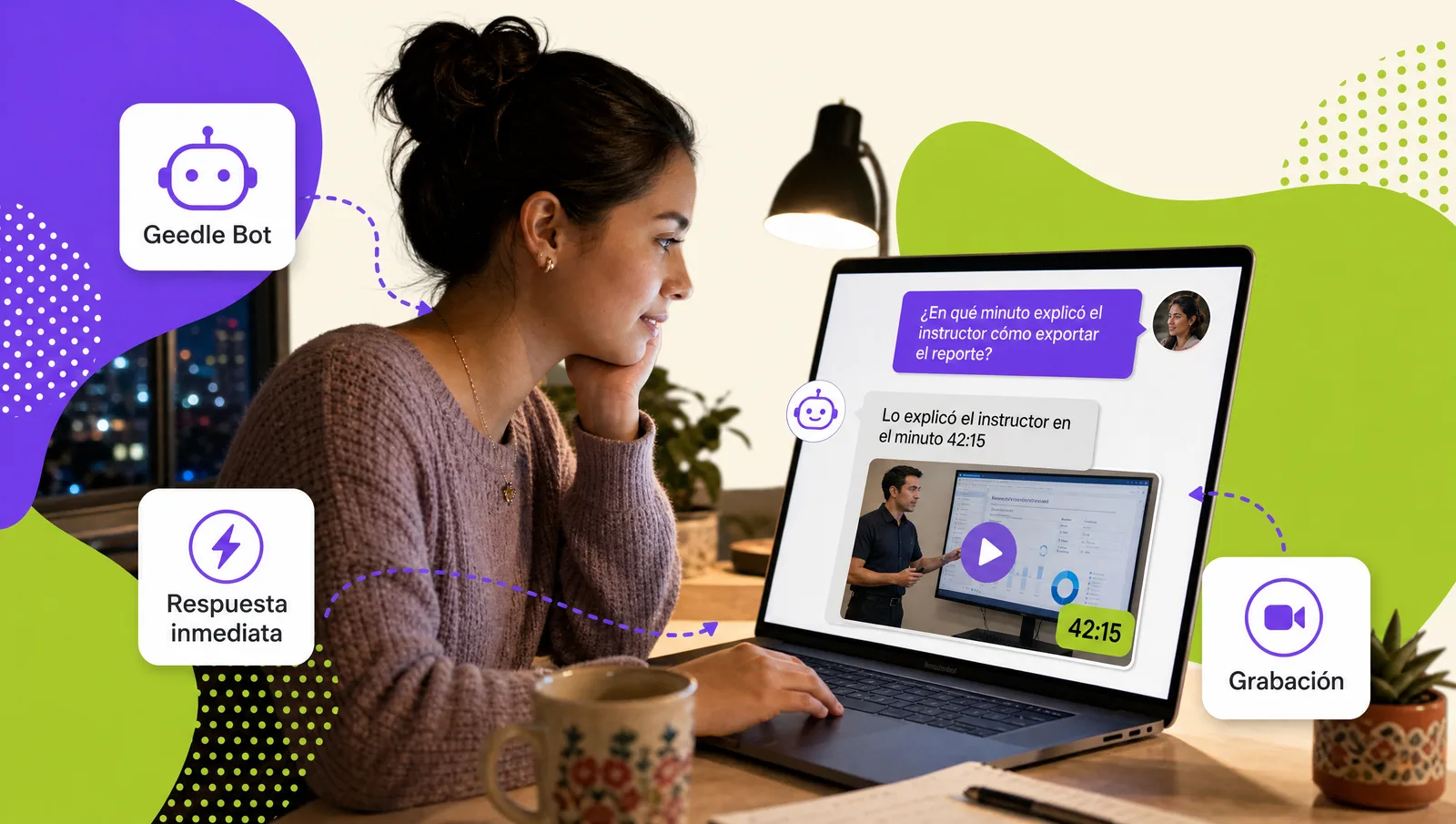
Participant asking Geedle Bot on a laptop at night; the agent replies with minute 42:15 of the course recording
Artificial intelligence

An AI agent supports every participant during and after the course

Geedle Bot is trained on the syllabus, materials and recordings of your course. Participants ask in plain language and get an exact answer, not a generic one.

  • Knows every detail of the course: dates, syllabus, deliverables and certificate criteria
  • Solves problems in real time, at any hour, from Moodle, WhatsApp, Teams or Slack
  • Delivers the exact minute and second of the recording where the instructor explained the topic
  • Reinforces what was covered with summaries and review questions, and escalates to the instructor when needed
  • Shows HR which topics raise the most questions so the course can be adjusted

Which format suits each course?

All of them issue a DC-3 certificate and leave records on the platform; what changes is how people practice and how the calendar is organized.

Live virtualOn-site at your companySelf-paced on the platform
Ideal forTeams across several sites or remoteHands-on practice, team dynamics and brigadesRotating shifts and large workforces
InteractionLive instructor, breakout rooms and real casesInstructor in the room, role-plays and practice with equipmentMicrolessons, challenges and automatic assessments
Typical duration2-to-4-hour sessions on different days4-to-8-hour days2 to 4 weeks at your own pace
RecordsAttendance, participation and assessment on the platformRoster, assessment and photo evidenceProgress, grades and time on the platform
Questions between sessionsGeedle Bot 24/7Geedle Bot 24/7Geedle Bot 24/7
CertificateDC-3 with the STPSDC-3 with the STPSDC-3 with the STPS
FAQ

Frequently asked questions about the patient communication course

Get a quote for this course for your team

Tell us how many people, in which city and in which format. We reply the same day, free and with no commitment.