Soft skills vs technical skills: which to train first in your company
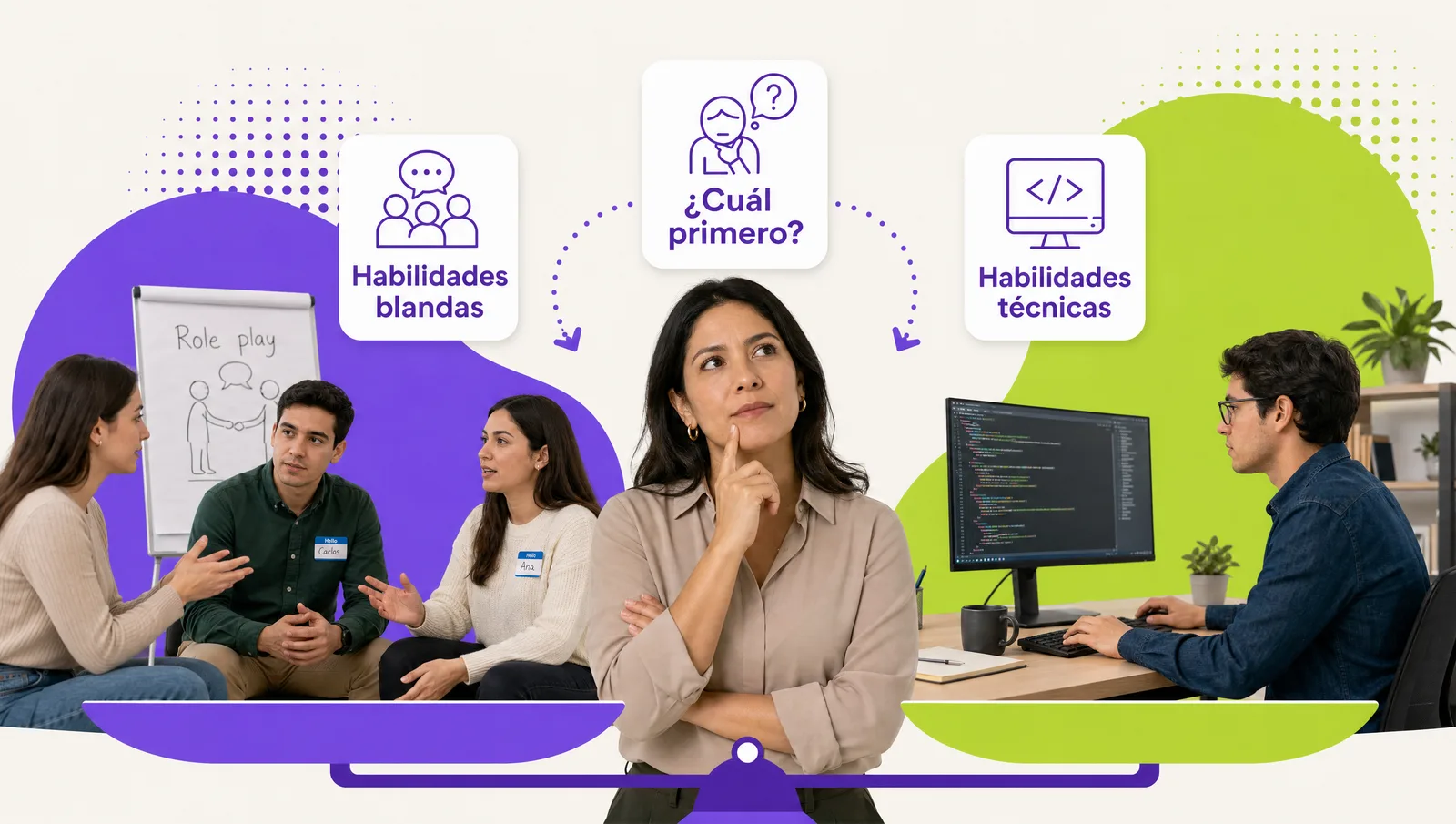
When the budget does not stretch to everything, the question is unavoidable: do we train leadership and communication first, or Excel, cybersecurity, and artificial intelligence? We define soft and technical skills, show examples of each and how they are measured, give a decision guide based on the problem the business is facing (turnover, complaints, tool adoption, compliance), and explain how to combine them into learning paths by role.
In this article
- What are soft skills and technical skills?
- Examples and how each is measured
- Which to train first? A guide by business problem
- High turnover or poor climate
- Customer complaints
- Adoption of a new tool
- Compliance and audits
- How to combine them in paths by role
- Three mistakes when choosing between soft and technical
- Want a quote for a course for your team?
What are soft skills and technical skills?
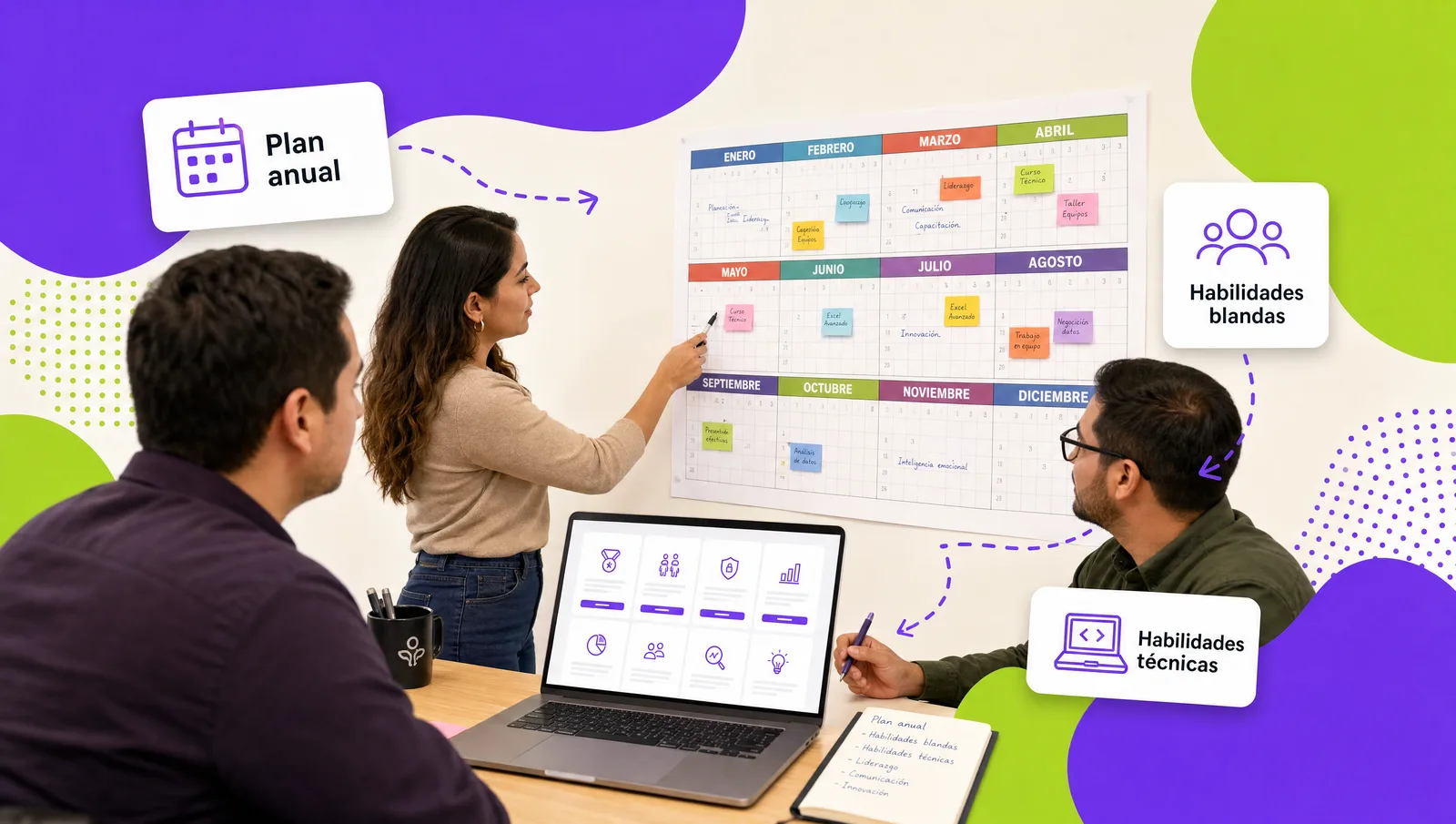
Soft skills are the behavioral competencies a person uses to relate, decide, and organize: leadership, communication, teamwork, emotional intelligence, conflict resolution, negotiation, time management, stress management, and customer service. Technical skills are the specific knowledge and abilities needed to execute a task with a tool, a method, or a standard: Excel, Power BI, cybersecurity, artificial intelligence, Moodle, Articulate, instructional design, 5S, first aid, or ISO 9001 internal auditing. The former travel with the person to any role; the latter become obsolete and must be renewed.
The distinction matters for deciding, not for labeling. A supervisor who masters the tool but cannot give feedback produces turnover; a charismatic leader who does not understand the KPI dashboard makes bad decisions. The right question is not which family is more valuable, but which one solves the problem that is costing you money today. The full catalogs are at soft skills courses and technical skills courses.
Examples and how each is measured
One practical difference is how you measure. Technical skills are assessed with an exam or an observable task; soft skills require observation over time and feedback from others. The table sums it up with examples from the catalog.
| Skill | Type | Example course | How it is measured |
|---|---|---|---|
| Leadership | Soft | Leadership for middle managers | 360 review, team turnover and climate at 90 days |
| Effective communication | Soft | Effective communication at work | Manager observation, rework from misunderstood instructions |
| Customer service | Soft | Customer service | Complaints, satisfaction surveys, first-contact resolution |
| Emotional intelligence | Soft | Emotional intelligence | Self-assessment, reported conflicts, absenteeism |
| Excel for business | Technical | Intermediate and advanced Excel | Practical exam, time to produce a report |
| Cybersecurity | Technical | Cybersecurity for employees | Phishing drills, reported incidents |
| Artificial intelligence | Technical | AI for HR, sales, teachers, or developers | AI-assisted deliverable, hours saved per process |
| ISO 9001 internal auditor | Technical | Internal auditor training | Exam, internal audits run without procedural findings |
| First aid | Technical | First aid | Assessed practice, brigade in place |
Which to train first? A guide by business problem
The rule is simple: start with the problem that costs the most and pick the family that attacks it most directly. These four cases cover most situations.
High turnover or poor climate
Start with soft skills, and with the managers. Most resignations are explained by the relationship with the direct supervisor, not by the tool. A leadership program with effective communication and emotional intelligence for middle managers, measured with turnover and climate at 90 days, usually gives the fastest return.
Customer complaints
It depends on where the complaint comes from. If it is about treatment, response times, or broken promises, go with customer service and conflict resolution. If it is an error in the product, the invoice, or the process, the cause is technical: Excel, the internal system, 5S, or the procedure. Listen to ten real complaints before deciding.
Adoption of a new tool
Technical first, but accompanied. People do not use a system they do not understand, so the tool course (Power BI, Moodle, AI, the ERP) comes first. Add a short change-management session for leaders, because adoption collapses when the manager neither demands nor models it.
Compliance and audits
Technical, and on a calendar. NOM-035, first aid, cybersecurity, ISO 9001 internal auditor, and the courses that generate a DC-3 certificate have deadlines and mandatory evidence. They go first on the calendar because the cost of not having them is a penalty or a finding, not a missed opportunity.
How to combine them in paths by role
- Plant supervisor: leadership and effective communication first; then 5S, first aid, and Excel for shift reports.
- Sales executive: negotiation and customer service; then artificial intelligence for sales and marketing, and the company CRM.
- Administrative analyst: Excel for business and Power BI first; time management and written communication afterward.
- Internal trainer or teacher: instructional design, Articulate, and Moodle for teachers; then artificial intelligence in education and presentation skills.
- Developer: artificial intelligence for developers and cybersecurity; teamwork and communication with non-technical departments in parallel.
- Whole workforce: cybersecurity for employees and NOM-035 as the annual baseline, in gamified self-paced format.
A well-built path alternates: a technical module that solves something immediate, a soft module that improves how it is used, and so on. On the e-learning platform this is configured with prerequisites and gamified with coins per completed module, which keeps people moving forward.
Three mistakes when choosing between soft and technical
The first is training what is easy to measure instead of what hurts: technical exams are comfortable, but turnover is not fixed with Excel. The second is giving soft skills to everyone equally: a leadership workshop for someone who supervises nobody breeds cynicism; target by role. The third is not measuring at 90 days: without the direct manager's assessment after the course, you will never know whether the investment changed anything on the job, and the next annual plan will repeat the same list. Every Geedle course, soft or technical, closes with a DC-3 certificate and includes access to Geedle Bot so questions are resolved on the spot from the course materials.
Want a quote for a course for your team?
Tell us the problem you want to solve and we propose the path of soft and technical courses to attack it. Tell us what you need: message us on WhatsApp, fill out the contact form or open this site's live chat. We send a proposal with three scope options in under 24 business hours, with the DC-3 certificate and access to Geedle Bot included. The full catalog is at training courses for companies.