



- Industry
- Safety
Forklift simulator
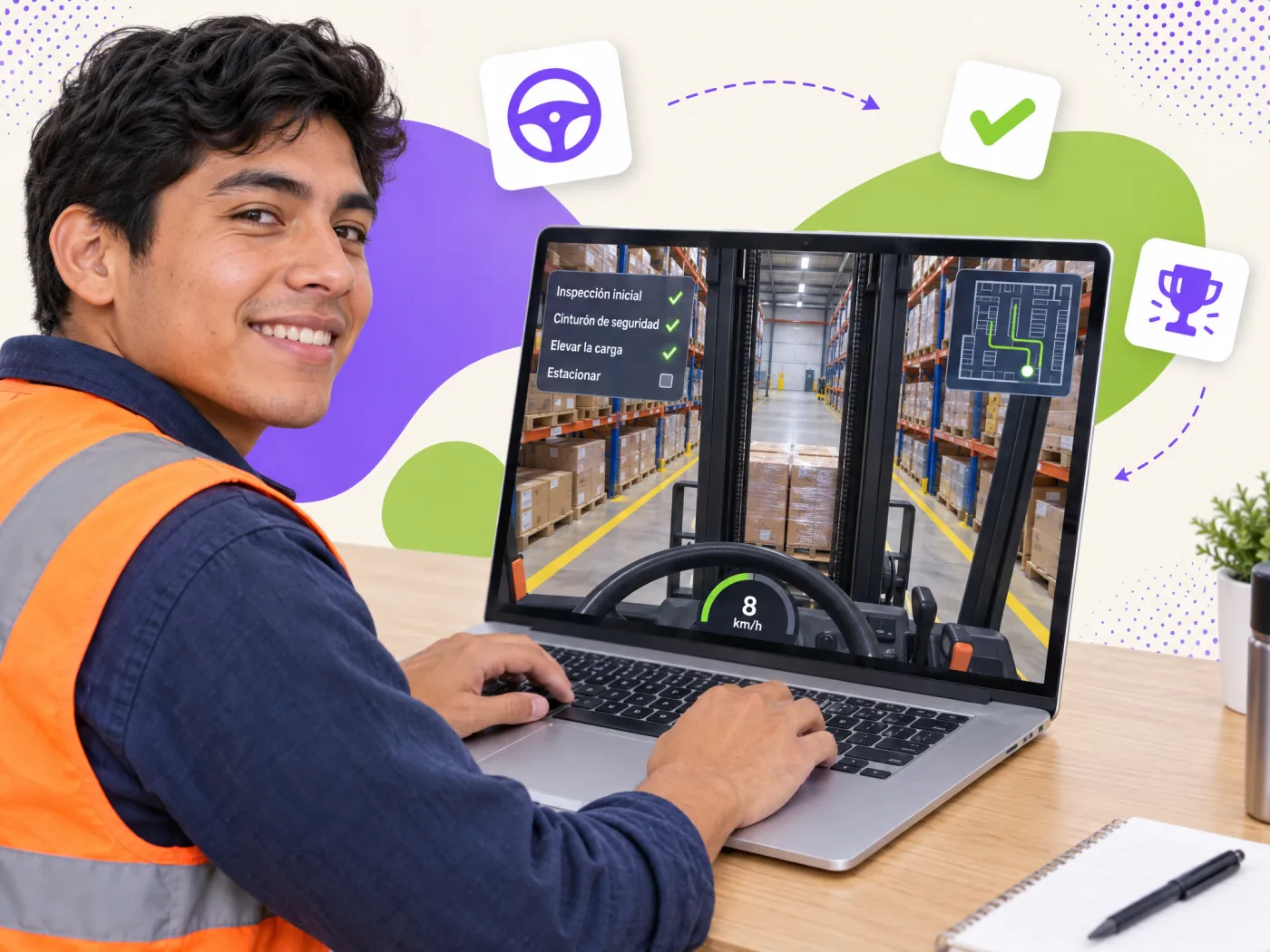
First-person driving between racks, with a warehouse minimap and the checklist ticking off as the operator completes each step.

Platforms
Course production
Online course production
From content to SCORM, in your city
Instructional design for courses
Objectives, script and storyboard
Course content design
Writing, scripts and graphic design
Gamified courses
End-to-end SCORM production
Interactive videos
Decisions and assessment in video
Learning objects
Interactive micro-content
Moodle Plugins
Artificial intelligence
ISO 9001 — Quality
ISO 14001 — Environmental
ISO 45001 — Safety
ISO services
Formats
Learn
A working scenario that runs in your browser: look around the cell in 360°, learn what each pendant button does, and move an engine from the rack to the assembly line without breaking the safety rules. This is what the simulators we build into courses for companies, universities and onboarding programs look like.
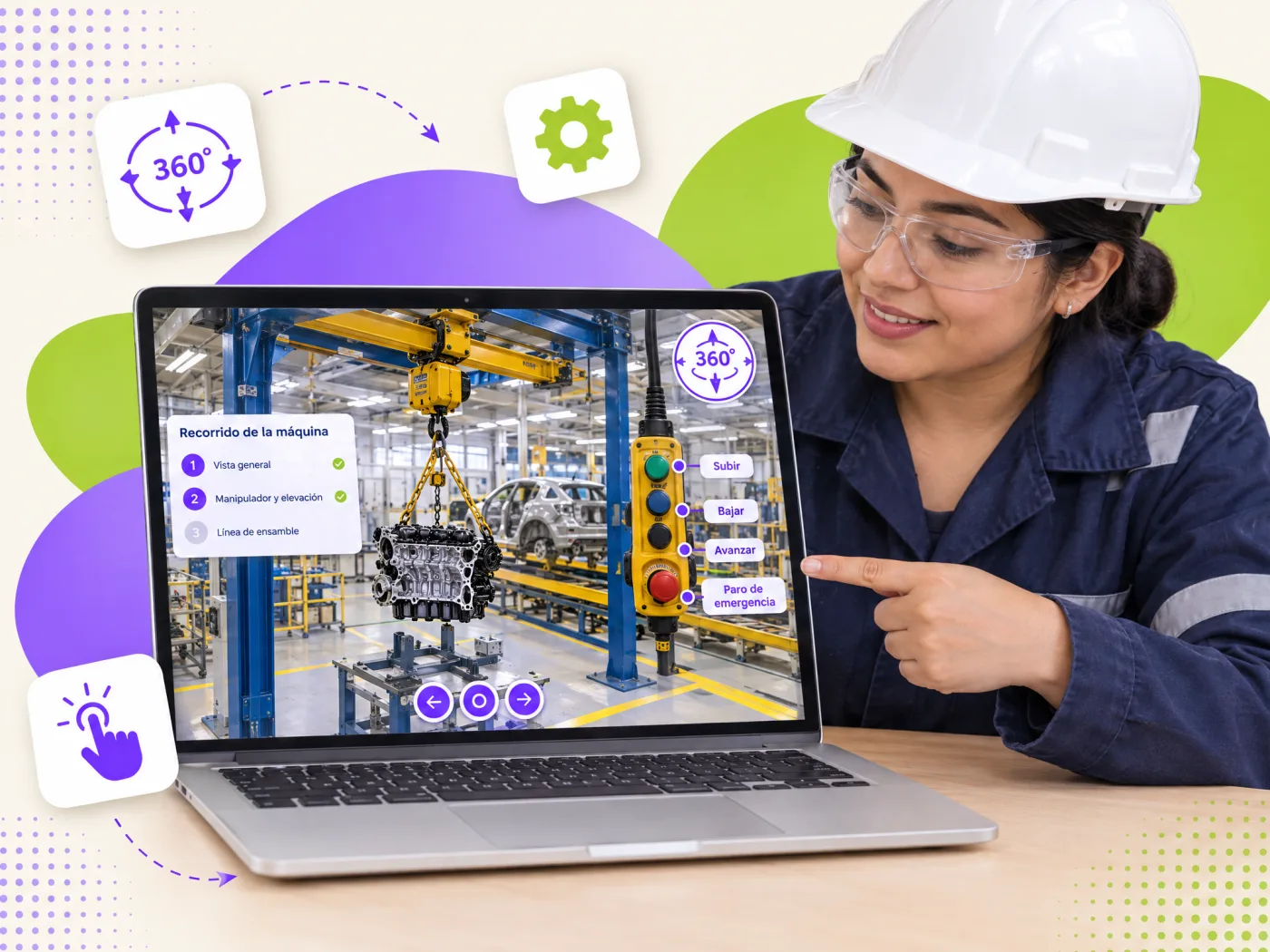
A working scenario, built with WebGL, that runs in the browser without installing anything. Look around the cell, learn the pendant and complete the lifting cycle.
Reading about a procedure is not the same as doing it. We build scenarios where people practice, make mistakes without risk, and every decision is recorded.
First-person driving between racks, with a warehouse minimap and the checklist ticking off as the operator completes each step.
The real cell in 360°: every button explained, the machine cycle simulated and the operator practicing before touching the equipment.
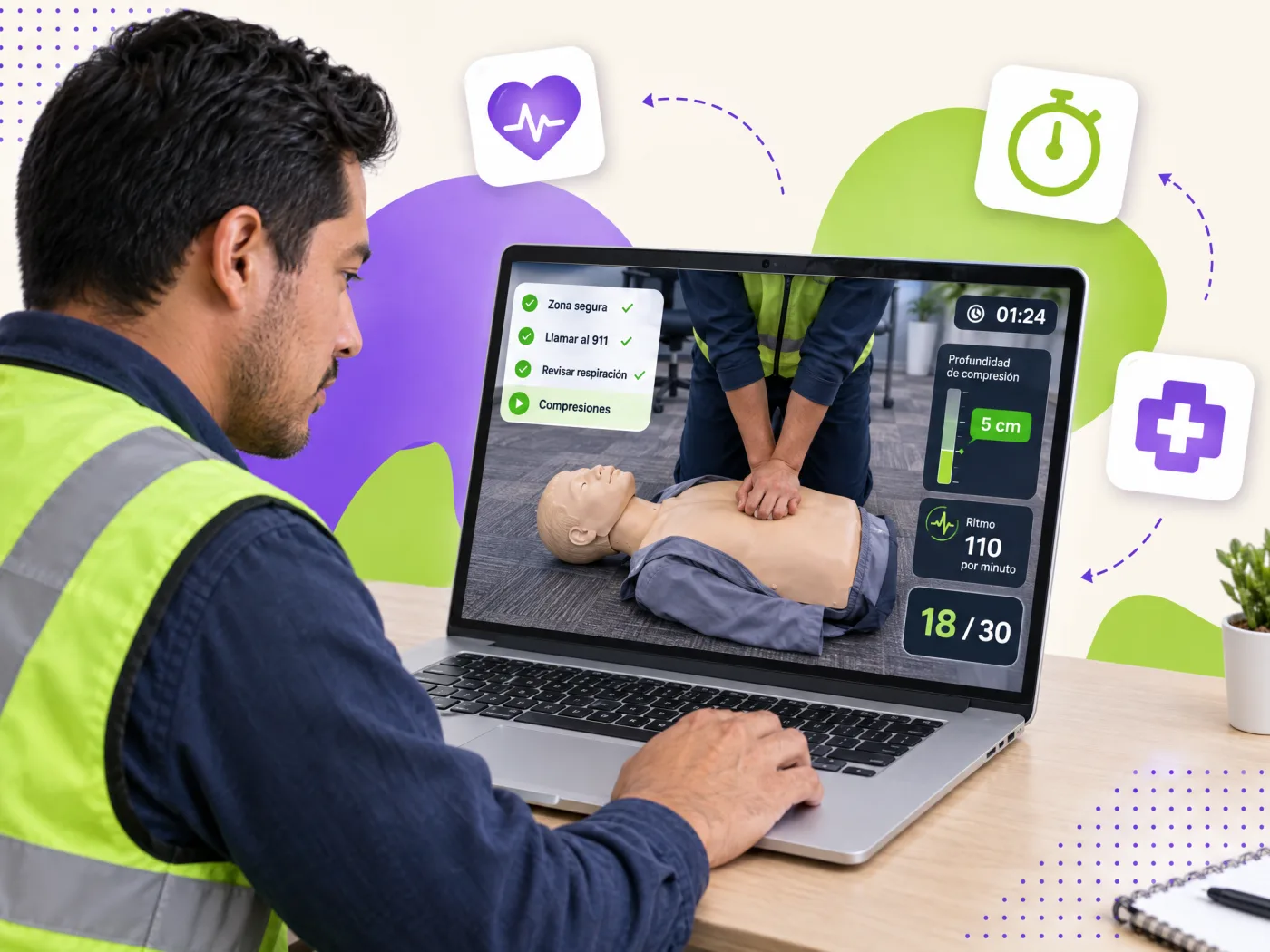
Compressions with depth and rhythm meters, and the full protocol step by step: safe scene, call, check breathing, act.
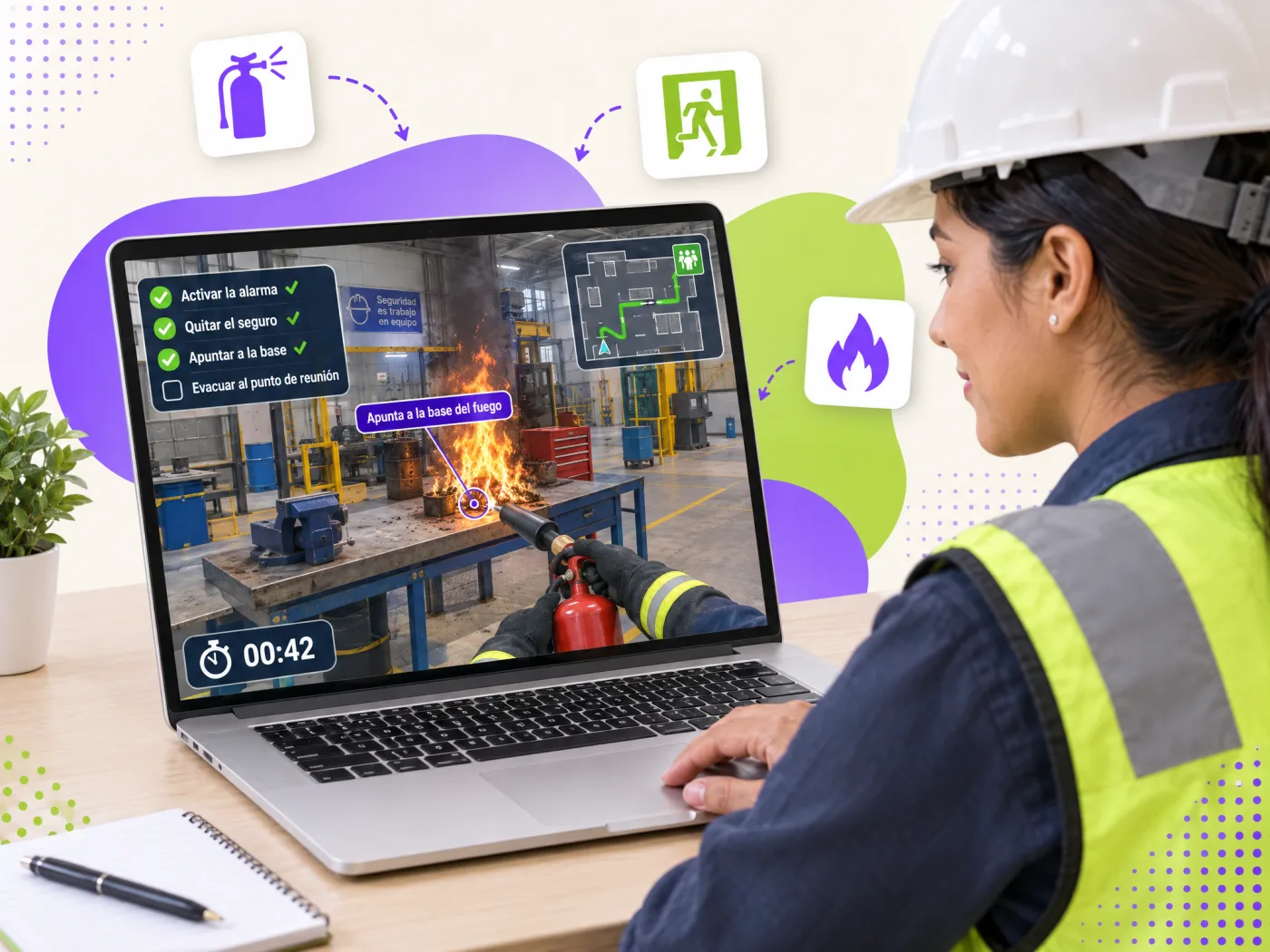
Aim at the base of the fire, follow the route on the map and reach the assembly point against the clock.
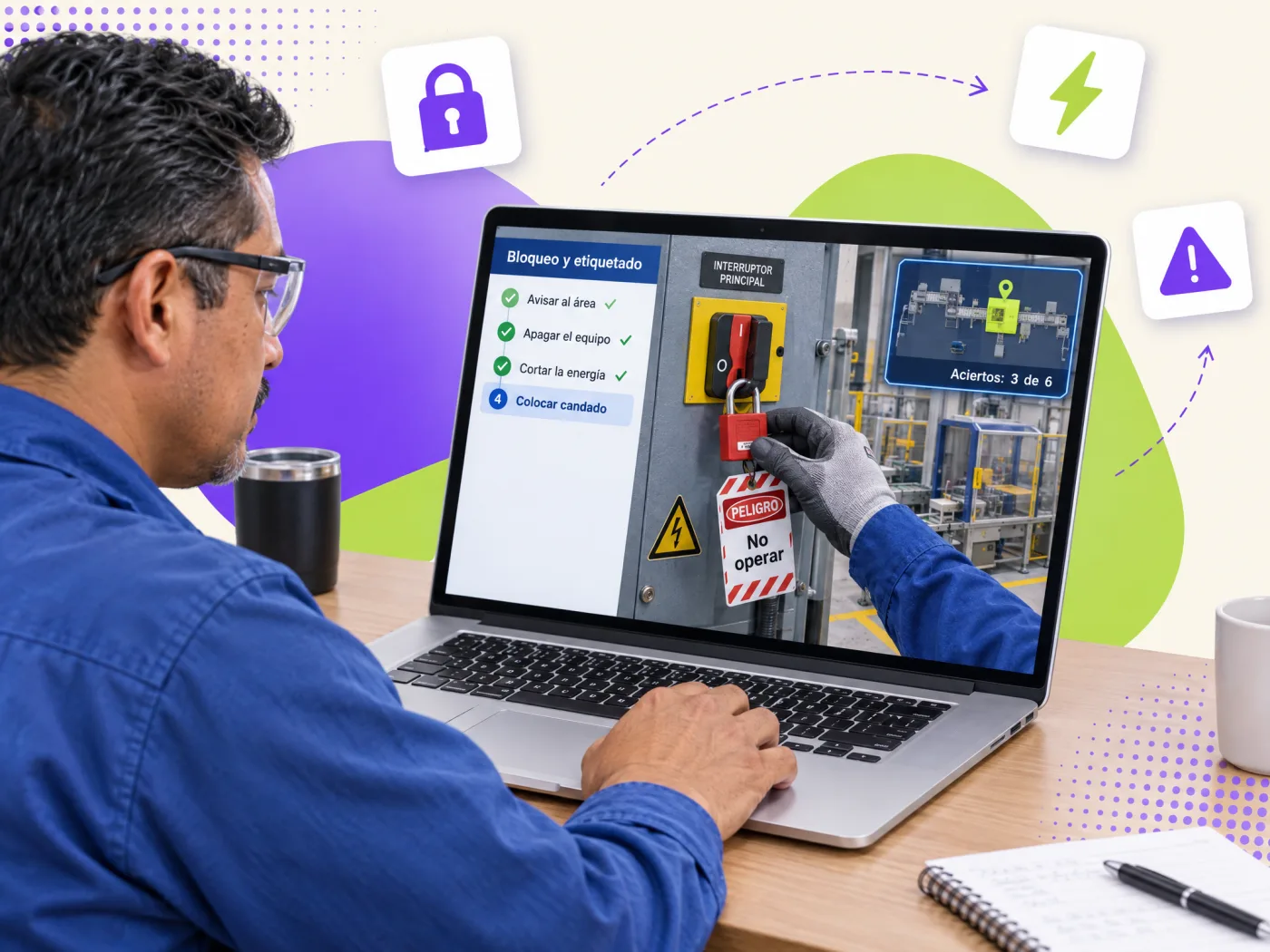
De-energize, lock and tag in the right order. An out-of-sequence step is an error that gets recorded.
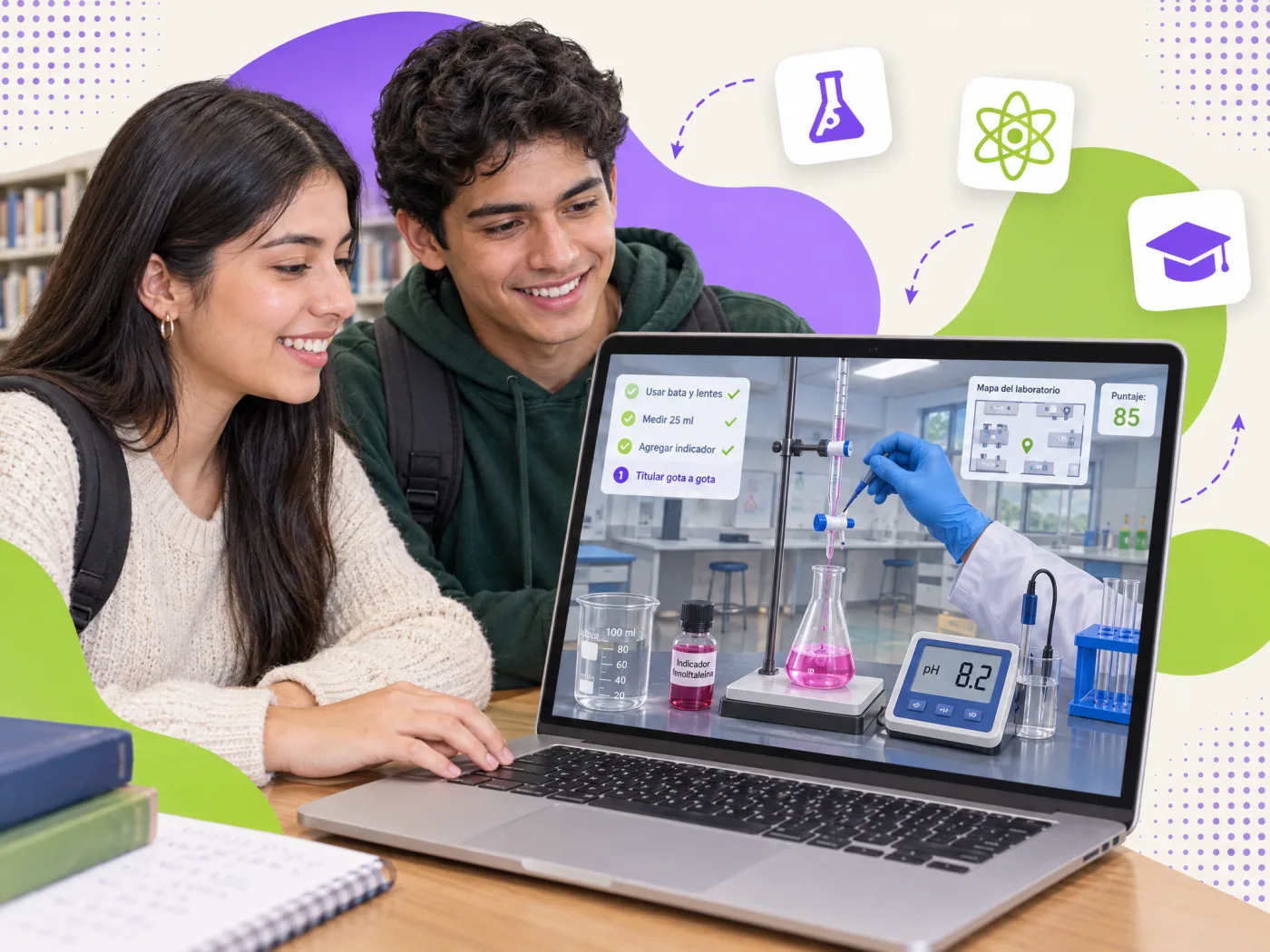
Titrations, circuits or dissections without reagents or risk, as many attempts as the student needs.
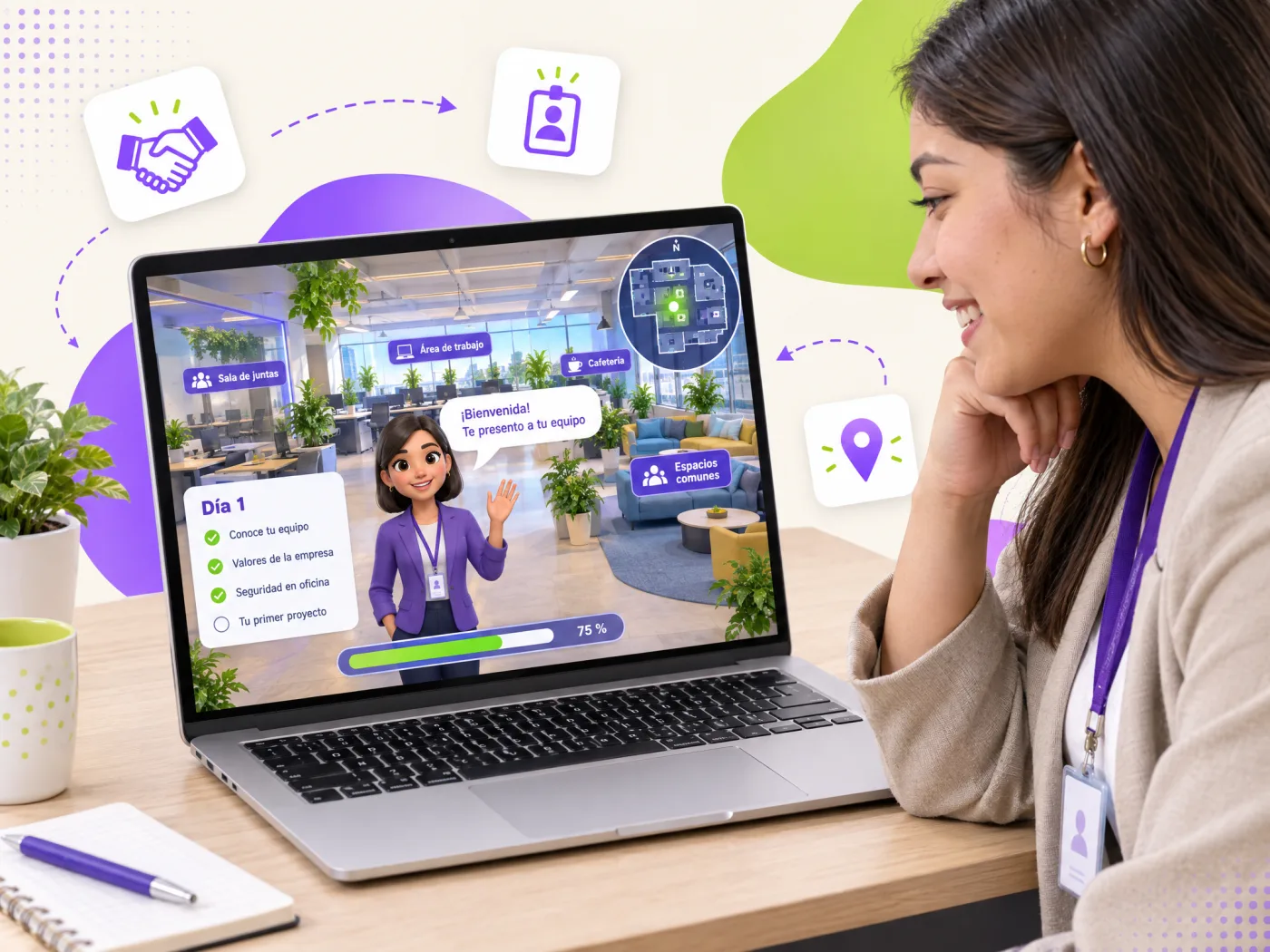
A tour of the company with an avatar guide: team, values, safety and the first project, from day one.
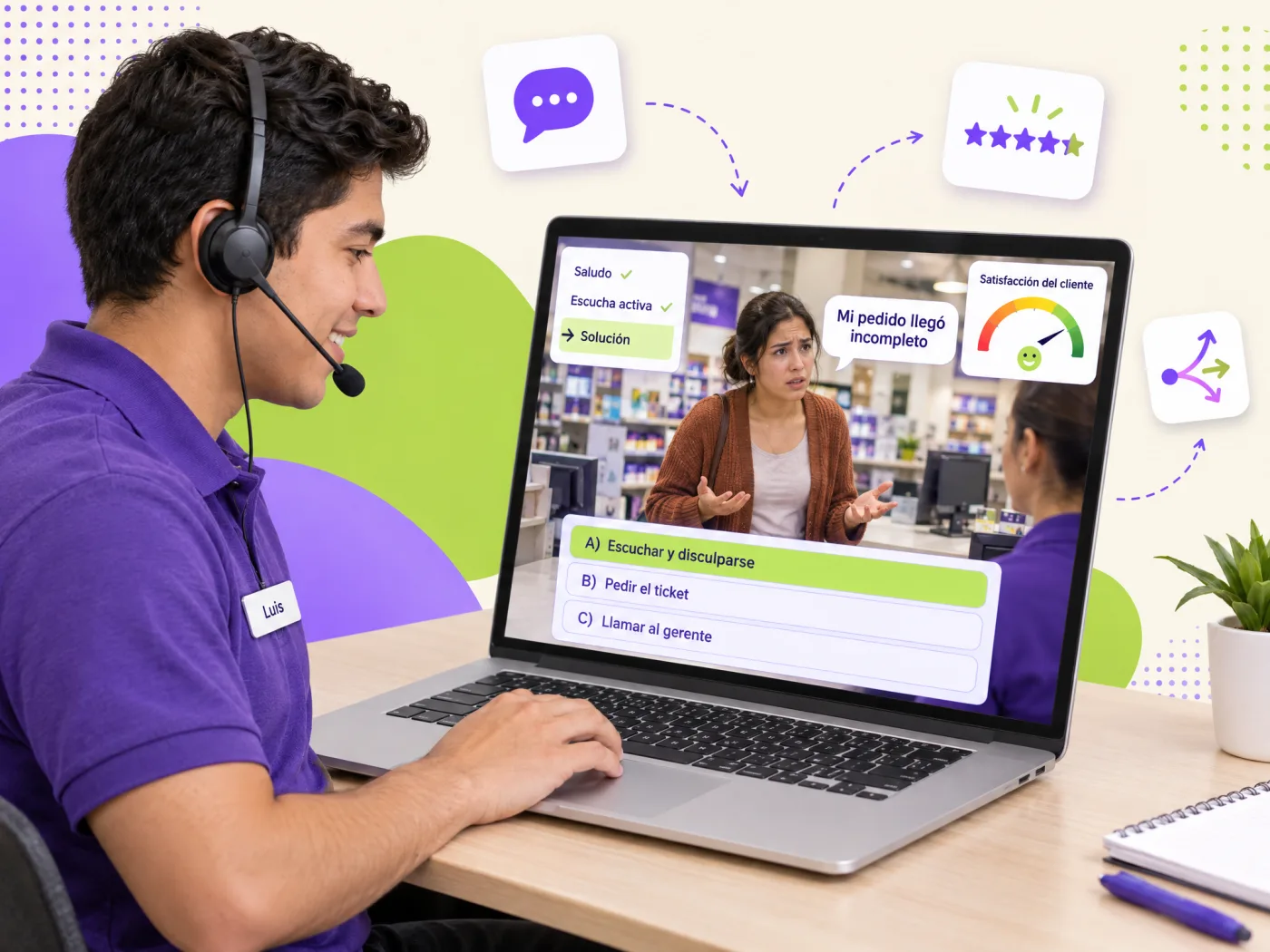
A difficult customer, three possible answers and a satisfaction meter that reacts to every decision.
Everything you see here adapts to your machine, your procedure and your platform.
Four viewpoints — operator, rack, line and catwalk — to understand the space before stepping into it.
Up, down, forward, reverse, grip and emergency stop: what each one does and when it must not be used.
The crane will not travel with a low load or release the engine in mid-air. The error is explained and counted.
Seven steps that tick themselves off as the learner completes them, like a video game.
Live position of the bridge, the load and the operator, with their field of view.
Every action is written down: what was pressed, what went wrong and how long it took. In your LMS, that is a report.
Five phases, each with a deliverable you approve.
360 photo and video of the area, machine drawings, an interview with the expert and the current procedure.
Deliverable: technical scriptTarget behavior, critical decisions, frequent errors and the feedback for each one.
Deliverable: storyboard and decision treePanoramas with hotspots, or the machine modeled when its movement has to be simulated.
Deliverable: navigable scenarioControls, safety interlocks, checklist, score and the xAPI events that will reach your LMS.
Deliverable: working simulatorSCORM or xAPI tested on your platform and a pilot with real operators before launch.
Deliverable: published package and reportNot every procedure needs a simulator. This is the rule we use to recommend.
| Procedure video | 360 tour with hotspots | Interactive 3D simulator | |
|---|---|---|---|
| The learner… | Watches | Explores and looks things up | Operates and decides |
| Good for | Getting to know a process | Area induction, locating risks and equipment | Practicing a maneuver with rules and consequences |
| What is measured | Whether it was watched | Hotspots viewed and answers | Sequence, errors per step, attempts and time |
| What we need from you | Script and filming | 360 photography of the area | Drawings, photos and video of the machine |
| Production effort | Low | Medium | High |
Reading about a procedure is not the same as doing it. We build scenarios where people practice, make mistakes without risk, and every decision is recorded.
First-person driving between racks, with a warehouse minimap and the checklist ticking off as the operator completes each step.
The real cell in 360°: every button explained, the machine cycle simulated and the operator practicing before touching the equipment.
Compressions with depth and rhythm meters, and the full protocol step by step: safe scene, call, check breathing, act.
Aim at the base of the fire, follow the route on the map and reach the assembly point against the clock.
De-energize, lock and tag in the right order. An out-of-sequence step is an error that gets recorded.
Titrations, circuits or dissections without reagents or risk, as many attempts as the student needs.
A tour of the company with an avatar guide: team, values, safety and the first project, from day one.
A difficult customer, three possible answers and a satisfaction meter that reacts to every decision.
A simulator pays off more inside a course: first the why, then the practice, then the assessment. See our end-to-end online course production, the instructional design for online courses that defines what gets practiced, and the gamified scenarios and interactive videos that go with it.
If you have nowhere to publish it yet, we handle the LMS implementation and leave the attempts-and-errors reports ready for your managers. Based in the United States? See our nearshore eLearning development.
Tell us about the procedure in the free assessment and we will propose three scopes at a fixed price.